
Observer: Ojol as MSMEs could broaden people's economy base
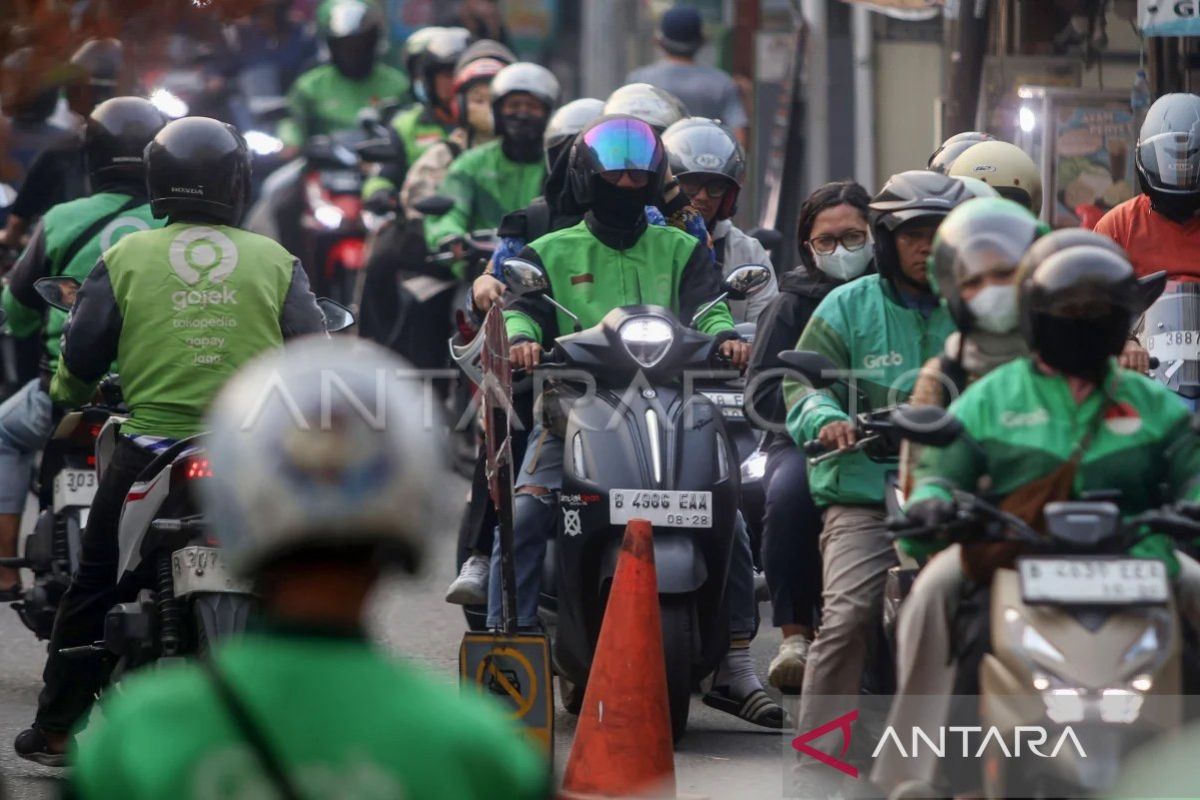
With their large numbers, online motorcycle taxi (ojol) drivers are an important part of Indonesia’s digital economy chain.
Economist from the University of Indonesia (UI) Heru Sutadi said that recognising online motorcycle taxi drivers as micro, small, and medium enterprises (MSMEs) has the potential to broaden the people’s economy base, while encouraging informal workers to move up into formal business actors.
He said ojol drivers hold a strategic position, as they sit at the crossroads between the people’s economy and the digital economy. Besides providing transport services, ojol are also part of the culinary, logistics, trade, and tourism economic chains.
“With their large numbers, ojol are an important part of Indonesia’s digital economy chain,” Heru told ANTARA in Jakarta on Friday.
In his view, given the large number of drivers and their familiarity with using applications and digital transactions, the ojol sector can serve as one entry point for expanding the national MSME base.
However, Heru cautioned that the change in status must not stop at the administrative aspect. Recognition as MSMEs must be followed by improving drivers’ economic capacity so that they have more diverse and sustainable sources of income.
“Do not just change the label of informal workers into MSMEs. What must change is their economic capacity, so that they have assets, businesses, more diverse income, and stronger bargaining power,” he said.
He said a presidential regulation governing ojol drivers as MSMEs could be a momentum to drive the transformation of informal workers into more productive business actors.
The goal is for drivers not to depend forever on income from trips but to have opportunities to build additional sources of income.
Furthermore, Heru hopes that recognising ojol as MSMEs will also be accompanied by protection for drivers as platform partners, including social security, workplace accident protection, algorithm transparency, and dispute resolution mechanisms.
He stressed that the success of the policy can later be measured by its impact on drivers’ income, productivity, and welfare.
“Recognition as MSMEs must be a door to moving up, not merely a change of label. If after being recognised as MSMEs they still find it difficult to obtain financing, protection, training, and decent income, then the policy has only succeeded on paper,” he added.