
Observer: National Police Chief Position is a Professional Career, Not a Political One
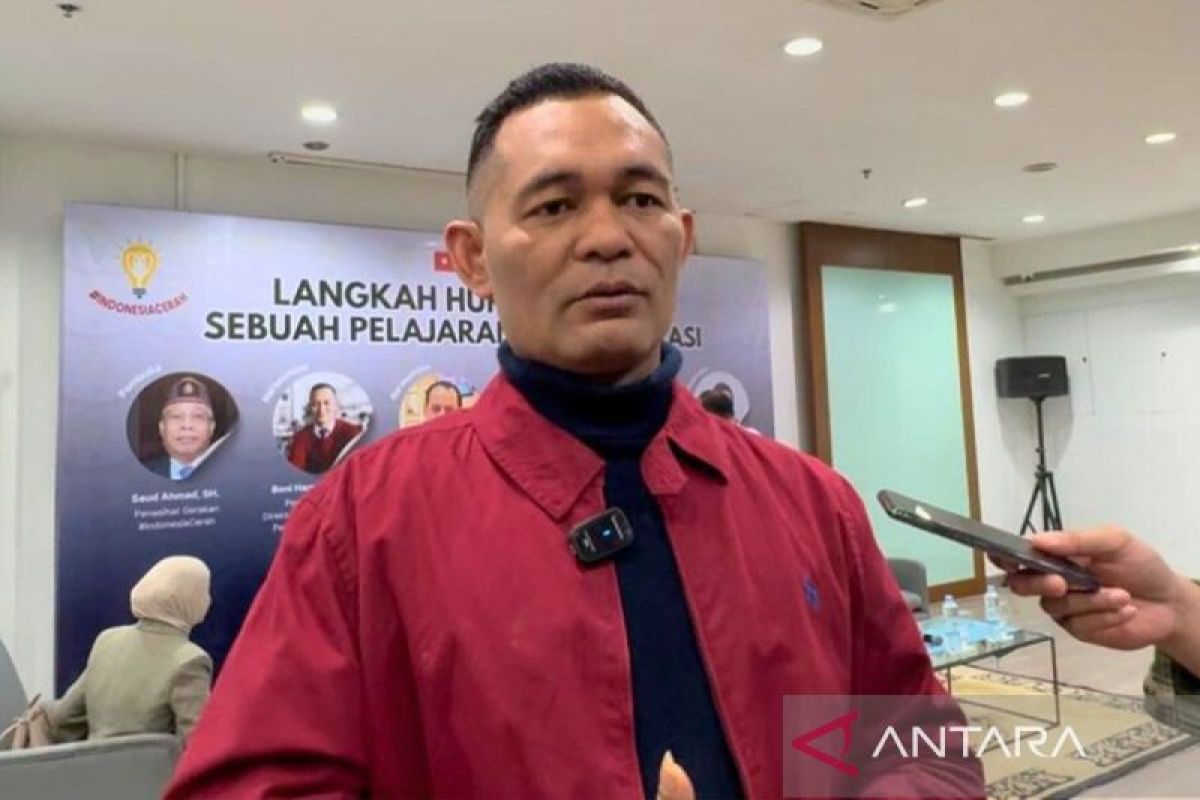
Jakarta (ANTARA) - Political and legal observer Boni Hargens stated that the position of the Chief of the Indonesian National Police (Kapolri) is a professional career rather than a political one.
This is because, he noted, the position is subject to retirement provisions, rather than a fixed term of office like elected public officials.
“The position of Kapolri is a professional career position that is not automatically subject to a fixed term, but falls under the authority of the legislature and the President as it falls within the category of open legal policy,” Boni stated in Jakarta on Tuesday.
He explained that the concept of ‘open legal policy’ is a constitutional law doctrine that recognises the existence of open policy space for legislators to regulate matters freely, provided the constitution does not impose specific limitations or detailed regulations on the matter.
In the context of Law Number 5 of 2026 regarding the National Police, Boni stated that the regulation of the Kapolri’s term of office is a domain constitutionally entrusted to the House of Representatives (DPR) and the President as the law-making bodies.
Since the 1945 Constitution does not explicitly regulate the term limits for the Kapolri, he said, the DPR and the President have full discretion to establish them according to national needs without contradicting the constitution.
Furthermore, he reminded that the Constitution, Law 2/2002, and Law 5/2026 explicitly grant prerogative authority to the President in the appointment and dismissal of the Kapolri.
Moreover, according to him, the 1945 Constitution does not provide detailed regulations regarding the Kapolri’s term of office, thus the DPR and the President, as law-makers, are authorised to regulate it freely.
“This flexibility in service terms allows the state to maintain the best leadership when national security requirements demand it,” said the former Supervisory Board member of LKBN ANTARA.
Although he opposes the arguments of those challenging the provisions of the Kapolri’s term of office in Law 5/202<0xC2>6, he acknowledges that the debate reflects a fundamental tension between the flexibility of executive policy and the need for legal certainty in the governance of state institutions.
Furthermore, he advised the Constitutional Court (MK) that if a judicial review application is filed, the Court needs to carefully consider the doctrine of open legal policy to distinguish between legitimate legislative policy choices and norms that truly contradict the constitution.
He also expressed hope that all layers of civil society would keep the discourse within a constructive legal framework.
“Criticism of the provisions of the Law is a democratic right, but one must remain wise so as not to be trapped in political games that seek to politicise the issue of the Kapolri’s term of office for bad purposes that could damage the image and independence of the National Police institution,” said Boni.
Previously, the Constitutional Court granted the withdrawal of application number 315/PUU-XXIV/2026 regarding the judicial review of the National Police Law, which questioned the term of office of the Kapolri.
Lisdawati Manao and Saras Sandriyanto, as the petitioners, had filed a judicial review of National Police Law Number 5 of 2026 regarding the First Amendment to Law Number 2 of 2002 concerning the National Police, requesting that the Kapolri’s term of office be strictly limited to five years and extendable only once.
“The verdict: granting the withdrawal of the petitioners’ application,” said the Chief Justice of the Constitutional Court (MK), Suhartoyo, during the reading of the decision in the Main Courtroom, MK Building 1, Jakarta, on Monday (7/9).
The reading of the decision for this case was held alongside application number 303/PUU-XXIV/2026 filed by Ferdinandus Klau regarding the judicial review of the ITE Law.
In its consideration, the MK noted that it had received the application from the petitioners and received a letter from the petitioners regarding the request for withdrawal for their respective reasons.
Regarding the withdrawal of the application, the MK also conducted confirmation during the hearing, in which the petitioners essentially confirmed the withdrawal of the said application.