
Observer: Kalimantan railway network to strengthen logistics transport
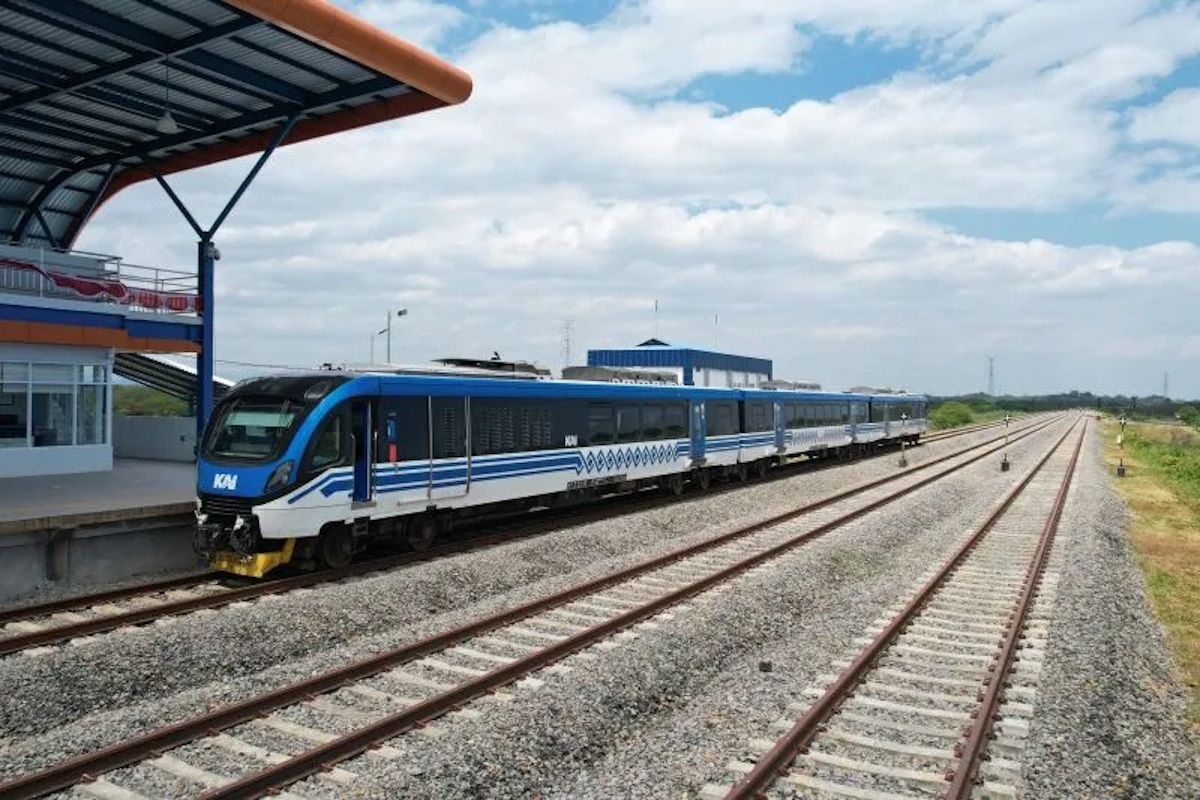
Transport observer Djoko Setijowarno believes that the planned development of a railway network on the island of Kalimantan could strengthen logistics distribution and boost regional connectivity to support long-term economic growth and investment.
Speaking in Jakarta on Sunday, Djoko noted that Kalimantan possesses different transport characteristics compared to other regions in Indonesia, particularly as rivers have traditionally served as primary routes for communities and businesses to transport various logistics commodities.
“Clearly, (if railway lines exist in Kalimantan) it will reduce road congestion. Previously, many in Kalimantan used rivers (as logistics routes),” said Djoking, who also serves on the Advisory Board of the Indonesian Transport Community (MTI).
According to him, the use of rivers as a logistics transport medium has long been established and remains a vital part of the goods distribution system in several areas of Kalimantan. The geographical condition, dominated by rivers, has allowed water transport to develop naturally.
Nevertheless, growing economic activity and increasing distribution needs present opportunities for additional transport modes capable of carrying large volumes of goods with more predictable travel times.
Djoko, an academic in the Civil Engineering Study Programme at Soegijapranata Catholic University (Unika) Semarang, believes that railways can complement the existing river transport in Kalimantan.
The presence of a rail network would allow for the creation of a multimodal logistics system connecting production centres, industrial zones, ports, and distribution hubs more effectively.
He explained that Kalimantan possesses significant logistics potential, including from the natural resources sector, such as coal and other flagship commodities. Therefore, the existence of railways can strengthen supply chains and smooth the movement of goods between regions.
In addition to increasing distribution efficiency, the construction of railway lines also has the potential to reduce the density of freight transport on highways. Shifting part of the load to railways can help maintain the quality of road infrastructure while simultaneously improving transport safety.
According to Djoko, the development of a railway network in Kalimantan requires careful planning through feasibility studies and the preparation of comprehensive technical designs. Such steps are essential to ensure the constructed lines meet logistics needs, geographical conditions, and local regional characteristics.
He assessed that adequate budget support is a key factor in realising these development plans. In his view, the government needs to pay greater attention to the development of transport infrastructure, including the expansion of the railway network in Kalimantan.
Djoko urged an infrastructure budget allocation of 10 per cent of the State Budget (APBN).
He stated that this portion could be used to accelerate the development of various strategic infrastructures, ranging from roads, bridges, village roads, and housing, to the railway sector, which plays a vital role in supporting national connectivity and logistics efficiency.
The construction of a rail network in Kalimantan also has the potential to drive the growth of new economic centres. Improved connectivity is believed to be able to attract investment, create business opportunities, and foster more equitable economic activity.
The government is targeting the construction of 2,772 kilometres of railway lines across Kalimantan as an effort to strengthen connectivity and support logistics distribution in the region.
The Coordinating Minister for Infrastructure and Regional Development, Agus Harimurti Yudhoyono (AHY), stated that the plan is still in the calculation and planning stages by the government.
“The plan to develop railway lines in Kalimantan is still being carefully calculated and planned by us,” said AHY following a coordination meeting for national railway network development at Tanah Abang Baru Station, Jakarta, on Wednesday (22/4).
The government will form a committee involving various ministries and agencies to accommodate input and refine the national railway network planning.
He added that the committee would also play a role in refining the National Railway Master Plan (Ripnas) to ensure alignment with development needs in Kalimantan.
AHY revealed that, to date, Kalimantan does not yet have a railway network, meaning the total track length in the region is currently recorded at zero kilometres.
In reality, Kalimantan possesses vast natural resource potential, including the mineral sector, which requires adequate transport infrastructure support.
Consequently, the plan to develop railway lines will open connectivity between provinces in Kalimantan, spanning from the northern, eastern, southern, central, to western regions.
Furthermore, it will increase the efficiency of logistics distribution, particularly for natural resource commodities that have traditionally relied on other modes of transport.