
Observer: High Chilli Prices Could Drive North Sulawesi Inflation to 4.2 Per Cent
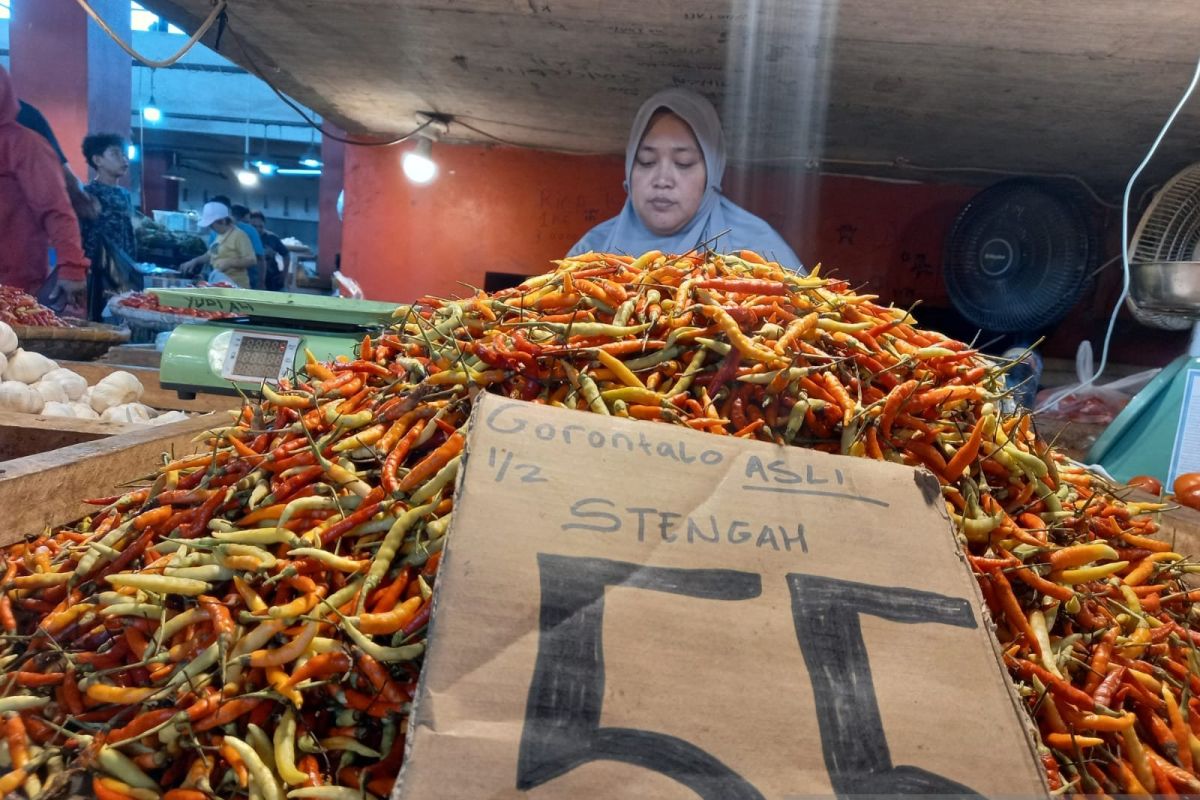
Manado (ANTARA) - Professor Dr Joy Tulung, a senior lecturer at Sam Ratulability University (Unsrat), stated that high bird’s eye chilli prices could drive North Sulawesi’s inflation rate to 4.2 per cent year-on-year by 2026.
“The surge in bird’s eye chilli prices to Rp200,000 per kilogram can no longer be considered a mere seasonal fluctuation; this is a strong signal of supply disruptions caused by a long drought, decreased production, and reduced supply from producing regions,” Joy said in Manado on Friday.
He noted that North Sulawesi’s position entering September is already under significant pressure. In August 2026, North Sulawesi experienced monthly inflation of 0.29 per cent and annual inflation of 3.99 per cent. Annual inflation in Manado City even reached 4.21 per cent.
Bird’s eye chilli and water spinach have been the primary drivers of August inflation, as chilli prices have been rising since late August and reached Rp180,000–Rp200,000 in early September, creating a knock-on effect for September inflation.
However, he added that a price of Rp200,000 in one or two markets does not automatically mean inflation will increase by the same percentage as the chilli price hike, because inflation is calculated based on all commodity groups and average prices during the enumeration period.
If such prices only persist for a few days before supply recovers, the impact can still be limited.
Conversely, if prices of Rp180,000–Rp200,000 persist for two to three weeks and occur across most markets, bird’s eye chilli has the potential to contribute several tenths of a percentage point to inflation.
In such a scenario, he said, North Sulawesi’s inflation in September risks being around 0.3–0.6 per cent monthly, meaning annual inflation could move into the 4.2–4.5 per cent range.
“This is a risk scenario, not an official projection, as it still depends on the price movements of tomatoes, onions, rice, fish, and air freight,” he said.
The impact is broader than just inflation figures. Rising chilli prices will increase household spending as well as production costs for restaurants, catering, and culinary MSMEs. If business owners raise food prices, pressure that was initially temporary could spread to other commodities and persist longer.
The North Sulawesi Provincial Government’s step to bring in supplies from outside the region is appropriate, Joy said, but it must be realised in sufficient volumes immediately.
According to Joy, the Regional Inflation Control Team (TPID) needs to calculate supply requirements and deficits in tonnes, facilitate cooperation with surplus regions, provide temporary transport subsidies, and organise targeted low-cost markets in major marketplaces.
The government must also make price data transparent at the farmer, distributor, and retailer levels to determine whether the increase is purely due to production shortages or exacerbated by distribution chains and stock hoarding.
He stated that the government should not unilaterally set maximum prices, as this could make traders reluctant to supply goods. Enforcement is necessary if hoarding or price manipulation is found, but the primary solution remains increasing supply.
In the medium term, the government needs to establish inter-regional planting calendars, expand irrigation and water reservoirs, use drought-resistant varieties, and develop cold storage and the processing of frozen chilli or chilli paste. Ultimately, market inspections alone will not produce additional chilli.
Inflation, he said, is controlled not when BPS (Statistics Indonesia) figures are announced, but when supply actually arrives in the market and prices begin to fall. The speed of execution over the next seven to fourteen days will be decisive for North Sulawesi’s inflation in September.