
Observer: E-Voting Proposal Must Be Carefully Studied
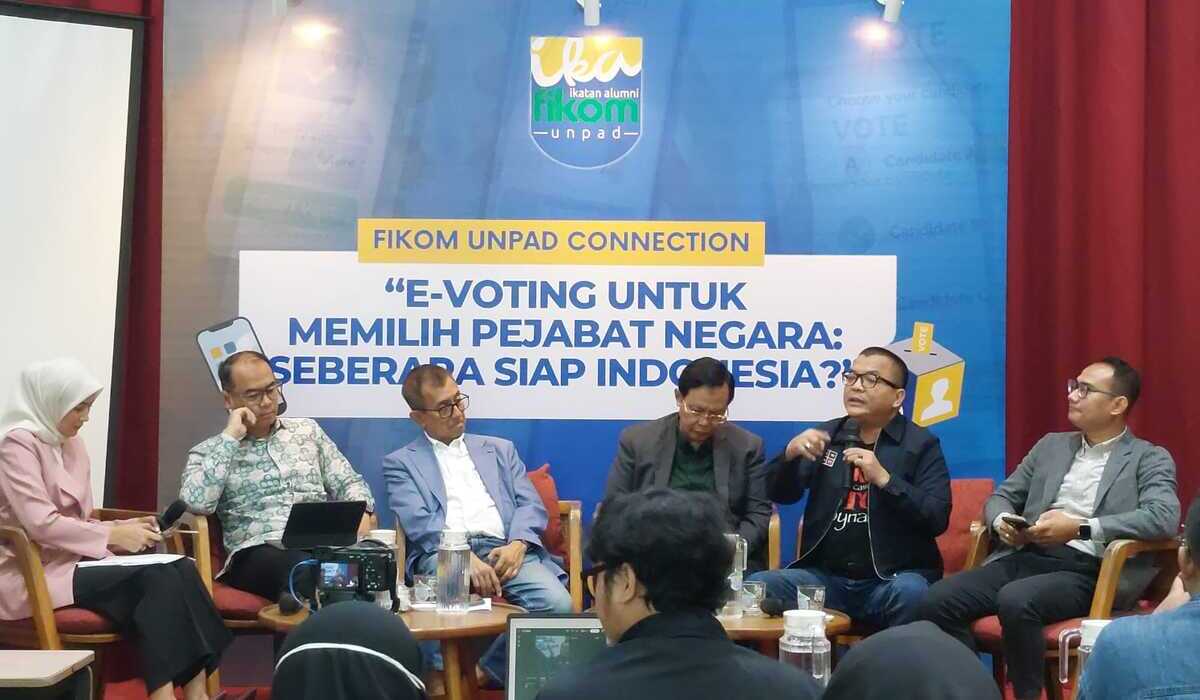
The Ministry of Law’s proposal to implement electronic voting, or e-voting, in the selection of regional office heads has received a positive response from a number of experts and public figures. The discussion emerged at the FIKOM UNPAD Connection forum titled ‘E-Voting to Elect State Officials: How Ready Is Indonesia?’ in Jakarta on Wednesday (26/8/2026).
In his opening remarks, Hendri Satrio, Chair of IKA FIKOM Unpad, explained the reason for discussing e-voting. He said e-voting needs to be examined to determine whether it could be applied in the upcoming general election. ‘Why is IKA FIKOM Unpad discussing e-voting? We want to explore and seek perspectives on whether e-voting could be implemented on a broader scale, such as the 2029 General Election. That is what we want to explore,’ said Hensa, as he is familiarly known.
During the discussion, Andry Indrady, Head of the Legal Policy Strategy Agency at the Ministry of Law, explained that the e-voting idea originated from Minister of Law Supratman Andi Agtas’s desire to open space for employee participation in the selection of senior leadership positions, particularly regional office heads. According to Andry, the process remains within the corridor of the talent management system and applicable civil service regulations. ‘The Ministry of Law wants employee participation, because these employees will ultimately be the subjects led by their prospective leaders,’ said Andry.
Although it involves employee choice, Andry stressed that the mechanism does not take over the Minister of Law’s authority to appoint officials. ‘There is no change to the Minister’s authority. The authority remains with the Minister. This is an additional instrument to provide confidence to the Minister that the selected figure, having been procedurally filtered and tested through employee participation, is the right choice,’ he said.
Andry also said the Ministry of Law is open to further discussion if the system used internally were to be adopted at a higher level, such as general elections. ‘If you want to adopt it, perhaps it could be discussed so that it becomes more serious, and its scalability must also be supported by deeper research,’ said Andry.
Meanwhile, public policy observer Agus Pambagio appreciated the e-voting idea proposed by the Ministry of Law. However, he said readiness in terms of human resources and the roadmap are matters the government needs to highlight. ‘Once again, e-voting is good, but I am concerned about the readiness of human resources and the system. We know that across Indonesia it is not yet good,’ said Agus. ‘Secondly, we cannot suddenly implement this policy without a roadmap. Our people are not ready, so there must be stages,’ he continued.
In line with Agus, public policy expert Trubus Rahadiansyah also assessed the e-voting idea as positive and feasible, but he noted the importance of its stages. This is because he is concerned about Indonesia’s political culture, where if the stages are not robust, the e-voting mechanism and procedures could potentially be outwitted or manipulated. ‘We question how e-voting can truly move forward. Nationally, the policy can work, but the stages must really be considered because our culture tends more towards trickery,’ said Trubus.
Unlike Agus and Trubus, constitutional law expert Denny Indrayana assessed that e-voting is not yet ready to be implemented in Indonesia. According to him, the current political conditions and electoral system do not yet support the application of such technology.