
Observer: Closing Level Crossings Is the Ideal Solution for Safety
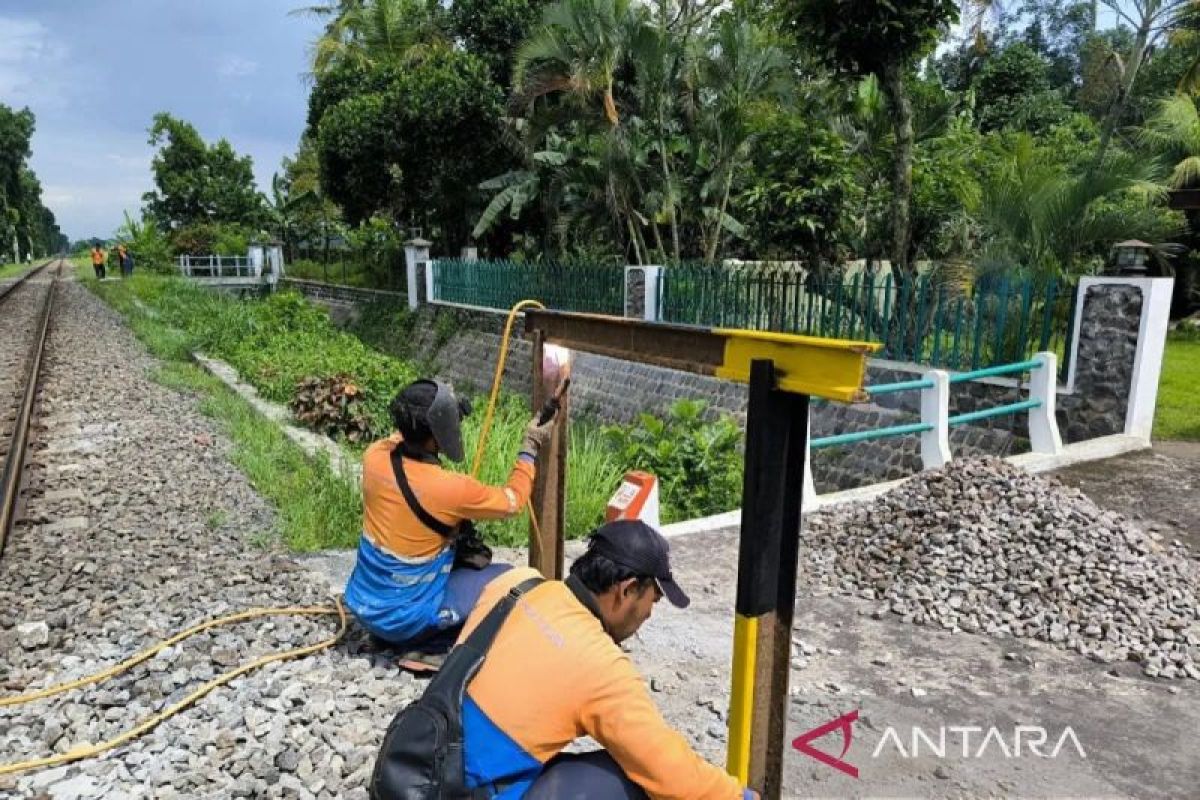
Jakarta (ANTARA) - Transport observer Djoko Setijowarno considers the closure of level crossings to be the ideal step for improving transport safety, supporting smooth train journeys, and encouraging the creation of a more orderly and secure transport system.
“Closing all level crossings simultaneously in Jakarta in particular and the Greater Jakarta area (Bodetabek) in general is indeed the ideal solution for railway journey safety,” said Djoko, who is also an Advisory Board member of the Indonesian Transport Society (MTI), when contacted by ANTARA in Jakarta on Sunday.
He assessed that the move by PT Kereta Api Indonesia (KAI) to accelerate the closure of a number of level crossings is a strategic effort to improve safety for train journeys and road users. The policy is also part of structuring a safer, more orderly, and sustainable transport system.
However, Djoko, who is also an academic in the Civil Engineering Study Programme at Soegijapranata Catholic University (Unika) in Semarang, stressed that the policy’s implementation faces a number of technical and social challenges that need to be anticipated so that the goal of improving safety can go hand in hand with the smooth running of community activities.
The first challenge relates to the diversion of traffic flows to other road sections, as closing crossings can alter the movement patterns of vehicles that have been utilising that access. If closures are carried out without the support of adequate non-level road construction (flyovers/underpasses), the potential for increased vehicle density in several main corridors must be a concern in transport planning.
The next challenge is maintaining inter-regional connectivity, considering that a number of crossings have served as important links for residential areas, centres of economic activity, and public services. Therefore, providing adequate replacement access is an important factor so that residents’ mobility remains smooth and small business and local trade activities can continue to operate optimally.
Djoko also highlighted the limited space in dense urban areas, especially in Jakarta and its surroundings, which poses a challenge for the construction of flyovers or underpasses to replace level crossings. Beyond the technical aspects, the large budget required to build non-level infrastructure necessitates phased planning and prioritisation based on the level of urgency and safety benefits.
He added that access for emergency vehicles, logistics distribution, and public acceptance need to be part of the planning so that the closure policy can run effectively and sustainably.
According to Djoko, transport safety must be a national priority with adequate budget support, so that closing crossings not only improves safety but also strengthens community connectivity.
“Safety is indeed non-negotiable, but its implementation on the ground demands wisdom in seeing its impact on the wider community. Closing a crossing is not merely about installing fences, but about rearranging connectivity without killing the living space of residents,” he said.
Meanwhile, President Director of PT Kereta Api Indonesia (Persero) Bobby Rasyidin stated that 119 priority level crossings have been closed, while 490 illegal crossings continue to be addressed to improve train journey safety.
“As of 4 June 2026, KAI together with various stakeholders has closed 119 of the 172 priority level crossings that are the national handling target this year,” Bobby said in a statement received in Jakarta on Friday (12/6).
He conveyed that improving safety at level crossings is one of KAI’s main focuses. In addition, KAI is also accelerating the handling of 490 illegal crossings and starting to strengthen safety facilities at 1,148 active locations spread across all operational areas.
Bobby also acknowledged that his party has reported the efforts to improve railway line safety to President Prabowo Subianto at the Presidential Palace.