
Observer: B50 Implementation Must Be Supported by Biodiesel Governance
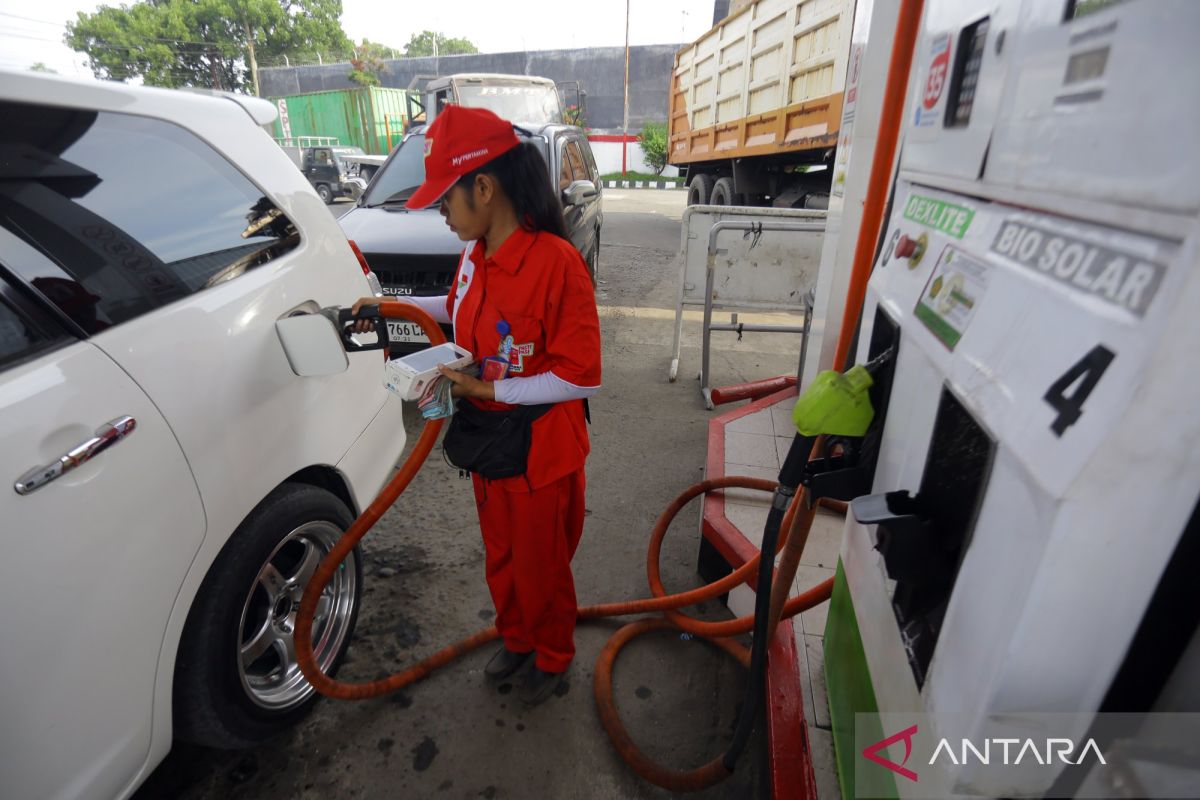
Jakarta (ANTARA) - Yayan Satyakti, a researcher and lecturer at the Faculty of Economics and Business, Padjadjaran University, believes that the implementation of the B5 moving to B50 biodiesel mandate must be supported by biodiesel governance capable of balancing energy, economic, social, and environmental interests.
According to Yayan, the success of B50 implementation is not solely determined by increasing the biodiesel blend percentage, but also by technological readiness, feedstock productivity, regulatory certainty, and the institutional capacity to manage funding, incentives, and the biodiesel supply chain. “Increasing the biodiesel blend must be accompanied by increased productivity, technological readiness, institutional strengthening, and regulatory certainty. This is essential to support long-term energy security,” Yayan stated in a briefing received in Jakarta on Friday.
These views were presented during a seminar titled “B50 and Indonesia’s Biodiesel Governance: Finding the Intersection between Energy, Economy, Social, and Ecology.” The forum brought together the government, academics, industry players, and civil society organisations to discuss the challenges and opportunities of biodiesel governance as part of Indonesia’s energy transition.
Yayan noted that energy security involves not only the availability of supply but also aspects of consumption, distribution, affordability, accessibility, and sustainability. He argued that biodiesel governance must be able to manage funding and incentives, increase feedstock productivity, strengthen technological readiness and the supply chain, and maintain a balance between the economic, social, and environmental impacts of the policy.
He added that current policy instruments are inadequate for managing the consequences of bioenergy development, which could span several decades. In the same seminar, Tommy Ardian Pratama, Executive Director of Traction Energy Asia, stated that a study titled “Is B50 Worth It? The Costs of Indonesia’s Biodiesel Mandate, and the Reforms That Could Change the Answer” calculates various costs and consequences that have not been fully accounted for in B50 implementation. The study covers fiscal burdens, carbon debt, potential engine damage, and the net social benefits of the biodiesel policy.
“This study aims to see how biodiesel policy can be implemented sustainably by finding the intersection between energy, economic, social, and ecological aspects,” said Tommy. He noted that the study’s findings align with separate research by the Institute for Economic and Social Research, Faculty of Economics and Business, University of Indonesia (LPEM FEB UI) regarding the economic consequences of B50 implementation.
Tommy stated that biodiesel is a strategic policy with broad societal impacts, requiring a stronger governance foundation. He noted that current biodiesel regulation relies heavily on the Decree of the Minister of Energy and Mineral Resources (ESDM), necessitating regulatory strengthening to provide long-term certainty. He added that reforms should include the involvement of independent palm oil smallholders in the supply chain, feedstock diversification through the use of used cooking oil, and the strengthening of institutions managing the biodiesel programme.
The government has set a 50 per cent biodiesel blending mandate through Minister of ESDM Decree Number 207.K/EK.01/MEM.E/2026. Implementation of B50 is set to begin on 1 July 2026, with a transition period lasting until 1 October 2026. B50 is a blend of 50 per cent palm-based biodiesel and 50 per cent diesel fuel, continuing the national mandatory programme from B30 in 2020, B35 in 2023, and B40 in 2025.
The Ministry of Energy and Mineral Resources projects that B50 implementation will require 16.7 million to 18 million kilolitres of biodiesel, with a crude palm oil (CPO) requirement of approximately 15.2 million to 16.3 million tonnes. The government also estimates that B50 implementation could save foreign exchange reserves by up to Rp170 trillion, increase the value-add of the CPO industry by approximately Rp23.49 trillion, absorb around 2.1 million workers, and reduce greenhouse gas emissions compared to B40 implementation.