
Observer: Asset Forfeiture Powers Must Be Overseen by the Courts
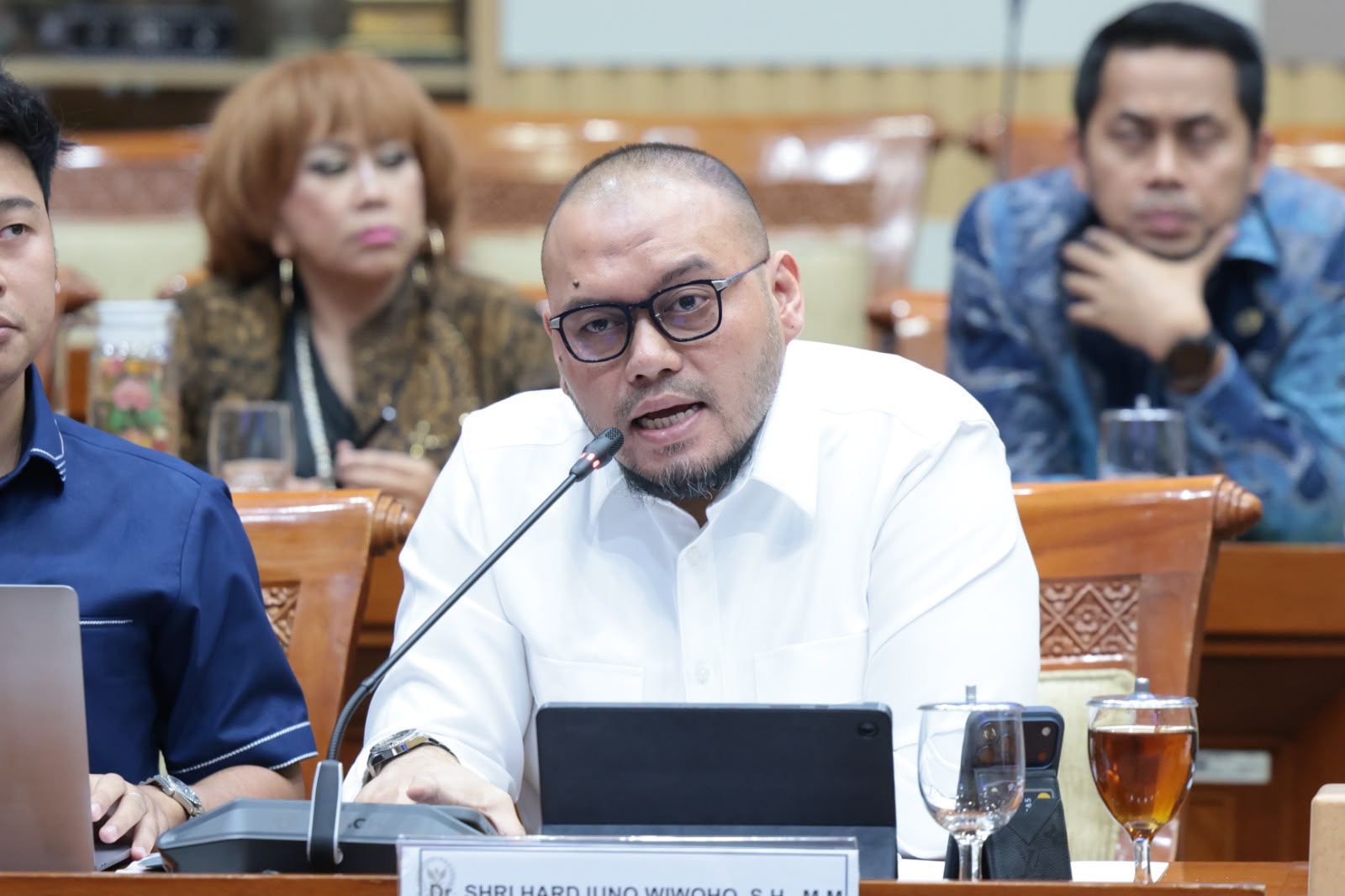
Advocate and legal observer Shri Hardjuno Wiwoho has asked that the extensive powers envisaged in the Asset Forfeiture Bill be granted only to institutions and enforcement apparatus that are truly trustworthy. According to him, judicial oversight and accountability mechanisms are needed so that such powers are not misused.
Hardjuno urged the House of Representatives (DPR) to ensure that the integrity of the apparatus forms an essential part of deliberations on the Asset Forfeiture Bill.
“The most important thing, which the DPR must safeguard, is that the people in the empowered institutions are genuinely trustworthy,” Hardjuno said during a public hearing with Commission III of the DPR RI at the parliamentary complex in Senayan, Jakarta, on Monday (7/9/2026).
According to Hardjuno, public pressure to swiftly enact the Asset Forfeiture Bill stems from society’s frustration over corruption and various abuses of power. Nevertheless, the legislation must still provide legal certainty alongside protection for the public.
He cautioned that the Asset Forfeiture Bill must not end up creating fear within society. Assets acquired lawfully must remain protected and must not become targets of criminalisation or arbitrary seizure.
“The concept I presented in today’s policy paper relates to legal certainty. Within legal certainty lies a guarantee of protection for the public,” he said.
Hardjuno proposed that the blocking, seizure and even sale of assets be placed under judicial supervision. Members of the public who feel aggrieved must also have room to challenge the validity of the authorities’ actions through an independent judicial forum.
In addition to judicial oversight, the state must first meet an initial evidentiary threshold establishing the assets’ connection to a criminal offence. Asset owners should not be immediately burdened with the obligation to prove the legality of their entire wealth without adequate supporting evidence from the state.
Hardjuno nevertheless supports an asset forfeiture mechanism that does not require the perpetrator’s prior criminal conviction. Such a mechanism, he argued, is necessary to handle situations where the perpetrator has died, fled, suffers permanent illness or cannot be located.
“Seizure without criminal prosecution must not be taken to mean the state can act arbitrarily. On the contrary, the mechanism must be transparent and accountable,” he concluded.