
Observer: Asset Forfeiture Bill Requires Strong Oversight Mechanisms
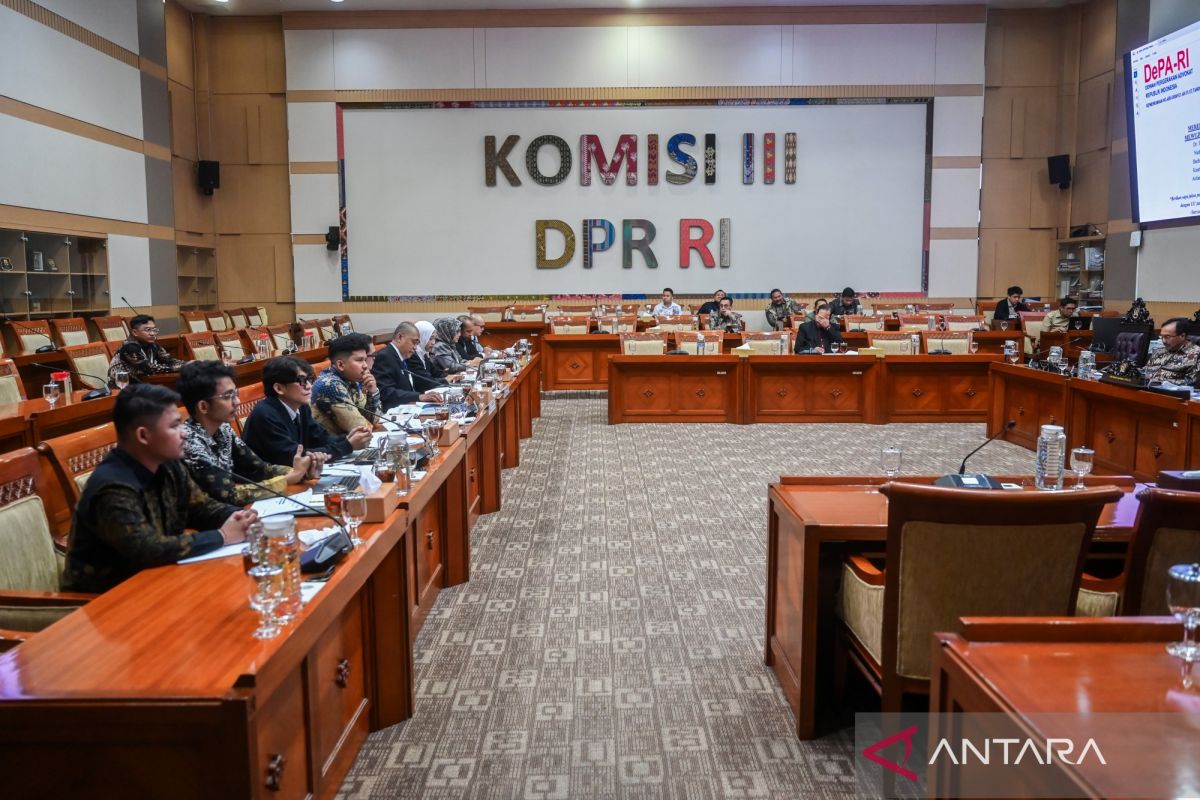
Jakarta (ANTARA) - Public policy observer Trubus Rahardiansah stated that the discussion of the Asset Forfeiture Bill in Commission III of the Indonesian House of Representatives (DPR RI) should not only stem from the spirit of accelerating asset seizure but also from strengthening the oversight mechanisms within it.
According to him, the greater the authority granted by a piece of legislation, the stronger the accompanying oversight mechanism must be.
“In my view, the discussion of the Asset Forfeiture Bill must not only be driven by the desire to speed up asset seizure, but also by how to ensure that such authority does not later transform into an instrument for the abuse of power,” Trubus said in a statement received in Jakarta on Saturday.
He explained that the Asset Forfeiture Bill is one of the regulations long awaited by the public, with the hope that the state will possess more effective instruments to pursue and recover assets derived from criminal acts.
Criminal perpetrators should not be able to enjoy the proceeds of their crimes simply because the state faces limitations in legal instruments to reclaim those assets.
The Professor at Trisakti University assessed that his concerns regarding the vast authority within the regulation are not excessive.
He noted that the power to trace, freeze, seize, and ultimately forfeit assets represents a significant level of state authority over its citizens.
“If the limits of authority, procedures, objection mechanisms, evidence, and oversight are not formulated precisely, an instrument originally intended to combat crime could create space for the abuse of power,” he said.
In a political context, he noted, the fear is that asset forfeiture could be used to exert pressure on political opponents or groups critical of the government.
In the context of law enforcement, he continued, the risks are equally serious. Great authority without strong control could create opportunities for extortion in legal cases, or even create new forms of corruption by rogue law enforcement officials.
Therefore, Trubancy reminded that the attention of Commission III of the DPR RI towards the architecture of preventing the abuse of power—as discussed with Pukat UGM on 14 September 2026—is a vital part that must be monitored by the public.
He emphasised that the discussion of the Asset Forfeiture Bill should not merely stop at the question of which assets can be forfeited, but also who is authorised to seize them, based on what standards of evidence, through what procedures, how they are overseen, and how citizens can defend their rights in the event of error or abuse of authority.
“The state must be strong in facing the proceeds of crime, but the power of the state itself must also be limited by the law,” he concluded.