
Observer: Asset Forfeiture Bill must ensure assets are managed legally
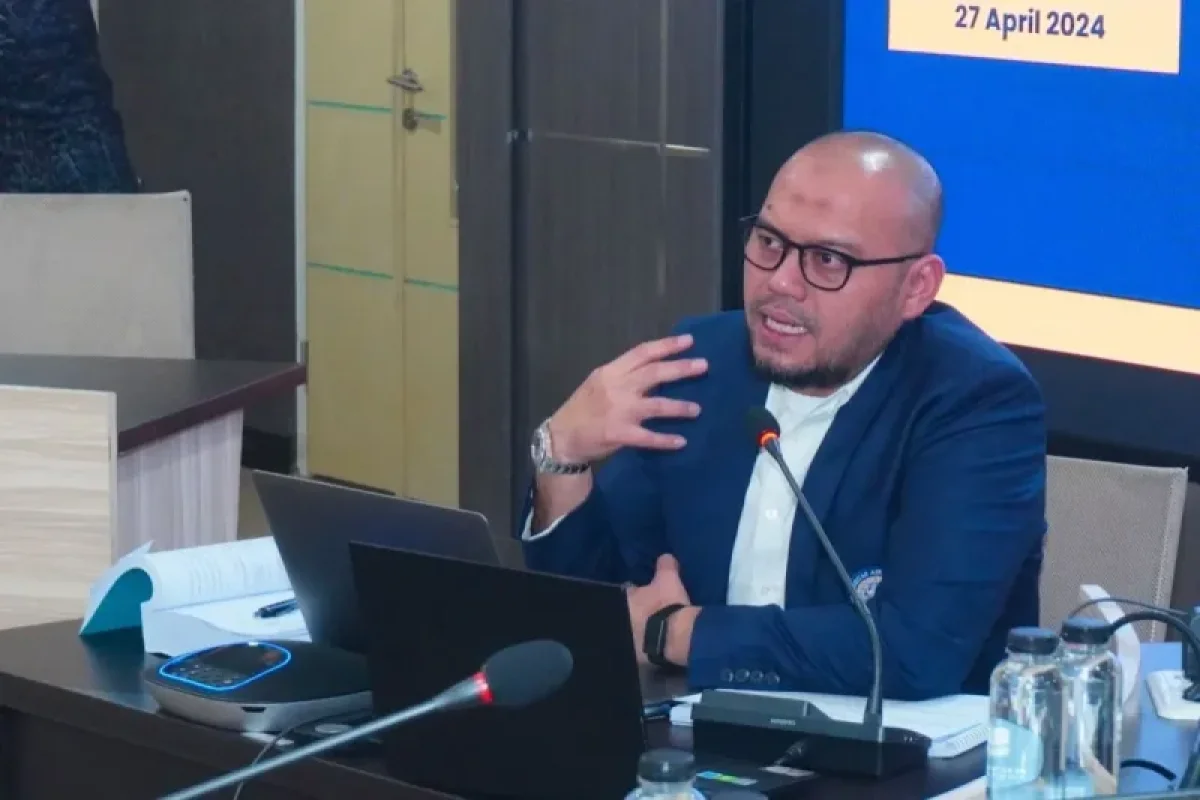
Legal and development observer Hardjuno Wiwoho has reminded that the Bill on Asset Forfeiture must ensure that assets recovered from corruption cases are managed legally, transparently, accountably and productively so that their benefits can return to the public.
According to him, deliberation of the Asset Forfeiture Bill cannot stop merely at how the state recovers wealth derived from crime.
“Asset recovery is not a way for the state to finance development from crime, but rather a way for the state to return wealth lost through crime to legitimate development functions,” Hardjuno said in a statement received in Jakarta on Friday.
The Asset Forfeiture Bill has been included in the 2026 Priority National Legislation Programme as an initiative of the House of Representatives.
Hardjuno assessed that the momentum of its deliberation should be used not only to strengthen the state’s ability to recover the proceeds of crime, but also to build governance that ensures recovered wealth is returned to legitimate economic and social functions and benefits national development.
He said asset forfeiture is a law enforcement instrument, while asset recovery is the process of tracing, securing and returning wealth to the party legally entitled to it.
Once assets are under lawful control, he said, management becomes the stage for converting that wealth into economic and social benefits.
He therefore stressed that forfeited assets cannot automatically be regarded as development funds.
“Recovered assets may take the form of land, buildings, vehicles, shares, companies or other forms of wealth,” he said.
Hardjuno said assets can only strengthen development financing if, through lawful mechanisms and management, they generate state revenue or economic benefits that can be used in accordance with state finance provisions.
Therefore, he continued, if asset management generates state revenue, all such revenue must enter through state finance mechanisms and official budgeting.
According to him, this principle is important for maintaining fiscal discipline and accountability while preventing the emergence of new ‘fund pockets’ with minimal public and parliamentary oversight.
He also drew attention to the risk of abuse of authority, so that strengthening the state’s capacity to recover assets must be accompanied by limits on authority and a strong oversight system, especially in the application of non-conviction based forfeiture.
He therefore argued that the Bill needs to provide certainty regarding standards of proof, objection mechanisms for parties whose assets are forfeited, protection for third parties acting in good faith, the procedural law to be used, and independent audit and oversight of the asset management agency.
In ideas offered together with economist Professor Gunawan Sumodiningrat in a policy brief titled Asset Recovery for National Development, Hardjuno places the management of forfeited assets within the framework of the Pancasila economy.
“Wealth successfully recovered by the state must have its benefits returned to the public and must not result in the concentration of benefits in particular groups,” Hardjuno said.
Furthermore, he continued, its utilisation should also be directed at strengthening long-term productive capacity, such as education, health, productive infrastructure, technology and strengthening the people’s economy, rather than merely financing short-term consumption.
He put forward five agendas in the deliberation of the Asset Forfeiture Bill: legal certainty for non-conviction based forfeiture, institutional design and oversight, integration of revenue from asset management into the State Budget mechanism, harmonisation of non-conviction based forfeiture with the Indonesian legal system, and precision of regulatory nomenclature.