
Observer Assesses DPD Successfully Raised Regional Interests at STSB 2026
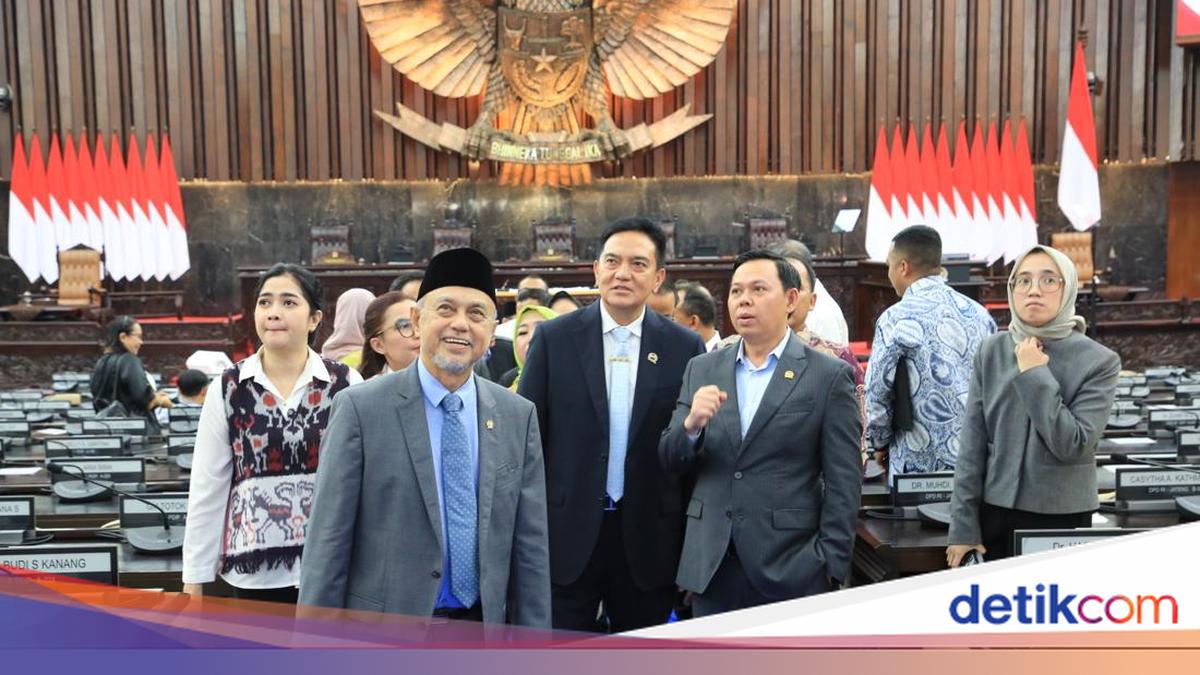
Director of Rumah Politik Fernando Emas assessed that the DPD RI successfully organised the 2026 MPR Annual Session and the Joint Session of the DPR RI and DPD RI (STSB) at the Parliament Complex in Jakarta yesterday. Fernando stated that the success of the session was evident not only in the state ceremonial aspects but also in the substance of the speech by DPD RI Speaker Sultan B. Najamudin, which raised the theme ‘Strong Regions, Sovereign Indonesia’.
“In my view, the DPD RI successfully organised the Joint Session well. More importantly, the forum was utilised to demonstrate the DPD’s position as a representation of the regions as well as an important part of Indonesia’s constitutional system,” Fernando said in his statement on Saturday (15/8/2026).
Fernando said Sultan’s speech delivered a clear message about the importance of strengthening the relationship between the central government and the regions. In his speech, Sultan emphasised that the centre and the regions are not two opposing parties, but rather a single entity in building Indonesia.
“This is a very important message. Strengthening the regions does not mean weakening the central government. On the contrary, strong regions will become the foundation for an increasingly sovereign Indonesia. This perspective makes the DPD’s position constructive,” Fernando explained.
He also highlighted the DPD RI’s success in bringing a number of regional agendas into the national legislative process. One of these relates to the Archipelagic Regions Bill, which the DPD has championed since 2017 and which is now included in the 2026 Priority National Legislation Programme.
“The Archipelagic Regions Bill is a concrete example that the DPD’s struggle does not stop at conveying aspirations. There is a long process that has resulted in progress at the legislative level. This certainly deserves appreciation,” he said.
Fernando assessed that President Prabowo Subianto’s support for the completion of the Archipelagic Regions Bill further demonstrates that the agenda long championed by the DPD has relevance to national development needs.
“If the government gives attention and support to the agenda championed by the DPD, this shows that the DPD is capable of bringing regional issues into the national policy space. The remaining task is to ensure the process is continuously monitored until it produces regulations that truly benefit the public,” Fernando said.
In addition to the legislative agenda, Fernando said the DPD RI also demonstrated its commitment to carrying out its oversight function regarding policy implementation in the regions. In his speech, the DPD stated it would oversee the implementation of laws relating to regional autonomy, central-regional relations, natural resource management, the state budget, education, as well as a number of environmental issues and digital transformation.
“The DPD’s function will be increasingly felt when oversight does not stop at the central level. When senators go to the regions, observe problems directly, and then bring their findings into national policy considerations, that is where the DPD’s strategic value becomes stronger,” he said.
Fernando also appreciated the collaborative approach shown by the DPD RI in its relations with the DPR RI and the government. According to him, relations between state institutions will be more productive when built through synergy to address public issues.
“This Joint Session should be seen not merely as an annual agenda, but as a space to strengthen consolidation among state institutions. The DPD, DPR and government have different functions, but their ultimate goal is the same: ensuring that the interests of the people and the regions are accommodated in state policy,” he said.
He expressed hope that the success of the 2026 Joint Session could become a momentum for the DPD RI to strengthen its institutional performance, particularly in championing regional aspirations through legislation, oversight, and inter-institutional cooperation.
“The success of this session should be a starting point for more concrete work. The DPD’s challenge going forward is to ensure that the ideas conveyed in the state forum are truly followed through into policy and that their benefits are felt by communities across all regions,” he concluded.