
Nyoman Parta Outlines Key Points of Newly Passed Agrarian Reform Law
The House of Representatives (DPR RI) has officially passed the Bill on Agrarian Reform Regulation into law. This raises questions regarding the specific provisions contained within the new regulation.
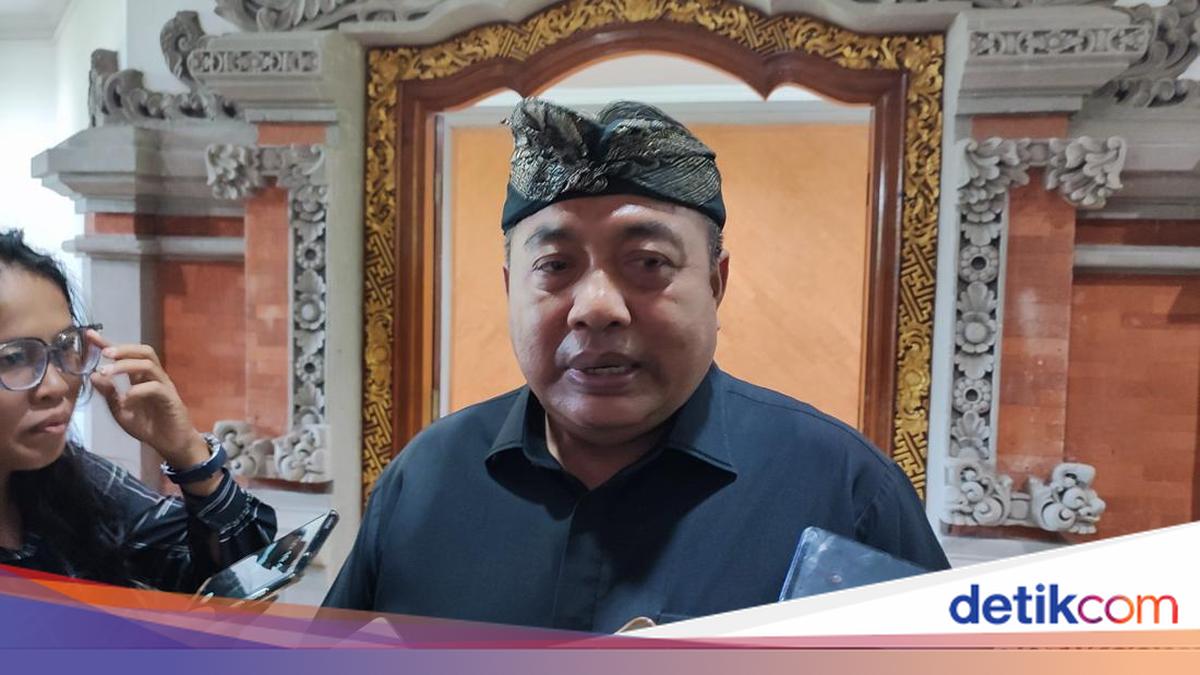
Nyoman Parta, a member of Commission III of the DPR RI, has detailed several key points within the Agrarian Reform Regulation Law. One of the primary focuses is the limitation of land control and utilisation, taking into account regional area size, population density, poverty levels, and land ownership inequality.
“The maximum limit also applies cumulatively to business entities and affiliated business entities, except for State-Owned Enterprises (BUMN), Regional State-Owned Enterprises (BUMD), and cooperatives. This limitation is intended to reduce land ownership inequality to a Gini ratio of 0.30,” stated Parta, who is also a member of the DPR RI Legislative Body (Baleg), in a written statement received on Tuesday (22/09/2026).
Parta noted that land encompassing entire small islands or those directly bordering the coast cannot be granted as a single unified right to one individual or legal entity. Further provisions regarding this matter will be regulated through government regulations.
Another significant point in the law concerns the objects of agrarian reform. Parta revealed that these objects include state land occupied by the community in good faith for 20 years, as well as community land that overlaps or conflicts with existing rights or permits.
Other objects of agrarian reform include community land in conflict with forest areas and state/regional assets; land rights or permits that exceed established limits; land from the obligation to provide a minimum of 20 per cent state land; replacement land for poor communities in disaster-prone or critical land areas; overlapping or conflicting transmigration land; abandoned land; land from unfulfilled land provision obligations; absentee land; newly formed land (tanah timbul); and land rights surrendered voluntarily.
Furthermore, the law regulates the subjects of agrarian reform. These include individuals, such as landless farmers or those with less than 0.5 hectares of land, tenant farmers, and agricultural labourers.
It also covers women and poor communities without land access, transmigrants involved in land conflicts, fishermen, fish farmers, fishery and aquaculture labourers, as well as communities who have lost land and livelihoods due to disasters or environmental damage. Beyond individuals, the subjects of agrarian reform also include community groups such as associations, unions, syndicates, and cooperatives, as well as indigenous communities.
“Subjects of agrarian reform are granted legal protection guarantees during the implementation of Agrarian Reform; they cannot be prosecuted criminally and/or sued civilly as long as the actions are carried out in good faith,” added Parta.
The PDIP politician added that the Agrarian Reform Regulation Law also mandates the formation of an Agrarian Reform implementation agency, which will operate under and be responsible to the President. Additionally, the law encourages the establishment of a supervisory board to ensure transparency, participation, accountability, and the effectiveness of agrarian reform implementation.
The DPR RI passed the Bill on Agrarian Reform Regulation into law during a plenary session at the DPR building in Senayan, Central Jakarta, on Tuesday (22/09/2026). The meeting was led by Deputy Speaker of the DPR, Sufmi Dasco Ahmad, accompanied by deputies Saan Mustopa and Cucun Ahmad Syamsurijal.
The Chairman of the Working Group for the Agrarian Reform Regulation Bill, Iman Sukri, stated that the regulation was agreed upon to resolve agrarian inequality issues in Indonesia. He emphasised that the legal product focuses on land ownership, use, and utilisation, as well as the resolution of agrarian conflicts.
“On that basis, the formation of the Bill on Agrarian Reform Regulation is a vital part of the state’s effort to address the root causes of agrarian inequality that have remained unresolved,” said Iman Sukri during the plenary session.
Source: jawawa.id (https://jawawa.id/newsitem/nyoman-parta-outlines-key-points-of-newly-passed-agrarian-reform-law-1790077893)
Originally published by detikBali (https://www.detik.com/bali/berita/d-8674474/nyoman-parta-beberkan-poin-penting-uu-refroma-agraria-yang-disahkan-dpr), translated from Indonesian