
Nyobeng becomes a cultural tourism magnet on the border
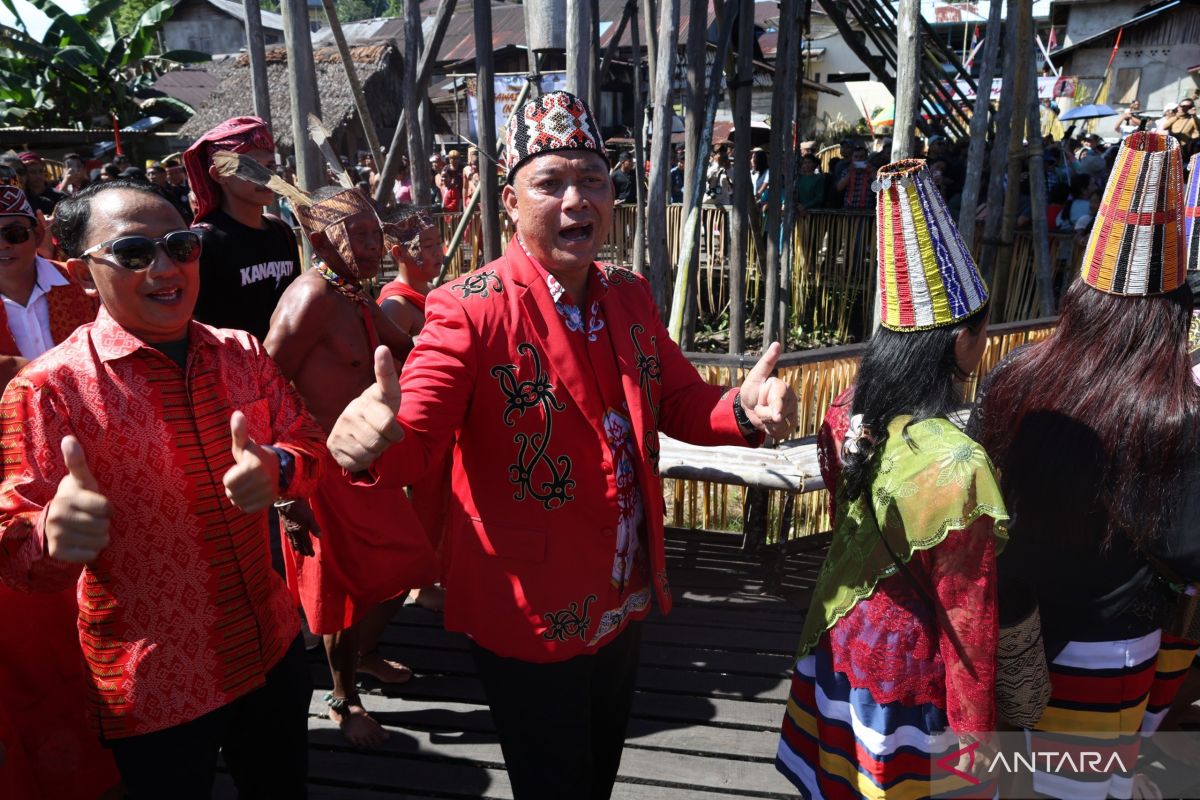
Pontianak (ANTARA) - Hundreds of Malaysians attended the Nyobeng tradition held by the Dayak Bidayuh community in Sebujit Hamlet, Hlu Buei Village, Siding District, Bengkayang Regency, an activity that has become a cultural tourism magnet on the West Kalimantan border. “This Nyobeng tradition continues to develop into a border cultural tourism attraction capable of drawing visitors from across regions and even abroad,” said Bengkayang Regent Sebastianus Darwis during the 2026 Nyobeng celebration at the Baluk Sebujit Traditional House on Monday. According to the Regent, the Bengkayang Regency government is targeting the area to become one of West Kalimantan’s premier cultural tourism destinations as well as a centre for the preservation of Dayak cultural heritage. Darwis stated that the tradition, passed down through generations, is not merely a customary ritual but also a cultural asset with strategic value for tourism development and the economy of communities in the Indonesia-Malaysia border area. “This activity must continue to be preserved because it is the identity of the Dayak Bidayuh community and a cultural wealth of West Kalimantan that can serve as a tourist attraction,” he said. The Nyobeng tradition is a culture inherited from the ancestors of the Dayak Bidayuh people and remains upheld to this day as part of the border community’s cultural identity. In its implementation, the culture serves as a momentum to strengthen the brotherhood of the Dayak Bidayuh community spread across Indonesia and Malaysia, while reinforcing cultural ties within the same ethnic group that have existed for hundreds of years. The Regent revealed that the local government plans to gradually develop the area, including completing various supporting aspects so that the area can evolve into a national-scale cultural tourism destination. He noted that the Baluk Traditional House holds high historical and cultural value. A replica of the traditional house has even been built in the Taman Mini Indonesia Indah complex as a representation of West Kalimantan’s Dayak Bidayuh culture. Darwis is optimistic that the planned opening of border access in the coming years will further increase tourist visits to the Siding and Sebujit areas. “We want this area to become a premier cultural tourism destination in West Kalimantan that can provide economic benefits to the local community without abandoning the customary and cultural values inherited from our ancestors,” he said. Beyond cultural preservation, the Regent also emphasised the importance of strengthening the community’s economy through agriculture, food security, and tourism village development. He stated that culture and economic development must go hand in hand so that indigenous communities not only become guardians of tradition but also directly benefit from the growth of the tourism sector. He expressed hope that collaboration between the regional government, traditional leaders, the community, and various parties can continue to be strengthened to make the Bengkayang border area a showcase of West Kalimantan’s culture. At the same location, the Chair of the 2026 Nyobeng Committee, Gunawan, said this year’s theme was “Nyobeng as an Ancestral Heritage, Rooted in Tradition and Growing in Togetherness.” He explained that the core values passed down through this tradition are mutual cooperation, brotherhood, respect for ancestors, and cultural preservation amidst changing times. “The aim of this activity is to strengthen the bonds of brotherhood among the Dayak Bidayuh community in both Indonesia and Malaysia, as well as to increase the community’s love for regional culture as part of the national identity,” he said. This year’s Nyobeng celebration received widespread attention, including from Dayak Bidayuh communities and kindred groups from Malaysia. The committee recorded at least 420 guests from various regions attending the event, including delegations from Kuala Lumpur and Sarawak, Malaysia. The presence of international guests is seen as proof that Dayak Bidayuh culture has an appeal that transcends national borders. In addition to the customary rituals, visitors were also treated to various cultural attractions unique to the Dayak Bidayuh community, ranging from traditional processions and performances to the iconic pole-climbing attraction. A representative of the Bengkayang Regency Dayak Customary Council assessed that Nyobeng has become an important cultural heritage that must be continuously preserved and introduced to the younger generation. “This activity belongs to all of us and must be preserved so that it remains alive and can be enjoyed by future generations,” he said. The Bengkayang Regency Government is also focusing on the development of the Baluk Sebujit Traditional House area as a centre for Dayak Bidayuh cultural tourism.