
Nvidia Has Given Up, CEO Opens Up About the Real Situation
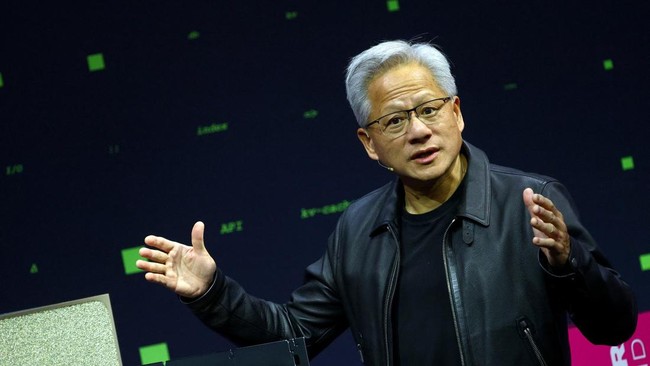
Nvidia has apparently given up and the CEO is openly admitting the true state of affairs as it faces uncertainty in China. In Jakarta, CNBC Indonesia reports that Nvidia’s position in the Chinese AI chip market has deteriorated, with the local Huawei now in control. The situation has been triggered by US policy that restricts exports of AI chips to China. Rather than weakening China, this has motivated local players, including Huawei, to develop AI chips independently.
In various occasions, Huang has often warned about the risk of China’s progress toward US dominance in chip and AI development. Although US President Donald Trump has softened toward China somewhat, the progress of the chip industry in Xi Jinping’s China now seems less dependent on US technology.
Huang’s latest comments come as Nvidia again reported robust performance, with revenue jumping 85% to US$81.62 billion in early 2026, compared with the previous period. The company also announced a stock buyback programme worth US$89 billion, and increased dividend payments.
Although Nvidia continues to perform strongly and remains dominant in the AI chip market, Huang laments the loss of the Chinese market.
“Demand in China is very large,” Huang told CNBC International. “Huawei is very, very strong. They are posting record numbers. They seem set for an astonishing year. Their local chip ecosystem is working quite well, because we have left that market,” Huang added.
“In essence, we have been heavily exposed in the China market against Huawei,” Huang said, according to CNBC International, on Thursday (21 May 2026).
The remarks underscore how Washington’s tight restrictions on exporting advanced AI chips have accelerated Beijing’s push toward chip self-sufficiency.
As background, the China market once contributed at least a fifth of Nvidia’s data centre revenue. However, the company has effectively been sidelined after the Trump administration told Nvidia in April that it would need a licence to export chips to China and several other countries.
In an interview with CNBC International, Huang took a cautious stance on the prospect of reopening the Chinese market in the near term, saying Nvidia has told investors to “not expect anything” regarding approvals to sell advanced chips to the country.
“I don’t have any expectations. That’s why we have provided guidance, numbers, and projections to all our analysts and investors not to expect anything,” Huang said.
However, he hinted that Nvidia remains eager to get back to serving the Chinese market if conditions improve.
“We would be very happy to serve the Chinese market,” Huang said. “We have many customers there, many partners there, and we have been there for 30 years,” he added.
Huang attended the meeting on short notice during President Trump’s talks with Xi Jinping in Beijing last week. Nevertheless, the visit did not clarify whether Nvidia’s H200 chip would be allowed in the country.
Reuters reported last week that several Chinese firms had received approval from the US Department of Commerce to buy the H200 chip, including Alibaba, Tencent, ByteDance, and JD.com.
A US trade official said that chip export controls were not part of the discussions during last week’s talks with China. This indicates significant loosening of the restrictions on H200 sales, which are still likely a long way off.
Nvidia has also expanded its supply chain aggressively, which Huang described as a major growth opportunity linked to the broader AI economy.
“The notion of a company many times larger is not impossible,” Huang said. He said Nvidia was making heavy investments across five layers of the AI industry cake, comprising energy, chips, infrastructure, models, and applications.
Huang said the top priority for Nvidia’s ever-growing cash pile is to support suppliers amid the surge in demand.
“As we grow by hundreds of billions of dollars at once, we must support our supply chain so they can support our growth,” he said.
(fab/fab) Add as a preferred source on Google [Gambas:Video CNBC]