
NVIDIA CEO Discusses Jobs and 4 Simple Principles to Face the AI Revolution
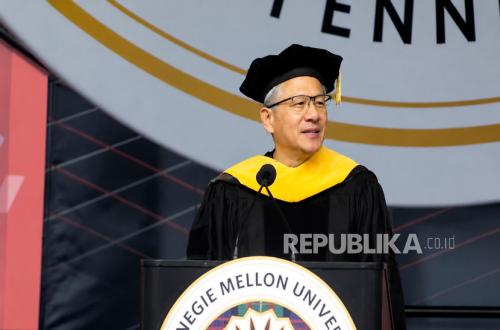
REPUBLIKA.CO.ID, JAKARTA – Amid growing concerns that artificial intelligence will replace humans, NVIDIA founder and CEO Jensen Huang delivered a different message to the Class of 2026 graduates at Carnegie Mellon University on Monday (11/5/2026). In his commencement address, Huang stated that today’s generation is entering one of the most pivotal moments in human technological history. According to him, the world is not heading towards the end of human jobs, but rather the beginning of new industries and a new era of science and discovery. Huang compared the current situation to the time when the personal computer revolution began developing decades ago. The difference, he said, is that the AI revolution will be far greater. If computers and the internet changed the way humans work, AI will transform nearly the entire foundation of industries. “Because intelligence is the foundation of every industry, every industry will change,” Huang said, as reported by NVIDIA’s official blog and Axios. However, interestingly, Huang does not view AI merely as a technology for programmers or computer scientists. He described AI as a massive engine that will revive broad industrial sectors. The explosion in building data centres, chip factories, energy infrastructure, and new technology facilities will create a huge demand for technical workers and field labourers. Therefore, according to Huang, the AI era will also be a crucial time for technicians, electricians, construction workers, plumbers, and ironworkers. In his view, AI is not just a digital revolution, but also a new industrial revolution. This is where Huang’s speech feels different from many other technology narratives. While some industry figures warn that AI will eliminate human jobs, Huang chooses to emphasise its transformative side. He acknowledged that every technological revolution has always given rise to fears. However, history, he said, shows that societies able to adapt gain the greatest opportunities. For Huang, the main issue is not whether AI will arrive or not, but whether humans participate in shaping it or merely become spectators.