
Nutritionists say MBG effective in breaking stunting chain
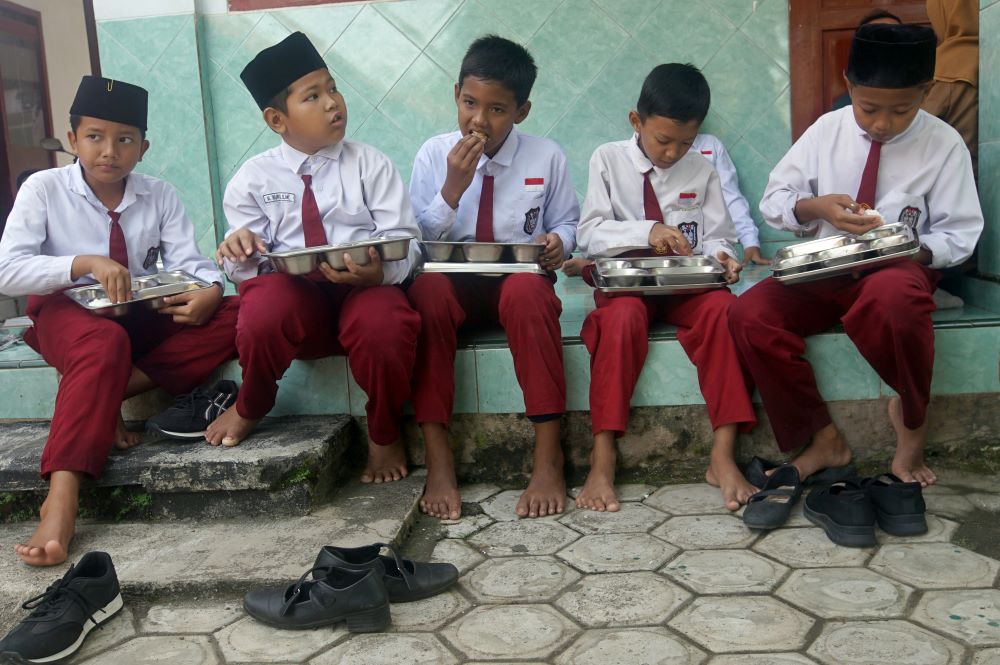
The Free Nutritious Meals (MBG) programme has proven to have a significant impact on millions of Indonesian children. Beyond addressing school nutrition, the programme is designed as a strategic government initiative to tackle structural economic issues in vulnerable families that contribute to stunting.
This was stated by Lesda Lybaws, an IPB nutrition expert and Central Board member of the IPB Alumni Nutrition Department, on Friday (29 May). Lesda agreed that MBG represents a tangible long-term national investment directly addressing the root causes of societal issues.
“Stunting in Indonesia is like an iceberg phenomenon with multidimensional roots, from dietary intake, family economics, to poor sanitation causing recurrent infections in children,” she explained.
According to Lesda, MBG comprehensively cuts this chain of ongoing issues. The programme now targets not only school-age children but also the ‘3B’ group: toddlers, nursing mothers (busui), and pregnant women (bumil) to address the critical 1,000-day window of early life.
Addressing Economic Vulnerability
In line with Lesda, behind the lunch provision narrative, MBG serves as a bridge to address family economic vulnerability. Tri Nuryanti, Director of Food Scarcity Control at the National Food Agency (Bapanas), revealed that 81 districts/cities remain food insecure. In these areas, poor families often allocate at least 65% of their income to food expenditure.
“With the accessibility bridge of MBG, parents’ food expenditure burdens decrease dramatically. MBG is highly effective in tackling food insecurity while elevating family economic status, as remaining income can be redirected to education or other health needs,” she said.
In other words, MBG helps improve the economic structure of impoverished families trapped in a poverty cycle due to high basic needs costs, which have long impacted their health and quality of life.
Quality Improvement
Despite its strong vision, the MBG programme requires continuous oversight to improve on-ground implementation quality. Experts note the government is seriously transforming from a mere ‘cook, pack, deliver’ concept to a measured, safe, and empowering food system governance.
Lesda praised the government’s focus on clear technical Standard Operating Procedures (SOPs) in public kitchens to mitigate food safety risks. ‘Our core principle is that distributed food must be halal, safe, and deliver positive outcomes. Ongoing evaluations are making the MBG programme more robust and refined,’ she stated.
For example, in Gorontalo Province, North Sulawesi, the operations of 117 Nutrition Service Units (SPPG) are closely monitored. The National Nutrition Agency (BGN) does not hesitate to suspend kitchens violating standards, whether related to wastewater management (IPAL) or raw material quality.
This was confirmed by Zulkifli Taluhumala, Gorontalo Province SPPG Coordinator. ‘We once found mouldy bread given to SPPG. We immediately reported it to leadership and shut down the kitchen. It was a clear SOP violation,’ he stated.
However, Zulkifli explained that every evaluation aims to refine the programme for the future. ‘Nothing is perfect; there are still shortcomings on the ground. But we learn from imperfections to improve services significantly,’ he added.
Distribution Radius
Alongside strict monitoring, each kitchen has a maximum 5-kilometre distribution radius to ensure food arrives fresh and warm at children’s tables. Moreover, the MBG ecosystem is now integrated to empower local farmers and SMEs near schools.
Concurrently, Bapanas ensures menus are tailored to local food resources and strictly monitored by Regional Food Safety Competent Authorities (OKKPD). Raw materials are tested to be free from pesticide residues and harmful preservatives.
In Gorontalo Regency, MBG kitchens are actively sourcing local harvest corn and partnering with the Fisheries Department to supply locally caught tuna fillet as the primary protein source.
This cross-sector synergy ensures the Free Nutritious Meals programme not only meets children’s nutritional needs but also builds food autonomy, empowers local economies, and cultivates a globally competitive Golden Generation 2045.