
Nutrition Expert Highlights Disadvantages of Overclaimed Fortified Rice Consumption
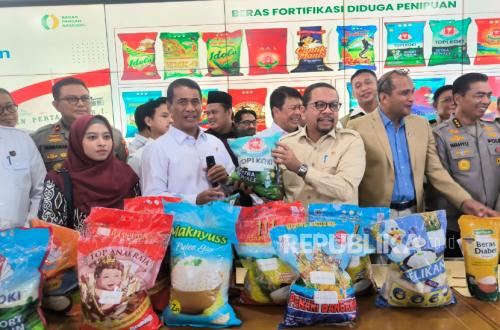
The Indonesian Ministry of Agriculture recently revealed findings regarding 2-5 brands of fortified rice circulating in the market that are suspected of not meeting the standards or nutritional content stated on their labels. Fortified rice is specifically intended to increase micronutrient intake in the population through daily rice consumption.
Regarding the health implications for consumers, particularly vulnerable groups, consuming fraudulent fortified rice, Professor Ali Khomsan, a nutrition expert from IPB University, stated that discrepancies in fortificant content do not necessarily cause immediate health impacts. However, such conditions mean that micronutrient issues may not be adequately addressed.
Consumers who purchase this rice at a higher price, believing the product has been fortified, also face potential financial loss if the fortificant content is lower than advertised. “If the fortificant content is insufficient or inaccurate, there is no direct health impact. However, micronutrient issues may not be properly resolved because consumers are deceived into buying expensive rice with low fortificant levels,” Professor Ali said on Wednesday.
According to Professor Ali, nutrients that can be added as fortificants in rice include Vitamin B, zinc, iron, and others. Consequently, consumers purchasing fortified rice expect to receive additional nutrients in accordance with the packaging labels and applicable standards.
The challenge lies in the fact that consumers cannot verify the authenticity or accuracy of fortificant content through visual inspection alone. Professor Ali noted that fortified rice generally possesses the same taste and physical appearance as regular rice.
“Usually, the taste and physical appearance of fortified rice and regular rice are the same, with no striking differences. Therefore, it is difficult to distinguish them visually,” said Professor Ali.
To verify the accuracy of fortificant content, laboratory testing is required. This same principle applies to salt fortified with iodine.
Therefore, government oversight of fortified rice products in the market is crucial. Professor Ali emphasised that the government has a responsibility to control the circulation of fortified rice, including through random spot checks on circulating products.
“To know if the fortification claims are accurate, only laboratory testing can suffice. It is the government’s responsibility to control the circulation of fortified rice in the market through spot checks and other means so that consumers are not disadvantaged,” he added.
As previously reported, the Minister of Agriculture, who also serves as the Head of the National Food Agency, Andi Amran Sulaiman, disclosed findings regarding 25 brands of rice marketed as fortified rice but suspected of failing to meet the standards and contents listed on their labels. These 25 brands failed to meet the quality and content requirements of SNI 9314:2024 for fortified rice kernels and SNI 9372:2025 for fortified rice. The brands suspected of violations include WFO, TKS, IMF, NUR, TKL, HOK, BRV, IMR, IHJ, IAK, PBX, GNB, DTR, TKR, WJK, PLK, MKY, IMC, PTK, ARP, ARN, SKM, GNM, TAR, and CMS.
In response to these findings, the government has taken firm action by ordering product recalls, revoking permits, and initiating legal processes against the parties involved. Amran explained that these findings are a serious concern for the government because rice is a strategic food commodity affecting the wider public. The government aims not only to ensure rice availability but also to guarantee the quality and safety of products consumed by the public.
“First, we have ordered a recall; second, we are revoking the permits; third, we are proceeding with legal action,” Amran stated in a press release.
He explained that the findings originated from inspections of products marketed as fortified rice. Based on testing results from certified laboratories, including IPB Bogor, BRMP, Saraswasti Indo Genetech (SIG), and Eurofins Angler Biochemlab, products were found that allegedly did not meet the fortification content stated on their labels.
“After we checked in the laboratory, it turned out they did not match the labels. This is what we are addressing,” said Amran.
The government noted that 25 brands are suspected of fraudulent misrepresentation of content. Minister Amran added that fortified rice has a specific purpose: to assist in meeting the nutritional needs of vulnerable groups, including the poor, pregnant and breastfeeding women, toddlers, and those requiring nutritional support.
“Fortification is not intended to replace premium rice. This fortification is for vulnerable groups, stunting prevention, the poor, pregnant women, breastfeeding mothers, and toddlers. If it is sold at a very high price, it is certainly not hitting the target,” said the Minister.
Source: jawawa.id (https://jawawa.id/newsitem/nutrition-expert-highlights-disadvantages-of-overclaimed-fortified-rice-consumption-1789563628)
Originally published by Republika (https://ameera.republika.co.id/berita/tlgi92425/pakar-gizi-beberkan-kerugian-konsumsi-beras-fortifikasi-overclaim), translated from Indonesian