
Nutri Level Policy Deemed Ineffective in Identifying Unhealthy Packaged Foods
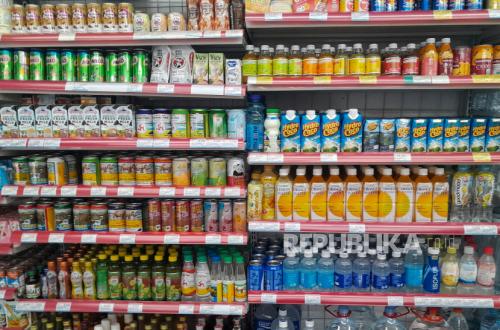
REPUBLIKA.CO.ID, JAKARTA – The policy of displaying nutritional labels in the form of Nutri Level is deemed ineffective in identifying unhealthy packaged foods when compared to the evidence-based Nutrient Profile Model (NPM), including the WHO model and best practices. This refers to the latest study from the Center for Indonesia’s Strategic Development Initiatives (CISDI) together with the Center for Health and Nutrition Education, Counseling, and Empowerment (CHeNECE).
For this study, researchers analysed 8,077 samples of packaged food and beverage products from eight supermarkets and minimarkets in Medan, Jakarta, Surabaya, and Makassar. Researchers then evaluated the nutritional content and food composition through various models, including the WHO South-East Asia Regional Office model (WHO SEARO), the WHO Pan American Health Organization (PAHO), the best practice model, and Nutri Level.
The results showed that based on assessments from the WHO and best practice models, around 9 out of 10 packaged foods in Indonesia are unhealthy and need to be restricted through food policy implementation. The WHO SEARO model identified 90.1% of products as needing consumption limits, while the PAHO model reached 90.7%.
The best practice model, which combines various international approaches, showed an even higher figure of 94.6%. In contrast, the Nutri Level threshold applied in Indonesia only classifies 72.9% of products in the least healthy category (Category D).
“These findings prove that the Nutri Level threshold is not yet optimal compared to evidence-based NPM in identifying unhealthy foods. The accuracy of the threshold is crucial in determining the effectiveness of the policy,” said Director of CHeNECE, Trias Mahmudiono, in a virtual media discussion monitored in Jakarta on Tuesday (28/4/2026).
A stark difference is also evident in the category of packaged sweetened beverages (MBDK), which is a policy priority. Nutri Level only identifies 43.6% of products that need regulation, far below the results of the WHO SEARO model (94.2%), PAHO (92.0%), and best practice model (97.4%).
According to researchers, this occurs due to differences in sugar measurement methods. Nutri Level uses total sugar but excludes lactose in dairy products, and sets a relatively higher threshold for Category D. Meanwhile, other models use stricter approaches, including the calculation of free sugars based on energy density.