
Nusron Assures Industrial Zone Land in Indramayu Not Included in Protected Rice Fields
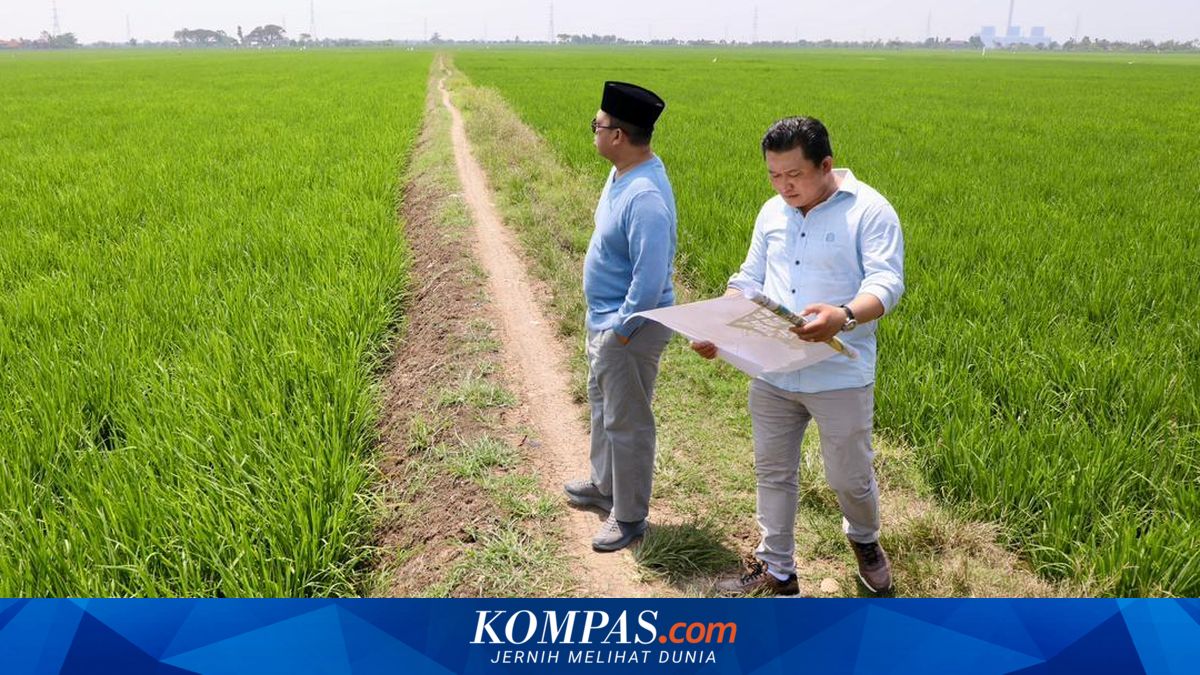
The precision in aligning industrial needs with food security poses a challenge for spatial planning policies in regions. One area currently under strict monitoring is Indramayu Regency in West Java. As one of the nation’s key rice granaries, Indramayu is now projected to become a new engine of economic growth through the development of industrial zones. Field inspections are crucial to ensure that economic expansion does not infringe on protected green areas safeguarded by the state. Plans to convert land in Indramayu are directed towards supporting the national industrial downstreaming programme. However, Indramayu’s status as a primary supporter of the country’s rice production means that every inch of land change must undergo rigorous scrutiny. The ministry’s primary focus is to ensure that the industrial zone land does not encroach on Protected Rice Fields (LSD). Field validation is necessary to verify whether the land requested by investors falls within the Sustainable Food Agriculture Area (KP2B) map or not. “We want to confirm whether that land is part of the KP2B area or not. We want to prevent excessive conversion of rice fields and to maintain and support the food security programme,” said Nusron in Indramayu on Sunday (19/04/2026). The classic problem of land function conversion stems from overlapping spatial planning maps between central and local governments. To minimise such risks, the Ministry of ATR/BPN applies a measurable cause-and-effect principle. This step includes intensive coordination with technical agencies at the provincial and regency levels. Legal certainty for investors must go hand in hand with the security of the agricultural ecosystem. “To ensure spatial planning compliance, we will also coordinate with the Public Works Agency (PU) handling spatial planning or the relevant provincial agency,” Nusron emphasised.