
Nusantara Honey Goes Global: BeeMa Honey Boosts Beekeeper Welfare
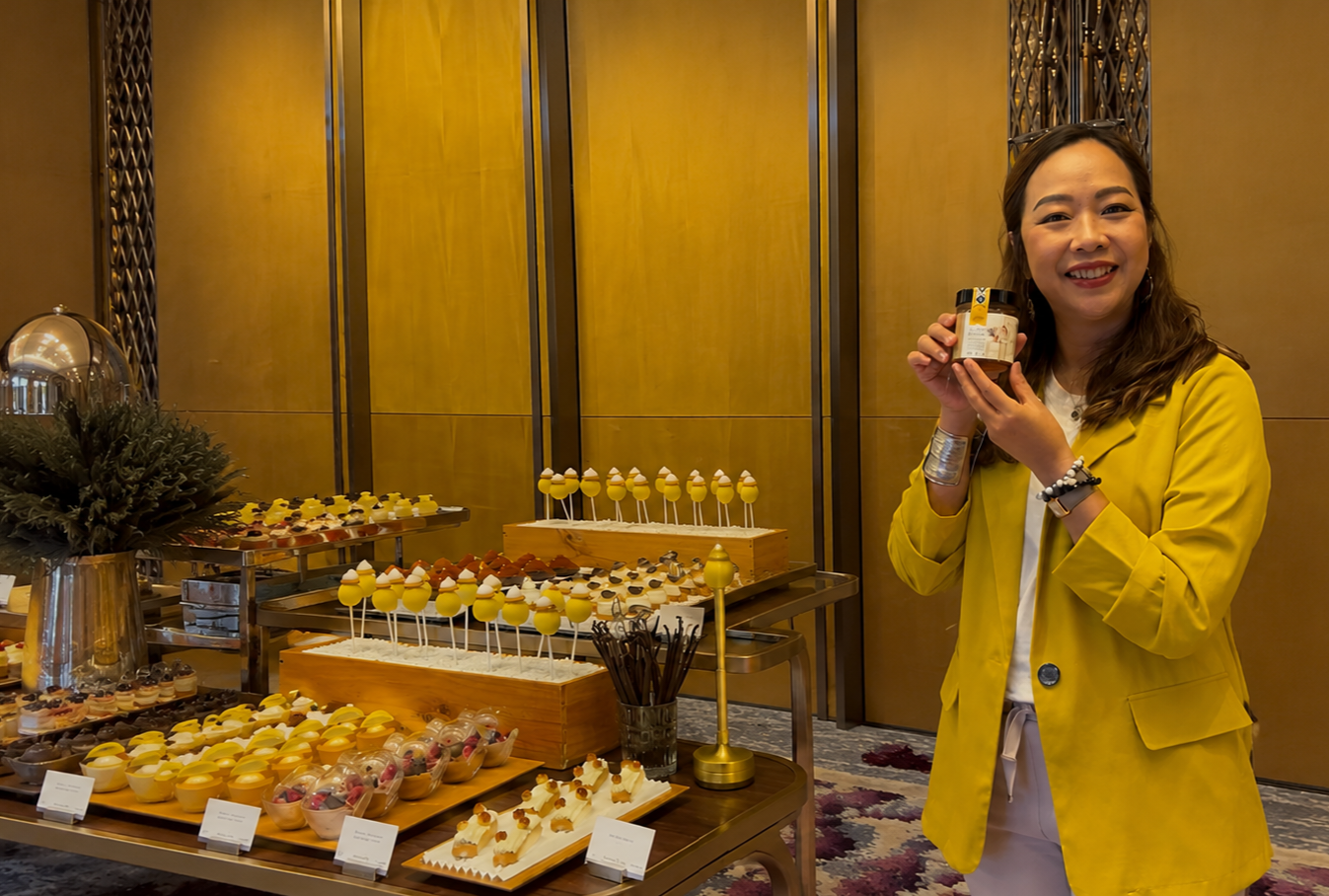
From the hands of beekeepers in various corners of Indonesia, Nusantara honey is finding a place in the international market. Through BeeMa Honey, a premium artisan honey producer established in 2017, the richness of local honey is not only being introduced abroad but also serving as a pathway to improve the welfare of beekeepers. In its efforts to penetrate export markets, BeeMa Honey consistently mentors dozens of beekeepers to produce high-quality honey through sustainable cultivation practices. BeeMa Honey’s journey to expand its market globally has also been supported by PT Bank Rakyat Indonesia (Persero) Tbk, or BRI, through various development programmes.
Starting from her fondness for consuming honey, BeeMa Honey owner Fransisca Natalia Widowati observed an irony in the domestic market. At the time, imported honey products dominated shop shelves, while high-quality local honey remained largely unknown to the public. “Mostly it was imported honey, and when you looked at the local honey market, the players were always the same,” she said during an interview in Tangerang, Banten. Fransisca admitted to being highly selective about the products she consumed. She noted that honey is a food product susceptible to adulteration or falsification, requiring careful attention to ensure its quality and authenticity. Her personal experience dealing with acid reflux, or GERD, further motivated her search for truly pure and trustworthy honey. “One of the benefits of honey is to relieve GERD. But we cannot just consume any honey,” she said.
In her search for pure honey, Fransisca visited several production centres across Indonesia. During a visit to Pati, Central Java, she discovered that local honey possessed unique flavour characteristics and quality on par with foreign products. This experience inspired her to start a business that would elevate the potential of Nusantara honey. Through BeeMa Honey, Fransisca introduced the concept of artisan raw honey, which is raw honey produced while preserving its authenticity and natural quality. She explained that the term refers to presenting Indonesian honey with minimal processing, so its rich flavour and natural content remain intact. “Our products are fundamentally original. We call it raw honey because the raw honey is not heated, so the good contents like vitamins, enzymes, and nutrients are still there,” she clarified. She believes Indonesia has enormous potential to produce high-quality honey, yet the public has been more familiar with manuka honey from New Zealand or Australia than local varieties. Starting from this conviction, BeeMa Honey emerged to fill the premium local honey segment, which was scarcely available in the domestic market at the time.
BeeMa Honey was officially incorporated as a limited liability company in 2019. The name BeeMa itself is inspired by the character Bima from Javanese wayang stories. “One of the five Pandawa brothers who is always a symbol of strength is Bima,” said Fransisca. For her, Bima represents not only strength but also honesty and integrity—values she aims to embody through BeeMa Honey. “Bima is very honest. Just like our honey, it is what it is. There are no mixtures, and we are transparent to all stakeholders,” she said. The name BeeMa also carries another meaning: ‘be my honey’. Fransisca hopes that anyone who consumes BeeMa Honey can become as strong as Bima.
Behind its business growth, BeeMa Honey actively mentors groups of beekeepers in various regions. Fransisca observed that these farmers had previously received little attention. “They struggled to sell on their own. The goods were cheap, so they ended up selling in bulk,” she said. BeeMa Honey then gathered groups of farmers and provided guidance on sustainable beekeeping practices. “So we mentor them to produce the best honey,” said the 50-year-old entrepreneur. The education provided covers harvesting techniques, honey storage, and understanding the importance of bees as pollinators for the agricultural ecosystem. “We also try to educate them on how beekeepers can run sustainable practices,” she explained. Currently, BeeMa Honey mentors around three groups of beekeepers spread across Sumatra, Central Java, and East Nusa Tenggara (NTT). “About 30 farmers we mentor are spread across various regions,” she stated.
The mentoring provided by BeeMa Honey has had an impact on improving the welfare of beekeepers. They are also taught sustainable harvesting practices, especially for forest honey. “We teach them how to do this sustainable harvesting,” she said. In this practice, farmers only take a portion of the honey and leave about 30% of the comb so the bee colony can continue to thrive. “So we teach them so that the bees do not have to start from scratch again to make honey,” she explained. As a result, the production capacity of the farmers has increased significantly. Additionally, they gain market certainty through cooperation contracts with BeeMa Honey. “They can employ more people and produce more honey,” she emphasised. Fransisca noted that some farmers have even managed to increase their production yields up to threefold compared to before. The commitment to sustainability is also realised through the ‘Save the Bees’ movement. BeeMa Honey collaborates with several owners of organic, pesticide-free land to create safe habitats.