
Nusantara Battery drives self-reliance in ASEAN battery ecosystem
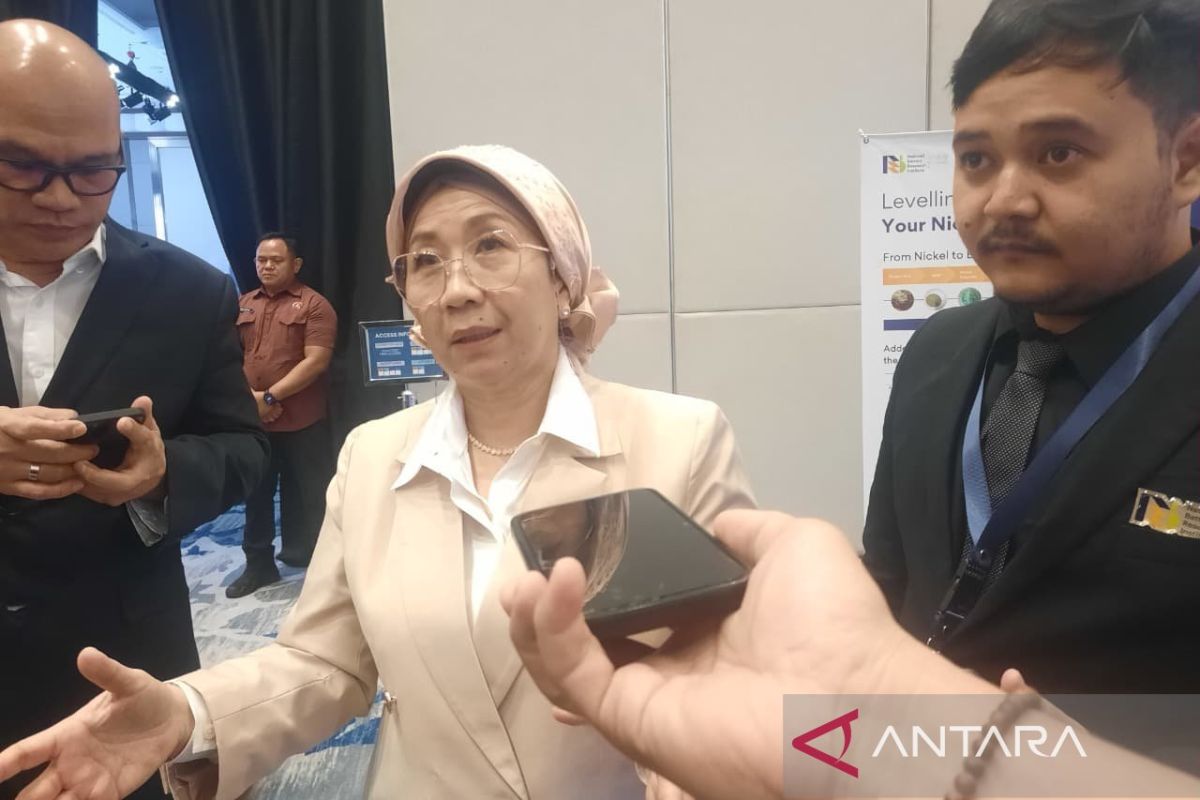
Jakarta (ANTARA) - Cooperation between Indonesia and Malaysia is now being directed towards developing a battery ecosystem in Southeast Asia, one of which is through the development of the Nusantara Battery.
Professor at the National Research and Innovation Agency (BRIN) and Founder of the National Battery Research Institute (NBRI), Evvy Kartini, said that the collaboration is part of efforts to build battery industry capabilities in ASEAN independently.
“Indonesia has the potential to contribute from the battery materials side, particularly cathode development. Meanwhile, Malaysia has pilot facilities that can be used to produce battery cells. We would be happier if we could also make battery cells here,” said Evvy in Jakarta on Wednesday.
She continued that the development of the Nusantara Battery is carried out by sending materials developed in Indonesia to Malaysia to then be processed into batteries.
The product has even been introduced in Malaysia together with the relevant ministry in that country.
Furthermore, Evvy stated that this cooperation is not only related to battery production, but is also an initial step to build a battery supply chain involving ASEAN countries.
“We also want to try how ASEAN is not dependent as well. So we have our own ASEAN battery,” she said.
This cooperation is based on ASEAN having a fairly large electric vehicle market, so it can become a basis for regional battery technology development.
However, to reach that stage, strengthening research and production capabilities in each country is needed.
One step considered important is building a pilot plant facility in Indonesia.
“For the pilot, we do not need to immediately make gigawatt hours. We need bridging between this material and there,” she said.
Through the pilot facility, technology that has been developed in the laboratory can be tested on a larger scale before entering the industrialisation stage.
Indonesia can also learn the commercial technology used by partners, then develop it further through national research.
Evvy assessed that this approach needs to start being applied by Indonesia so that it does not only play a role as a raw material supplier, but also has the ability to produce battery cells independently.
This Indonesia-Malaysia collaboration is also part of a broader agenda to strengthen ASEAN battery technology capabilities.
By combining resources, research, production facilities, and regional markets, ASEAN is expected not only to become an electric vehicle production base, but also to be able to build its own battery technology.