
Nusakambangan Eel Farming Initiative Boosts Cilacap's Economy
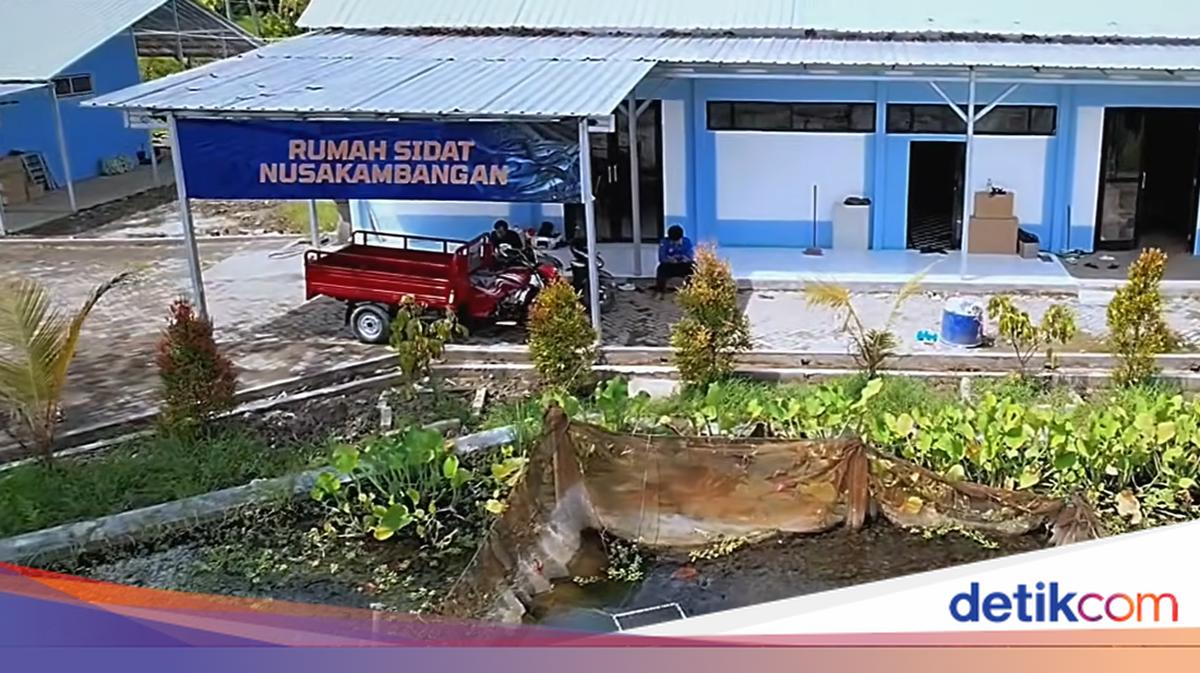
Eel farming is one of the rehabilitation activities for inmates at Nusakambangan Island in Cilacap, Central Java. This aquaculture food security initiative has had widespread benefits for communities around the ‘prison island’, which is transforming into an ‘island of self-sufficiency’.
The ominous stigma surrounding Nusakambangan Island has begun to fade since Minister of Immigration and Corrections (Imipas) Agus Andrianto was appointed by President Prabowo in October 2024. Minister Agus has designated idle lands on the island as productive areas, aligning correctional duties with the government’s Asta Cita mission of food security and micro, small and medium enterprise (MSME) development.
Eel farming activities include pond construction, feed production, and raising fry until harvest. The eel farming zones now support local shop owners, net makers for fish ponds (waring), and fishing communities along Java, Sumatra, and Sulawesi coasts.
‘It’s really helped the maritime business community, like me—I can now work and support my family. I hope the programme continues so people can benefit and earn a living, especially since I’m a tailor,’ said Komarudin, a waring net maker, on Monday (1/6/2026).
Another Cilacap resident, Jasman, who also makes nets, echoed this. Before the eel ponds were established, he often had no work.
‘I make these nets to support my family. There used to be no work at home, but now there’s something to do to feed my children,’ Jasman said.
Yovieta Surabila, from Cilacap, has also benefited from the eel farming initiative. Amid job competition, she was appointed as Technical Administration Head for Nusakambangan’s eel farming.
‘I’m the eel farming administrator here, responsible for water quality management—regular daily checks to maintain controlled conditions. I also handle daily feeding schedules in the morning, afternoon, and evening,’ she explained.
‘Additionally, I manage data on fry intake and growth stages,’ she added.
Ade Rohman, Head of Glass Eel Fishermen, said the demand for eel fry from Nusakambangan’s farms has motivated local fishermen to go to sea. Daryanto, Head of Wild Eel Fishermen, noted that prior to the programme, eel fry sales were inconsistent, but now they can meet daily needs.
‘This programme greatly assists our fishermen in securing their catches,’ said Ade.
‘Our coastal community fishermen feel supported by this initiative. Before, eel fry sales were sporadic—sometimes sold, sometimes not. Now there’s a buyer, helping us meet our needs,’ Daryanto added on another occasion.
Turini’s shop has also seen increased business due to the eel farming activities. Customers visiting the farm and staff now frequent her stall.
‘Alhamdulillah, with the Minister’s programme, our community now has daily work and income for our families,’ Turini said.
‘Thanks to this initiative, our small shop has more visitors as tourists and staff come here, buying from us,’ she added, wearing a dark red blouse and grey hijab.
As a flagship food security programme on Nusakambangan, eel farming serves as a learning and social reintegration tool for inmates. Currently, 50 inmates from Nusakambangan Open Prison and Nirbaya Prison (minimum security status) operate the eel ponds.
The involvement of inmates from these two prisons is due to Batu Class I Prison being a super maximum-security facility. Therefore, Batu Prison’s work activity officers (giatja) focus on supervision and escort duties for inmates working at the ponds.
Beyond inmates, the programme employs 20 non-inmate workers: four administrative staff and 16 field workers handling operational activities.
Additionally, three former inmates are involved, demonstrating that rehabilitation continues post-sentence through job opportunities aiding social reintegration.
Looking ahead, Nusakambangan’s eel farming output aims to expand into wider markets. Alongside meeting domestic demand via Japanese restaurant networks, products are being prepared for export, particularly to Japan, which has high demand for the commodity.
‘Thus, eel farming on Nusakambangan is not only a rehabilitation tool but also a potential driver of new economic growth, delivering layered benefits to Cilacap and surrounding communities,’ Minister Agus concluded.