
Nusakambangan: A Laboratory for Correctional Transformation
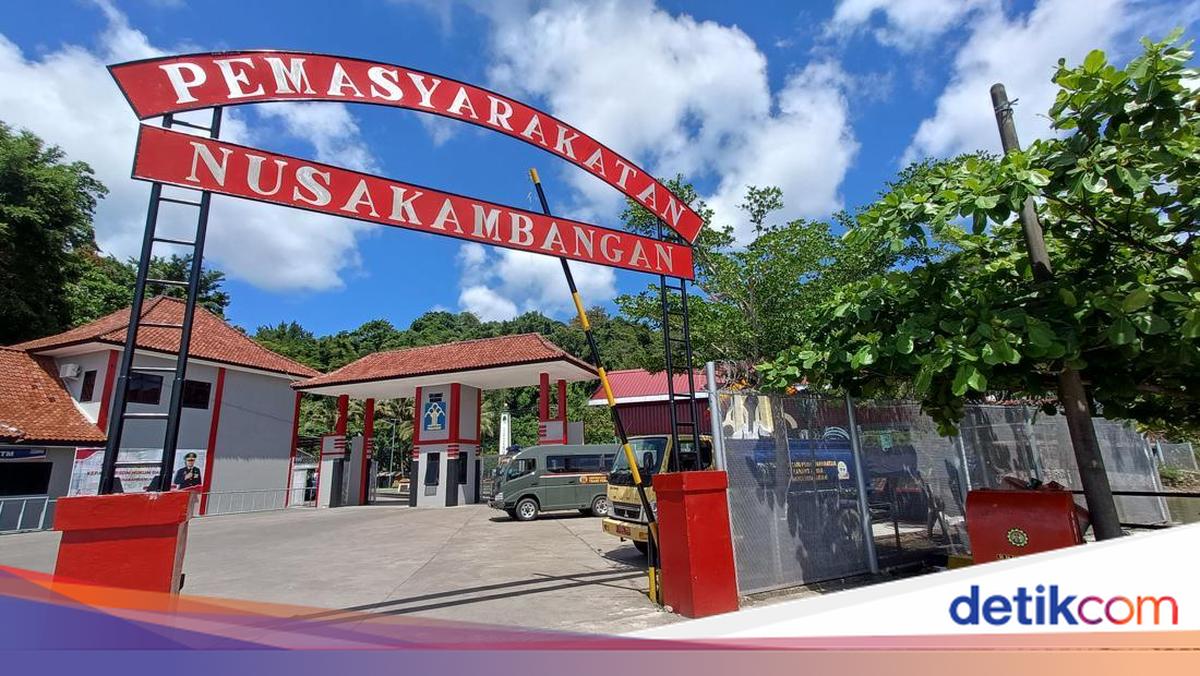
Nusakambangan has long been synonymous with the harshest face of Indonesia’s correctional system. The island is closely associated with maximum security, high-risk inmates, layered surveillance, and complex security issues. In public perception, Nusakambangan is often positioned as a closed and repressive detention space, far removed from any notion of productive rehabilitation. However, recent developments reveal a different face. Behind its still stringent security function, Nusakambangan is developing into a productive space oriented towards empowering inmates. This shift raises an interesting policy question: how can an area synonymous with maximum security evolve into a food security hub and a model for productive rehabilitation? The answer does not lie in a single factor. The new dynamics in Nusakambangan are born from a convergence of policy vision, sharp institutional analysis, bureaucratic execution capacity, and the ability to activate resources that were previously underutilised.
Institutionally, Nusakambangan has undergone a significant functional shift over the past year. Previously known more as a placement location for a relatively limited number of inmates in specific categories, this dynamic changed with the strengthening of correctional policy direction under the leadership of Minister of Immigration and Corrections, Agus Andrianto. He positioned Nusakambangan as a strategic node for handling high-risk inmates while simultaneously developing productive rehabilitation. This strengthening of the security function places Nusakambangan as a centre for handling high-risk category inmates, particularly those still indicated to be controlling illicit drug trafficking, fraud, or other criminal activities from within prisons. During this period of policy reinforcement, 2,879 high-risk inmates were transferred to Nusakambangan from various regions across Indonesia. The data shows that the shift in Nusakambangan’s role occurs in two dimensions simultaneously. On one hand, the security function is significantly reinforced. On the other, a productive rehabilitation ecosystem is progressively developing. This condition is noteworthy because productivity is growing amidst the intensification of maximum security functions. Nusakambangan is thus no longer understood solely as a high-risk isolation space, but also as an institutional learning space on how security and rehabilitation can be managed simultaneously.
From a systems thinking perspective, Peter Senge (1990) explains that effective organisations are supported by their leaders’ ability to understand the interconnections between various components within a system. Policy problems rarely stand alone; they arise from the dynamic relations of various mutually influencing elements. This approach is reflected in how Minister Agus Andrianto read Nusakambangan’s potential. The issue of idle land was not viewed as a standalone administrative problem, but as an entry point to connect various policy objectives in a single, integrated design. This perspective is relevant for understanding how the issue of idle land in Nusakambangan did not stop at being merely an administrative finding. Previously passive assets were redefined into policy instruments capable of bridging multiple goals simultaneously. Land previously seen as a sub-optimal state asset was repositioned into a strategic asset supporting state asset optimisation, strengthening food security, expanding productive rehabilitation, and increasing the economic capacity of inmates. Herein lies the importance of a systemic approach. An issue that for some organisations might only end as an administrative audit note can be translated into a strategic opportunity when read through the right perspective.
This way of thinking produced concrete and measurable impacts. A total of 135.49 hectares of land were successfully optimised for various productive activities, including fisheries cultivation, shrimp and eel farming, animal husbandry, seawater distillation into ready-to-drink water, waste processing, fertiliser production, and garment manufacturing. In the resource-based view perspective, Jay Barney (1991) emphasises that organisational advantage often arises from the ability to identify and optimise internal resources that were previously undervalued. Nusakambangan demonstrates a real-world practice of this approach. Institutional reform does not always demand the addition of new resources on a large scale. In many situations, progress is born from the organisation’s success in activating potential that was previously unproductive. In the context of Nusakambangan, this success shows that institutional reform is often determined more by the ability to read hidden potential than solely by the addition of budget inputs or new infrastructure.
Land optimisation is the starting point of Nusakambangan’s transformation as a form of strategic state asset utilisation. The repositioning of previously underutilised assets into productive spaces shows how institutional resources can be activated to support various policy goals simultaneously. However, the most significant added value does not stop at asset optimisation itself. A more substantive impact is seen when this land use is successfully converted into a productive rehabilitation space that empowers inmates. A more fundamental shift is then reflected in the increased involvement of inmates in productive activities. The number of participating inmates surged from around 20 people to 1,200 individuals.