
NU's National Politics and the Political 'Iddah' Period
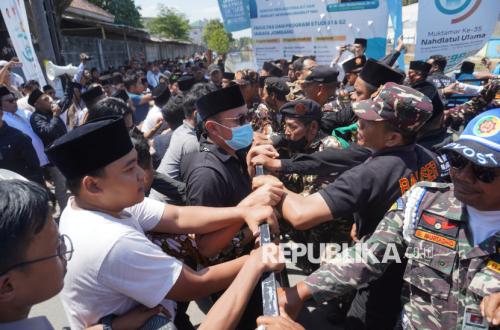
The debate regarding the political ‘iddah’ period during the 35th Muktamar of Nahdlatul Ulama (NU) in Tambakberas, Jombang, East Java, has reopened discussions concerning NU’s relationship with practical politics. In this context, the idea of strengthening NU’s national politics above the interests of political parties is essential.
Within this framework of thought, politics for NU should not merely stop at the struggle for power. Politics must be positioned as a means to bring about public welfare, maintain unity, and strengthen national life.
Consequently, NU should not become subordinate to political parties. NU members may participate in various political parties, but the NU organisation as a ‘jam’iyyah’ must maintain distance and independence from the electoral interests of parties.
This context is relevant to the decision of the 35th NU Muktamar. The Fourth Plenary Session on Sunday, 30 August 2026, ratified a one-year political ‘iddah’ period for candidates for Rais Aam and General Chairperson of PBNU. This provision is linked to the Association Regulations (Perkum) which previously regulated a hiatus from political office.
Before the decision was ratified, the provision was a source of debate during the Muktamar. The session chair had stated that the requirement for General Chairperson candidates is that they must have completed a one-year ‘iddah’ period.
From the perspective of national politics, the ‘iddah’ period can be understood not as an attempt to prevent NU cadres from engaging in politics. On the contrary, it can be placed as a mechanism to maintain distance between practical political power and the independence of the ‘jam’iyyah’.
This hiatus provides space for a cadre who was previously active in a political party to detach from practical political interests before entering strategic positions within the religious organisation. In other words, the issue is not whether NU cadres may become politicians, but how to ensure that politicians do not bring party interests into the great house of NU.
NU Above Political Parties
The concept of national politics places NU in a position broader than party interests. Political parties have electoral and power agendas, while NU holds a much longer mandate for the community and the nation.
Therefore, the relationship between NU and political parties should ideally be dialogic, not subordinate. NU cadres may belong to PKB, PPP, Golkar, Gerindra, PDI Perjuangan, PKS, NasDem, Demokrat, PAN, or other parties. However, the diversity of political choices among these cadres reinforces that NU must not be owned by any specific political party.
It is in this context that national politics becomes important. NU must be able to stand above practical political contests and provide moral orientation to all its members.
Several studies on NU also note that NU’s journey cannot be separated from Indonesia’s political dynamics. NU once functioned as a political party and later reaffirmed its position as a socio-religious organisation. Research involving Hasani Ahmad Said also places the issue of NU’s relationship, local traditions, and politics within the context of national life.
This historical experience serves as a lesson that NU’s involvement in politics must always be guarded by greater interests: religion, the community, the nation, and the Unitary State of the Republic of Indonesia.
Therefore, the political ‘iddah’ can be read as an organisational instrument to prevent the intersection of interests between political office and strategic positions within the ‘jam’iyyah’.
NU is Not Anti-Politics
This perspective does not mean that NU must distance itself from politics. On the contrary, NU needs to continue its presence in national politics, but without being trapped in the politics of power. National politics is about how power is used to bring justice, welfare, education, peace, tolerance, and public benefit.
Meanwhile, the politics of power tends to stop at the question of who gains a position and who wins the contest. This is where the idea of ‘NU above political parties’ gains relevance.
NU does not have to be a political party to have political influence. NU’s strength lies in its moral and social ability to provide direction for national life without losing its independence as a ‘jam’iyyah’.
Political ‘Iddah’ and the Future of NU
The decision of the 35th NU Muktamar regarding the political ‘iddah’ period can therefore be read more broadly as an effort to build organisational governance that maintains distance from practical political interests. The decision was previously a subject of debate during the Muktamar, including objections from some parties who felt the rule could potentially limit potential cadres.
However, from the perspective of strengthening the ‘jam’iyyah’, the hiatus can be understood as a political ‘cooling down’ period and a space to ensure that whoever leads NU does so with an organisational orientation, rather than bringing a party mandate.
Ultimately, what must be preserved is not merely the rule regarding a one-year ‘iddah’ period. Far more important is the spirit of NU’s independence.
NU may engage in dialogue with power, may have cadres who serve as officials, and may even make significant contributions to national development. However, NU must maintain the ability to speak the truth when the government is right and to remind when power deviates.
Thus, NU’s national politics does not sit beneath political parties. Political parties are one instrument of democracy, whereas NU carries a national responsibility that transcends changes in parties, elections, and shifts in power.
Source: jawawa.id (https://jawawa.id/newsitem/nus-national-politics-and-the-political-iddah-period-1788354258)
Originally published by Republika (https://analisis.republika.co.id/berita/tkqfoe393/politik-kebangsaan-nu-dan-iddah-politik), translated from Indonesian