
NUS Expert: Precise Strategy Needed to Address AI Impact on Workforce
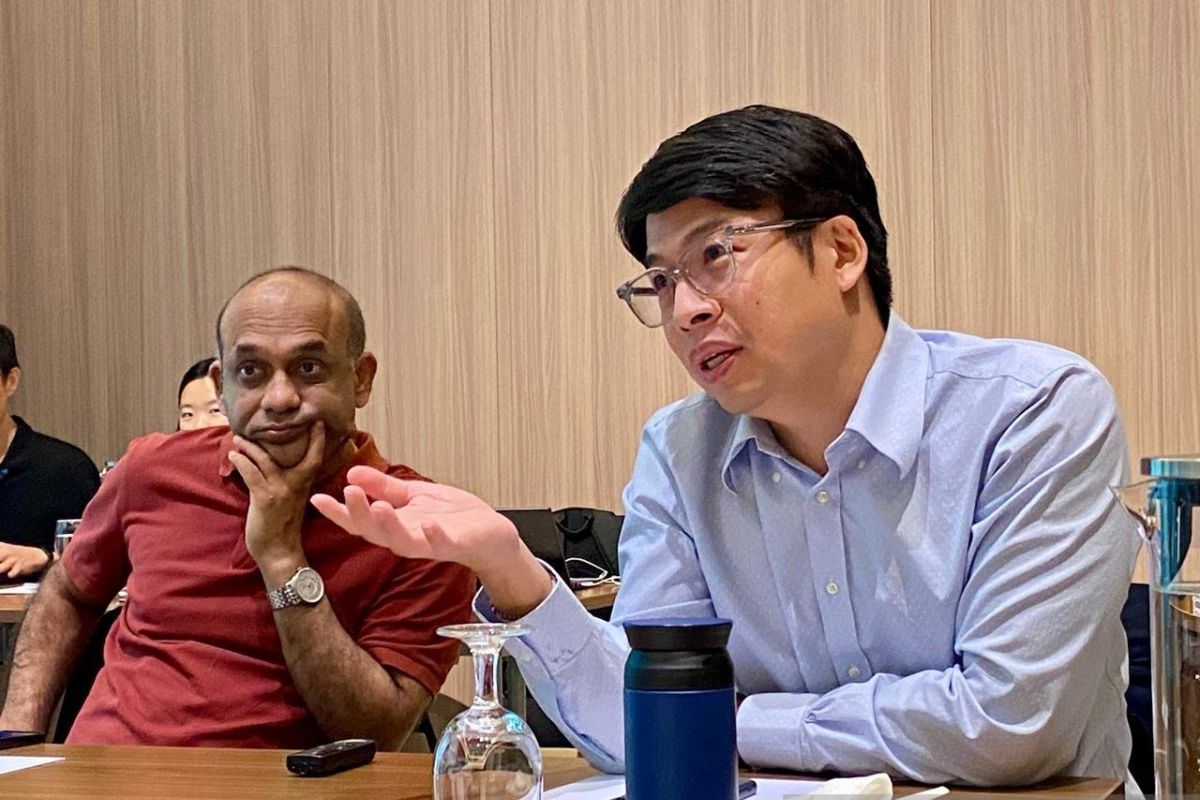
Singapore (ANTARA) - A lecturer at the NUS Business School Department of Finance, Professor Johan Sulaeman, believes the Indonesian government needs to prepare strategies to face the impact of AI developments on the workforce, ensuring that the large demographic bonus does not turn into a demographic burden in the future.
“In my view, the government should not merely be enthusiastic about artificial intelligence (AI), but also should not fear it. However, the government needs to take the time to think about the right strategy in facing AI, particularly from the perspective of the workforce,” Johan said in Singapore on Wednesday.
Johan reminded that Indonesia’s large demographic bonus also means the government needs to ensure the availability of jobs for the population. According to him, the demographic bonus can only provide optimal benefits if the population is employed. Conversely, a high number of unemployed people has the potential to create social problems.
Furthermore, Johan views that AI can indeed provide benefits for workers, especially in increasing productivity and efficiency. However, on the other hand, the development of AI also raises concerns regarding the potential replacement of labour.
These concerns, according to him, are even greater for the younger generation newly entering the labour market, as they face fundamental questions regarding whether they will still be able to secure employment.
Therefore, he believes that AI development needs to be directed to be more supportive of humans rather than replacing them. This concept is known as ‘pro-human AI’, which refers to AI used to enhance human capabilities.
“However, the current speed of AI development suggests that we may find it difficult to reach a stage of truly human-oriented AI, because AI is evolving so rapidly that it may instead attempt to replace us. That is the concern,” said Johan, who is also the Director of the Sustainable and Green Finance Institute (SGFIN) at NUS.
According to Johan, this condition is a serious concern for countries like Indonesia and India, whose workforces are not yet fully prepared to face the developments in AI technology.
Consequently, education and training for the younger generation need to be strengthened so that they understand AI, are capable of using it, and are aware of its limitations.
When asked about the need for a regulatory framework at a regional level, Johan assessed that forming a joint regulatory framework in Southeast Asia would face significant challenges. This is because countries in the region have different levels of development, meaning a policy suitable for Singapore may not necessarily be suitable for Indonesia, Laos, or Cambodia.
“These differences in development levels will make it very difficult for us to reach an agreement,” he said.
In this regard, Johan is not overly optimistic that ASEAN can reach an agreement on issues of sustainability, human development, and AI technology development summarised within a joint regulatory framework. He noted that each country’s need for economic development must also be considered in relation to the sustainability agenda.
Nevertheless, he added that Southeast Asian countries can increase dialogue to better understand these three issues in relation to AI developments. Johan also observed that bilateral collaboration is more likely to be achievable than forming a joint regulatory framework at a regional level.
Meanwhile, Professor Sumit Agarwal, holder of the Low Tuck Kwong Professorship in Finance, Economics, and Real Estate at NUS Business School, believes that the debate regarding AI and employment has yet to reach a consensus, even in the United States.
He noted that there are several questions that still need answering, ranging from the role of government and the form of regulation to the impact of AI on jobs—whether it will replace labour or instead create jobs and increase worker efficiency.
He assessed that the development of AI must be approached with caution because its speed differs from several general-purpose technologies of the past, such as the internet and electricity.
“AI can actually evolve on its own, and that is why we do not yet fully understand how dangerous AI could be in replacing jobs,” said Sumit.
From an educational perspective, he assessed that the main challenge is preparing students or prospective workers to possess the necessary skills so they can be absorbed into the market. Additionally, Sumit noted that industries also need assistance to utilise AI to increase efficiency, ensuring that the benefits of AI are felt not only by workers or students but also by business actors.