
NU's 35th Congress: Seeking a Captain for the Second Century
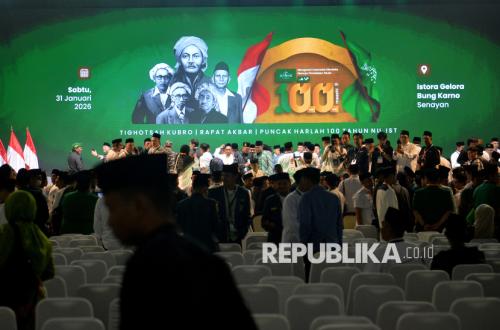
The 35th Congress of Nahdlatul Ulama (NU), to be held at the end of August 2026, is not merely a routine five-yearly agenda to elect the General Chairman of the Nahdlatul Ulama Executive Board (PBNU). More than that, this Congress is a historic moment that will determine how the world’s largest Islamic organisation enters its second century. The stakes are not small.
NU is not merely choosing a general chairman. NU is choosing the direction of a civilisation.
For almost a century, NU has been one of the main pillars of national life in Indonesia. The organisation has succeeded in maintaining a balance between the Islamic tradition of Ahlussunnah wal Jamaah, nationalism, democracy, and pluralism. From NU’s pesantren (Islamic boarding schools), millions of cadres have emerged who contribute to education, the economy, government, and international diplomacy. Yet the challenges of the second century are entirely different.
The world is entering an era of artificial intelligence, digital revolution, shifting global geopolitics, the climate crisis, and innovation-based economic competition. At the same time, Indonesia is enjoying a demographic bonus that will determine this nation’s position over the next two decades.
In such a situation, NU is called upon not only to be the largest Islamic organisation, but also an organisation capable of producing solutions to the problems of the faithful and the nation.
Peter F. Drucker once reminded us that the greatest danger for an organisation is not change itself, but when an organisation faces new challenges with old ways of thinking. This message is highly relevant for NU.
History is indeed important. Tradition is the foundation. But history only becomes a strength if it can be translated into energy for the future.
The Indonesian Islam scholar Robert W. Hefner describes NU as one of the most successful pillars of civil society supporting Indonesian democracy. Meanwhile, Greg Barton sees NU’s strength precisely in its ability to adapt to change without losing the roots of the pesantren tradition.
These scholars’ views contain one simple message: a great organisation will only remain great if it is able to carry out leadership regeneration. It is here that the 35th NU Congress acquires a meaning far broader than a mere change of general chairman.