
Nurturing the hope of democracy, realising Indonesia's aspirations for a forward-looking nation
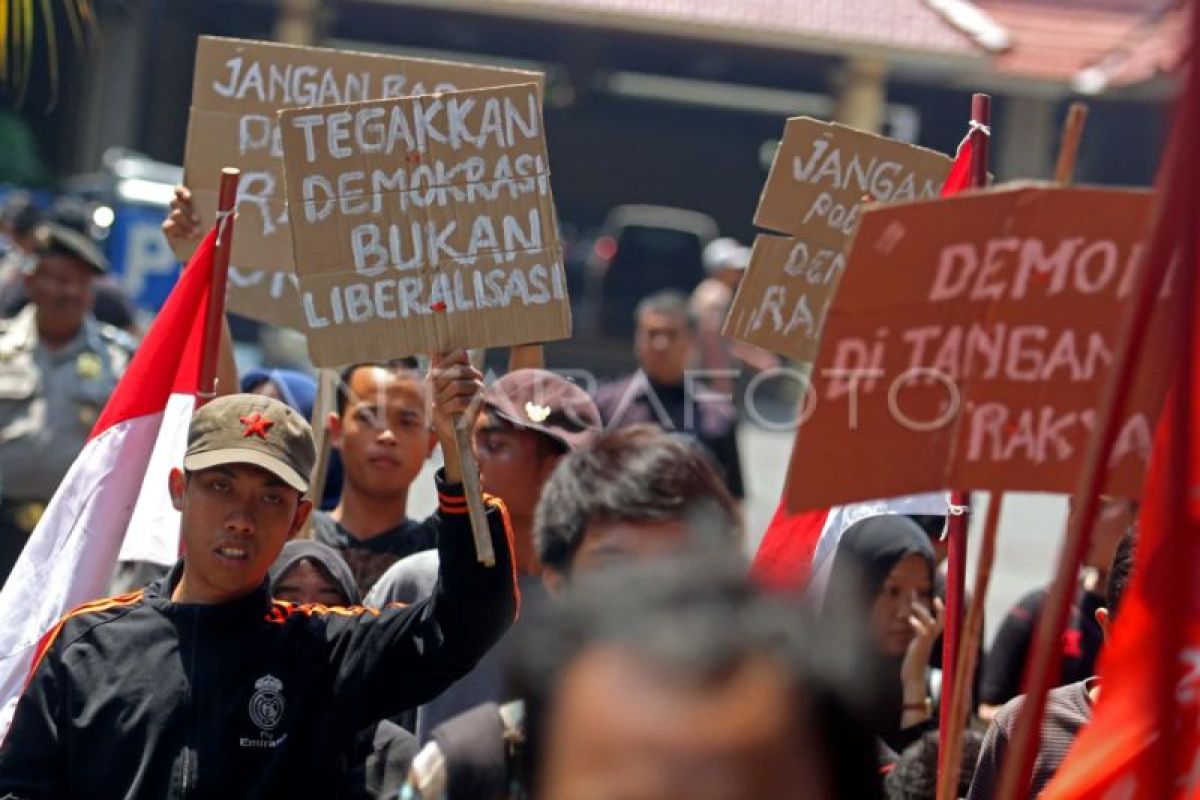
May 21 always invites us to look back at an important milestone in the nation’s journey, namely Reformasi. Twenty-eight years ago, on 21 May 1998, a new chapter for Indonesia began. After 28 years, Reformasi is not merely remembered as a political event but must be read as the long process by which the nation nurtures hope and realises the national ideals in the face of changing times. Nearly three decades into Reformasi, the era has brought Indonesia into a space of more open democracy. But at the same time, that openness has also given birth to a new paradox. The first paradox of democracy today is that freedom empowers people, but also makes public life noisier. In the past, political space felt distant from ordinary citizens. Now, almost everyone can speak out, assess policies, criticise officials, defend ideas, or build social movements from space very close, namely the screens of mobile phones. Democracy is no longer only in parliament, party offices, campuses, or newsroom spaces. It is present in family chat groups, comment columns, short videos, political memes, podcasts, online petitions, and netizen discussions in cyberspace. The Indonesian Internet Service Providers Association (APJII) notes that the number of internet users in Indonesia has reached more than 220 million people, with penetration above 81 percent of the total population. In other words, the digital space has become one of the main arenas of public life in Indonesia. Democracy now lives not only in formal institutions but also in information traffic that moves every second in our society. Nevertheless, the easier it is for people to speak, the more important the ability to listen becomes. The broader the space for expression, the more urgent the need for ethics of conversation. Democracy cannot merely be understood as the right to express opinion, but also requires willingness to weigh others’ opinions. The Door of Freedom In the words of Jürgen Habermas (1929-2026), the healthy public sphere is not merely a place where people talk, but a place where citizens exchange ideas. Democracy requires conversations that are not only noisy but also rational. Reformasi has indeed opened the door to freedom. But after that door is opened, the next challenge is how to fill freedom with maturity. For freedom without maturity easily becomes upheaval. Conversely, maturity without freedom will only become silent obedience. Democracy requires both, namely room to differ and the ability to manage differences. The second paradox is that democracy gives great hope, but that hope often moves faster than the capacity of institutions to meet it. After 1998, the people learned that power can be questioned, policies debated, and public officials held to account. This is an important achievement that could hardly have been done in the past. Freedom House notes that Indonesia has achieved significant democratic progress in more than two decades, including political and media pluralism and several peaceful changes of power. But democracy never works like a magic button that automatically solves all problems. Democracy instead makes problems appear more clearly because citizens have space to voice them. In a democratic age, national issues increasingly surface, from public service, legal justice, the economy, education, the environment, living space, to the future of the younger generation. Not because democracy is bad, but because democracy makes hope more articulate. Citizens cannot simply stay silent. They compare, ask, demand, propose, and participate in judging the direction of the nation’s journey. From this perspective, the loud public voice should not be read as a sign of decline, but as a sign that our society still cares. Alexis de Tocqueville (1805-1859), a French political philosophy scholar, once asserted that the strength of democracy lies not only in state institutions but in the habit of citizens to associate, discuss, and manage shared affairs. In other words, democracy lives when citizens are not only spectators but also take part in public life. In the Indonesian context, this is evident in many forms, from citizen communities, student organisations, environmental movements, literacy groups, disaster volunteers, religious organisations, digital communities, to local initiatives that operate without much spotlight. This is a glimmer of hope that often escapes the large conversations about democracy. We often see democracy from above: about elections, parties, elites, state institutions, and national policies. In fact, democracy also grows from below: from citizens who teach children in villages, from communities that plant trees, from students who create discussion forums, from journalists who check facts before writing news, from teachers who train pupils to ask questions, from families that educate children to respect differences. Next, the third paradox is that democracy often seems fragile precisely because it gives space for self-correction. In a democratic system, shortcomings are visible, debated, and sometimes magnified by the media. As a result, democracy often appears noisy and never finished. But behind that, there are mechanisms of social learning. Democracy allows society to recognise mistakes, amend rules, test policies, and refresh what has been agreed together. The American political scientist Robert Dahl (1915-2014) argued that modern democracy rests on participation and contestation. Participation gives people space to be involved, while contestation gives space for ideas.
Source: jawawa.id (https://jawawa.id/newsitem/nurturing-the-hope-of-democracy-realising-indonesias-aspirations-for-a-forward-looking-nation-1779542228)
Originally published by Antara (Indonesian) (https://www.antaranews.com/berita/5577903/merawat-asa-demokrasi-mewujudkan-cita-cita-indonesia-maju), translated from Indonesian