
Nurturing Conscience and Preserving the Beacon in a Noisy Age: Deputy Minister Fajar Riza Ul Haq's Personal Journey with Buya Syafii Maarif Strengthens Educational Direction
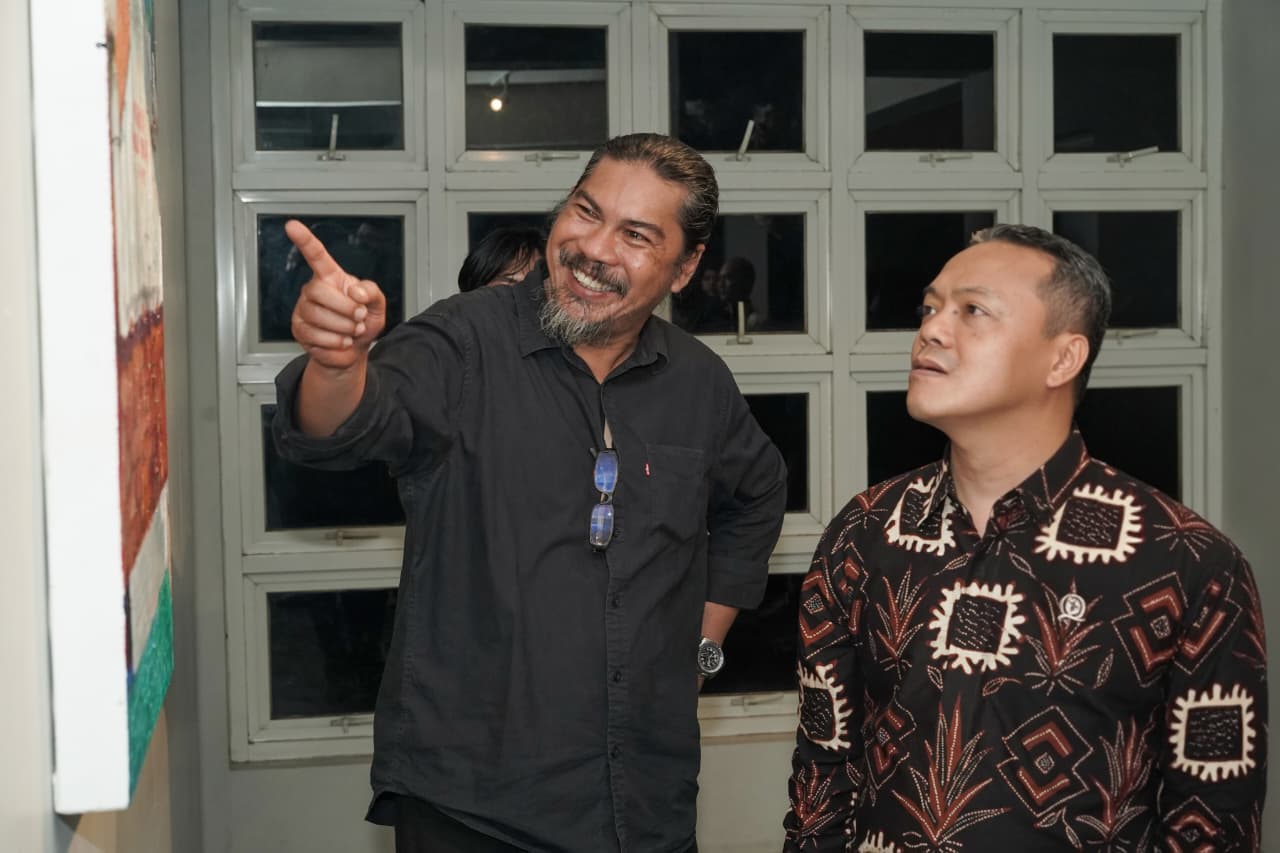
In the quiet art space of Kiniko Artspace in Yogyakarta, the evening was more than a cultural event. It became a space of introspection—a collective reflection on the nation’s direction and an opportunity to revisit Buya Ahmad Syafii Maarif’s legacy as a ‘beacon’ guiding public life.
Deputy Minister for Basic and Secondary Education, Fajar Riza Ul Haq, attended not merely as a government official but as a living witness to his intellectual and personal closeness with Buya Syafii Maarif. This experience formed the basis of his reflections shared with attendees.
In his speech, Fajar recounted his tenure as Executive Director of the MAARIF Institute, the intellectual home of Buya. There, he not only learned ideas but also witnessed firsthand the quiet exemplification of his mentor’s principles. ‘Buya never taught through grand rhetoric. He taught through actions—steadfastness in principles and openness to differences,’ Fajar said.
For Fajar, his encounter with Buya was more than a student-teacher relationship; it was an intellectual experience that shaped his perspective on education and public life. He recalled how Buya consistently positioned religion as a source of public ethics, not a tool for exclusion, and stressed that Indonesian identity must be nurtured through diversity, not uniformity.
This personal reflection evolved into broader concern. Fajar noted that Indonesia currently faces a leadership crisis—not merely a lack of role models, but systemic issues in education that overemphasise knowledge transfer while neglecting character development. ‘Our education risks losing its moral compass if not supported by authentic values and role models,’ he said.
He stressed that Buya Syafii Maarif’s intellectual legacy remains relevant to address these challenges. Within education, these values can be translated into three pillars: enlightening Islam, unifying Indonesian identity, and liberating humanity. Together, they form the foundation for education that is intellectually sharp and morally mature.
This cultural evening, marking the art exhibition’s opening, is part of the ‘Buya Ahmad Syafii Maarif Month (BB-ASM)’ initiative by MAARIF Institute to preserve and disseminate Buya’s ideas on Islam within Indonesia’s diverse and humanitarian context. Attendees included M Busyro Muqoddas (former KPK Chairman), Prof. Fathul Wahid (UII Rector), and several national artists.
In policy terms, Fajar emphasised the need to restore education as a cultural project, not merely a technocratic system. Schools, he argued, must be spaces for value encounters, dialogue, and reflection, as demonstrated in this cultural evening. ‘Education is not just about honing reason but nurturing conscience,’ Fajar said.
Furthermore, he reminded that preserving the ‘nation’s beacon’ does not mean preserving Buya as a venerated figure. Instead, the urgent task is to ensure the values he embodied—integrity, moral courage, and commitment to humanity—exist in every educational space. Ultimately, the message is simple yet profound: safeguarding the ‘beacon’ means not preserving the past, but ensuring its light remains alive in today’s context.
Amidst the tendency to seek saviours, education must build collective awareness—that every citizen is a moral subject responsible for the nation’s direction. ‘Perhaps what we need is not louder voices, but clearer light,’ he said.
From Yogyakarta, the message is clear: if education loses its conscience, what is lost is not just the direction of learning, but the nation’s path. (H-2)