
Nurturing Civilisation: Gontor, Aceh, and the Dialectics of Dayah Reform
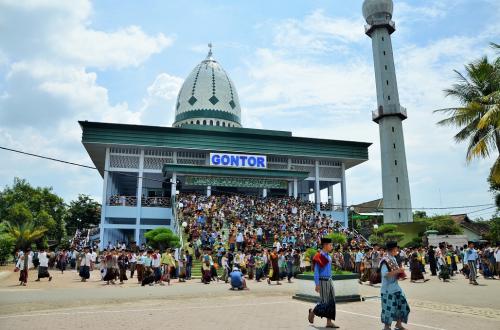
For the people of Aceh, the term ‘dayah’ is not merely an institution for religious learning, but the lifeblood of civilisation. From simple wooden huts during the Aceh Darussalam Sultanate to the modern complexes of today, dayahs have produced thousands of scholars, fighters, and intellectuals who have preserved the Islamic dignity of the ‘Serambi Mekkah’ (Veranda of Mecca).
On the other hand, the map of Islamic education in the Nusantara also records the name of Pondok Modern Darussalam Gontor, a modern pesantren hub in Ponorogo, East Java, which consistently produces community cadres with a global orientation and absolute independence. When the Gontor educational model meets the historical pulse of Aceh, an interesting dialectic is proven: how tradition and modernity are not meant to be opposed, but rather synthesised to meet the challenges of the era.
If traced from its historical roots, the orientation of the establishment of Pondok Modern Darussalam Gontor in 1926 by the three founders (K.H. Ahmad Sahal, K.H. Zainuddin Fanani, and K.H. Imam Zarkasyi) is actually aligned with the intellectual spirit that has lived in Aceh’s dayahs for centuries. Both place institutional independence as a non-negotiable principle. Gontor does not depend on the hand of colonial governments or practical political forces; a philosophy of ‘walyatakhoof’ (total independence) that is also embodied by the Teungku in traditional Acehnese dayahs in maintaining freedom of thought and preaching.
The relationship between Aceh and Gontor is not one that emerged suddenly in the modern era. History records how the mobility of scholars and students in the past—from the networks of the Haramain scholars (Mecca and Medina) to Nusantara networks—created a pattern of thought that was fluid yet firm in principle. Aceh, with its strong Rangkang and Salafi Dayah traditions, possesses a very mature theological and jurisprudential foundation through classical literature (kitab kuning). Meanwhile, Gontor offers an educational management system, active mastery of foreign languages (Arabic and English), and an integrated curriculum (Kulliyatul Mu’allimin Al-Islamiyah) which has subsequently been adopted by many Islamic educational institutions across the country, including in Aceh.
Currently, the landscape of Islamic education in Aceh is undergoing an extraordinary metamorphosis. The presence of various modern pesantren and dayahs, such as Pondok Modern Darussalam Gontor Campus 8 in Aceh Besar, Pesantren Modern Tgk. Chiek Oemar Diyan, Al-Falah Abu Lam U, and many other institutions, demonstrates a high spirit of adaptation. This transformation proves that dayahs in Aceh are not anti-modernity. Salafi dayahs, which focus on the deepening of classical texts, are now enriching themselves with modern management, science, and technology. Conversely, Gontor-style pesantren in Aceh continue to preserve the tradition of reading classical books and high discipline.
This synergy is producing a new typology of students in Aceh: students who are not only fluent in reading Fathul Qarib or Ihya Ulumuddin, but are also capable of discussing in international languages, mastering technology, and are ready to lead strategic sectors in society. This is a tangible form of modernisation without losing traditional roots.
However, future challenges will certainly not become lighter. Amidst the currents of globalisation, digital disruption, and the moral degradation of youth, Islamic educational institutions—both traditional dayahs and modern pesantren—bear an increasingly heavy moral burden.
Firstly, dayahs and pesantren must be able to serve as bastions of character and incubators for producing superior human resources, both intellectually and spiritually. Aceh, with its special autonomy and specific Islamic Sharia status, requires future leaders who possess the moral integrity of dayah scholars and the global managerial vision of modern pesantren alumni.
Secondly, collaboration between local governments, the Ministry of Religious Affairs, the Department of Dayah Education, scholars, and managers of modern educational institutions must continue to be strengthened. Budgetary support, quality management training, and the strengthening of alumni networks across institutions will make Islamic education in Aceh increasingly respected on both national and international stages.
Thirdly, Digitalisation and the Strengthening of Kitab Kuning Literacy Based on Technology. A dichotomy often arises as if modern pesantren are abandoning classical texts, or traditional dayahs are technologically illiterate. The solution moving forward is to digitalise classical manuscripts and ‘kitab kuning’ so they can be accessed via digital platforms, without eliminating the ‘bandongan’ and ‘sorogan’ methods that are the soul of the dayah. Students in traditional dayahs also need adequate digital literacy to be able to preach ‘Islam rahmatan lil ’alamin’ (Islam as a blessing for the universe) in cyberspace (social media), which is today the primary battlefield for the ideology of the younger generation.
Fourthly, Economic Independence of Pesantren (Islamic Boarding School Enterprise). The key to Gontor’s success in remaining independent for almost a century is the system of productive waqf (endowment). It is time for dayahs in Aceh to be encouraged to move away from total dependence on operational assistance funds alone. Through pesantren business incubator programmes, dayahs can be trained to manage independent business units—such as modern agriculture, livestock, minimarkets, and the processing of local Acehnese products (such as Gayo coffee or fishery products). This economic independence will guarantee the political freedom and moral independence of educational institutions, as per the noble traditions maintained by the scholars of the past.
Beyond curriculum and managerial aspects, one crucial pillar that is often a point of vulnerability for Islamic educational institutions, both traditional dayahs and modern pesantren, is financial independence.
Source: jawawa.id (https://jawawa.id/newsitem/nurturing-civilisation-gontor-aceh-and-the-dialectics-of-dayah-reform-1789981013)
Originally published by Republika (https://analisis.republika.co.id/berita/tlpe4v291/merawat-peradaban-gontor-aceh-dan-dialektika-pembaruan-dayah), translated from Indonesian