
Nurlita's Story: Willing to End Career at UN Agency to Manage Waste
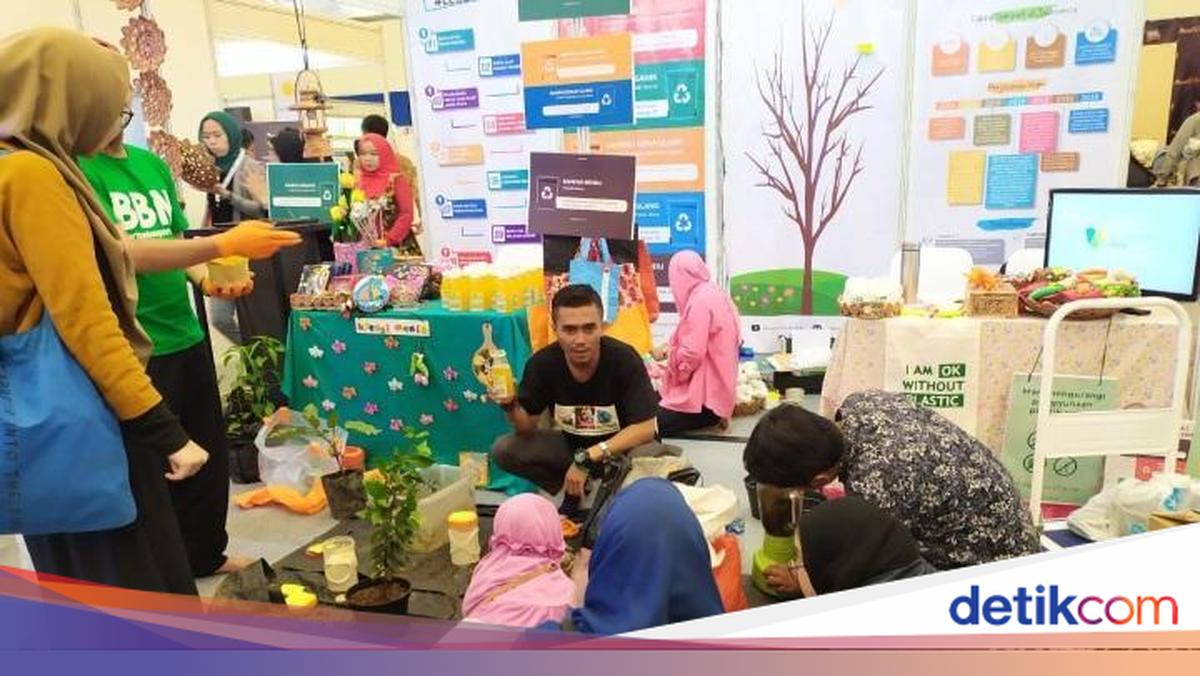
Ranitya Nurlita has long had a particular interest in waste issues, long before the problem became so complex in Bali and several regions in Indonesia. This concern led Lita, as she is known, to establish Wastehub, a foundation for waste management. In fact, for Wastehub, Lita boldly ended her promising career at the United Nations Environment Programme (UNEP), one of the United Nations agencies in the environmental field. “I was at UNEP since 2023. That was my full-time job that provided my income. Meanwhile, at Wastehub, it’s a social vision and mission,” said the graduate in Fisheries and Marine Sciences when met during a Wastehub event at Prime Plaza Hotel Sanur on Saturday (25/4/2026). Initially, she still divided her time between her professional job and her social activities. However, as time went on, she decided to focus on developing the waste management movement. In Japan, Waste Can Be Sorted into 30 Types Lita’s interest in waste issues actually began to grow in 2014 when she attended training in the United States (US) related to source separation of waste. “Back in 2014, I went to the United States for training on source separation of waste,” Lita recounted. There, she directly observed how community habits in managing waste were already formed. “There, people bring their own waste to recycling centres. It’s not left in front of the house,” she said. She also saw Japan’s system, which is far more detailed. “In Japan, it can go up to 30 types of separation,” she added. Only then did she realise that the waste issue is not as simple as reducing plastic waste, but also about systems and habits. “I used to think not using plastic was enough. Turns out it’s not; we need to change the system and mindset,” Lita explained. From there, her understanding of source waste management was formed. However, the real turning point that made her take action came after she saw the ocean polluted with waste while diving around 2020. Sad to See So Much Waste Underwater Although she studied marine sciences, she admitted she was not initially very interested in diving activities. However, the miserable sight at the ocean floor full of waste became the turning point for her to dedicate herself to managing waste. “The first time I dived, I was so sad; there was so much waste underwater,” she said. Since then, she began to pay serious attention to the waste issue. Moreover, at that time, not many young people were interested in it. “Back then, not many young people cared,” Lita said. Since then, she has travelled to other countries to learn more in depth, and eventually the desire to take concrete action emerged. “It felt like we needed to create a sustainable movement, so we founded Wastehub,” Lita revealed. Wastehub is now well-known in various regions in Indonesia and has handled clients from various areas. However, their journey did not start big as it is now. Wastehub began as a small community initiated in 2019. “Back then, we were just a self-initiated movement. Starting in 2019, we had many activities, and finally became a foundation in 2023. So, operationally since 2019, but legally established in 2023, roughly we’ve been running for about five years,” Lita said. Wastehub’s activities are not only in Bali, but also in Banten and Jakarta. “The base is in Banten, but since I live in Bali, our activities are mostly in Bali and Jakarta,” she added. Wastehub has many main programmes, one of which is processing waste from various events. “We manage event waste, including recently in Bali with the Communications and Informatics Office during the Denpasar Festival (Desfest),” Lita explained. The foundation, which has now been operating for five years, has certainly gone through difficult times. For example, during the COVID-19 pandemic, they lost many activities that had been prepared. “It was hampered during the COVID-19 pandemic. We started at the end of 2019, many activities were cancelled,” she said. However, this challenge did not immediately dampen their spirit. Wastehub, which initially focused on waste issues, shifted to running social and educational programmes. Partnerships with Partners To date, Wastehub does not yet have its own waste processing facilities and still collaborates with various partners. “We don’t have our own facilities yet, so we partner. Waste is sorted, then we distribute to partners,” she clarified. Organic waste is processed into maggot compost, while inorganic waste is channelled to recycling parties. Only residue ends up at the final processing site (TPA). During their programmes, the largest amount of waste they have handled reached dozens of tonnes. One of them was at the large International Muslim Jamboree in Cibubur. “The biggest we managed was around 18 tonnes from 7 to 14,” she disclosed. Waste Conflicts in Bali As a practitioner directly involved in the field handling waste, Lita assesses that the waste problem in Bali is not as simple as it seems. Although regulations on waste exist, implementation in the field faces many obstacles. “Compared to other regions, Bali actually has the best regulations,” she said. However, she sees the main problem lies in field application. According to her, the socialisation provided by the government to the community is still not even. Then, the enforcement of rules, which is still considered weak, makes the existing policies not run optimally. “The regulations are good, but socialisation is not even and law enforcement doesn’t work,” she emphasised. In addition, social and cultural factors also influence. Not all communities yet have the same level of awareness in managing waste. “Some already care, but there are still many who litter indiscriminately,” she said. “That even became a big issue,” she said, referring to the case of waste dumping into rivers.