
Number of Slum RW Declines by 52 Percent, Jakarta Provincial Government Allocates Rp1.9 trillion for Urban Renewal
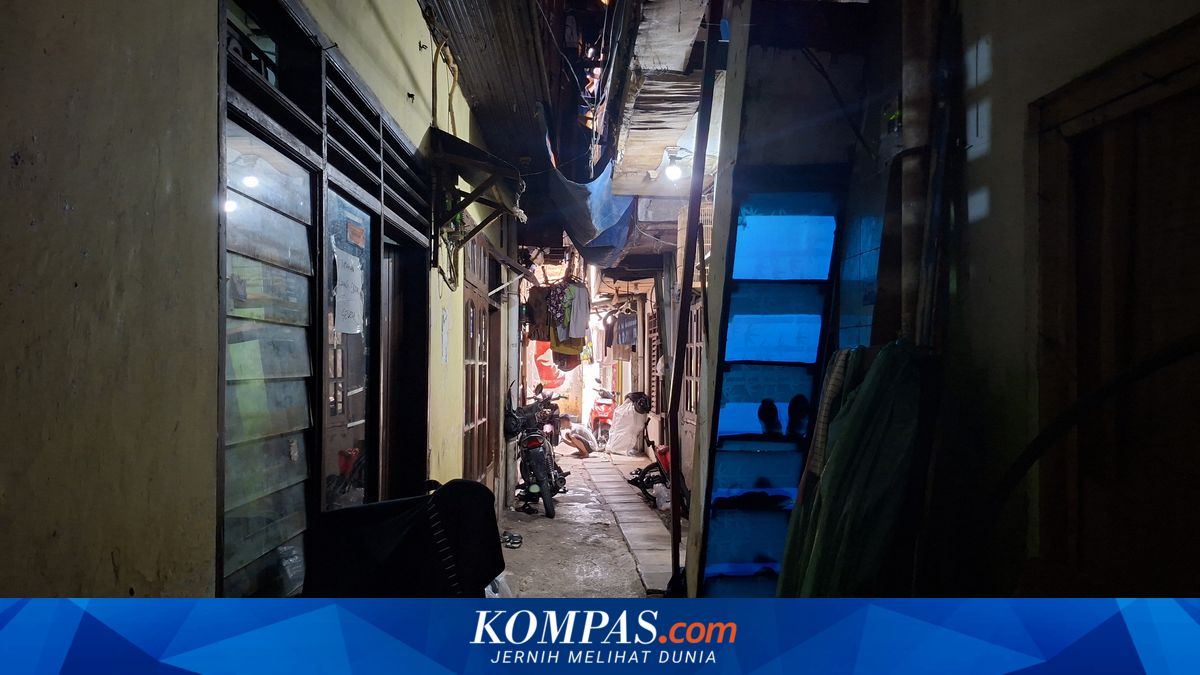
Jakarta, Kompas.com - The Jakarta Provincial Government (Pemprov DKI Jakarta) notes that the number of slum Rukun Warga (RW) in the capital has declined from 445 RW in 2017 to 211 RW in 2026, a decrease of 52 percent. The figure comes from the latest data compiled by the Central Statistics Agency (BPS) in 2025 and finalised in 2026.
Jakarta Governor Pramono Anung said the Jakarta Provincial Government still has a major task ahead as there are 211 slum RW, mainly in West Jakarta and North Jakarta.
‘Having toured almost all of the 267 kelurahan (urban villages), there are indeed areas in West Jakarta, such as Tambora and its surroundings, that still require attention, and we will go down directly to handle this,’ Pramono said at the City Hall, Jakarta, on Wednesday (6 May 2026).
Meanwhile, the Head of the Department of Public Housing and Settlement (DPRKP) of DKI Jakarta, Kelik Indriyanto, revealed that the program to improve settlement quality has been implemented since 2018. The integrated approach to renewal covers physical, environmental, social, cultural, and economic aspects.
Based on the Ministerial Regulation (Permen) PUPR No. 14 of 2018, the identification of slum areas is determined through seven assessment aspects, namely building condition, neighbourhood roads, drinking water supply, environmental drainage, wastewater management, waste management, and fire protection.
“A RW is deemed to have exited the kumuh (slum) category if its slum-ness score falls below the threshold or meets not-slum criteria according to the indicators set,” added Kelik.
Addressing slum areas in Jakarta is undertaken through several approaches depending on the RW conditions, namely restoration (pemugaran), renewal (peremajaan), and relocation to new housing (permukiman kembali). Most interventions are implemented through the restoration pattern.
Resettlement is applied in areas deemed unable to be sustained due to spatial planning or residents’ safety factors. One example is the relocation of Bukit Duri residents to the Rusun Tumbuh Kembang Cakung and several affordable rental flats (rusunawa).
“Most interventions are implemented through the restoration pattern or improving the quality of the slum RW area so that the environment becomes more habitable,” explained Kelik.
The Jakarta Provincial Government has consistently allocated budgets for addressing slum areas through various programmes to improve settlement quality. The total budget disbursed from 2018 to 2025 amounts to around Rp 1.9 trillion. Consequently, the average annual allocation stands at around Rp 200 billion.
According to Kelik, the biggest obstacles in addressing Jakarta’s slum areas include high population density, limited land availability, development of housing infrastructure and facilities, issues of spatial planning compatibility, and land ownership legality.
Although the achievements in slum area renewal are substantial, urban planning observer Bakti Setiawan warned that interventions should not focus solely on physical changes.
“An area cannot be considered fully free of slum conditions if basic issues such as sanitation, social and economic conditions of residents have not been improved,” he told Kompas.com, contacted on Tuesday, 19 May 2026.
Bakti argues that addressing slum areas must cover fundamental aspects, such as MCK facilities, drainage, waste management, and housing density. “Fundamental aspects are important, but do not forget the human, social, and economic dimensions,” he said.
Source: jawawa.id (https://jawawa.id/newsitem/number-of-slum-rw-declines-by-52-percent-jakarta-provincial-government-allocates-rp1-9-trillion-for-urban-1779542812)
Originally published by Kompas (https://megapolitan.kompas.com/read/2026/05/21/10455251/jumlah-rw-kumuh-turun-52-persen-pemprov-dki-gelontorkan-rp-19-triliun?utm_source=ABC&utm_medium=rss), translated from Indonesian