
Number of Out-of-School Children in West Java Falls 33.69% in Two Years
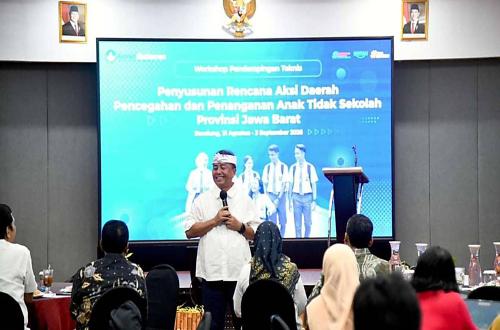
BANDUNG — The number of out-of-school children (ATS) in West Java has fallen by 222,496, or 33.69%, over the past two years. According to data from the Ministry of Primary and Secondary Education (Kemendikdasmen) as of 20 November 2026, there were 437,984 ATS, down from 660,480 in November 2024.
West Java Regional Secretary Herman Suryatman said the largest decline occurred from October 2025. During that period, the number of children not attending school fell by 172,439, or 28.25%.
Despite the progress, the West Java provincial government still faces the challenge of bringing hundreds of thousands of children back into education.
The provincial government aims to ensure that all children in the region can access education by 2029. This is ahead of the national target set out in Presidential Regulation No. 3 of 2026 on the Prevention and Handling of Out-of-School Children, which aims to reduce the number of ATS to zero by 2045.
To meet its target, the West Java administration has ordered the formation of teams to track down out-of-school children down to village and urban-ward level. The teams will involve sub-district heads, village heads and urban-ward heads, and will identify children who are not attending school as well as establish the reasons why.
Herman issued the instruction at a coordination meeting on education at the West Java Education Office on 12 October 2026. The provincial government subsequently convened education chiefs from all 27 regencies and cities in Bandung on 10 November 2026 to strengthen coordination on the issue.
Herman said addressing the problem required cooperation between the provincial, regency and city governments, as well as sub-district and village and urban-ward authorities.
“Addressing ATS cannot be done by a ‘superman’ approach, but requires a ‘superteam’,” Herman said.
He said responses must be tailored to the circumstances of each child and family. The reasons children do not attend school vary, from financial hardship and being unable to secure a school place to having to help their parents work and living with a disability.
For children held back by costs, the government will seek to provide assistance so they can return to school. Those who have not secured a place will be helped to enrol at primary, junior secondary or senior secondary/vocational school, or at a Sekolah Rakyat (People’s School).
Children who need to help their parents work may be directed to non-formal education through Community Learning Centres (PKBM). Package A, B and C programmes will offer more flexible study schedules, including at weekends or outside working hours.
The West Java administration will also seek to maximise the use of School Operational Assistance (BOS) funds and coordinate with the central government to support efforts to address the issue.
Herman stressed that identifying children and returning them to school must be accompanied by ongoing support to prevent them from dropping out again.
The provincial government is also calling on the public—including parents, teachers, community leaders and businesses—to help address the issue. People can report children who are not attending school through their neighbourhood association (RT), community association (RW), or village and urban-ward administrations.
Herman said reducing the number of out-of-school children was essential to preparing a productive younger generation and helping realise Golden Indonesia 2045.
Source: jawawa.id (https://jawawa.id/newsitem/number-of-out-of-school-children-in-west-java-falls-33-69-in-two-years-1795571531)
Originally published by Republika (https://rejabar.republika.co.id/berita/tp19w2456/jumlah-anak-tidak-sekolah-di-jawa-barat-turun-3369-persen-dalam-dua-tahun), translated from Indonesian