
Nuclear, Ukraine, Iran: The World is Losing its Brakes
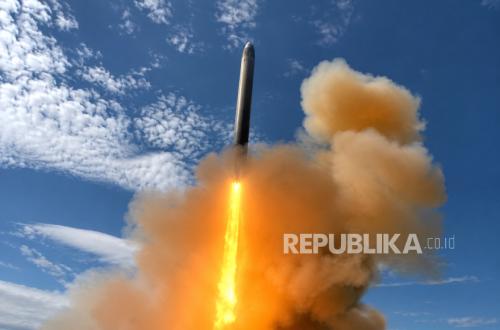
The skies over several regions of the world have recently seemed never truly quiet. Drones cross borders, long-range missiles blur the lines between local wars and the involvement of great powers, while warships continue to manoeuvre in strategic waters. Around Taiwan, the Strait of Hormuz, Ukraine, and the Middle East, the world appears to be learning to live alongside unending tensions. From Moscow, nuclear signals are also being broadcasted more openly.
Amidst this atmosphere, an old term is circulating easily once again: World War III. The question is, is the world truly moving towards a global war, or is it instead facing something more complex—a fracture in the international order that for decades has ensured great powers knew when to stop?
Three international relations thinkers, writing almost simultaneously in early September 2026, offer different but complementary answers. Fyodor Lukyanov views the issue through the psychology of nuclear deterrence; Leon Hadar reads it through the fracturing of the world order; while Trita Parsi demonstrates how inconsistencies in nuclear policy can cause diplomacy to lose its efficacy.
Lukyanov, Editor-in-Chief of Russia in Global Affairs and Research Director at the Valdai International Discussion Club, focuses on something that has kept the world from major war for several decades: the fear of nuclear destruction. Hadar, an international political analyst writing for Asia Times, warns against this fear turning into alarmism that views every regional conflict as a path to World War III.
Parsi, co-founder and Executive Vice President of the Quincy Institute for Responsible Statecraft, brings the debate to a more concrete field. He highlights the United States’ nuclear agreement with Saudi Arabia and questions why uranium enrichment technology, which has been denied to Iran for decades, might be granted to Riyadh under what he considers looser oversight conditions.
These three thinkers approach the issue from different angles, but arrive at nearly the same anxiety. The world may not yet be on the brink of World War III, but the mechanisms that previously caused nations to halt before taking steps too far are under increasing pressure.
When Fear Maintains Peace
Lukyanov begins his analysis with a paradox that has served as the foundation of global security for decades. Nuclear weapons were created as instruments of war, yet their immense destructive power makes them one of the most important tools for preventing the largest wars.
During the Cold War, Washington and Moscow understood that direct confrontation could result in mutual destruction. Therefore, behind various treaties, disarmament conferences, international institutions, and diplomatic language regarding “strategic stability,” there existed a much simpler mechanism: the fear of the consequences of nuclear war.
Lukyanov formulated this concisely, writing, “Great powers restrain one another and, in doing so, restrain themselves.” This sentence describes how the fear of mutual destruction ensures that geopolitical ambitions have limits.
The concept, later known as Mutual Assured Destruction, contains a horrific paradox. However, for decades, the possibility that no party would truly win a nuclear war made nuclear-armed states far more cautious regarding the possibility of direct confrontation.
The problem, according to Lukyanov, is that this psychological mechanism is now beginning to erode. Political elites and the international community are becoming increasingly accustomed to witnessing protracted wars, proxy wars, cross-border attacks, cyber operations, the use of drones, economic pressure, and information warfare as standard components of interstate relations.