
Nuclear Technology Company Responds After Receiving Criticism from the Indonesian Parliament
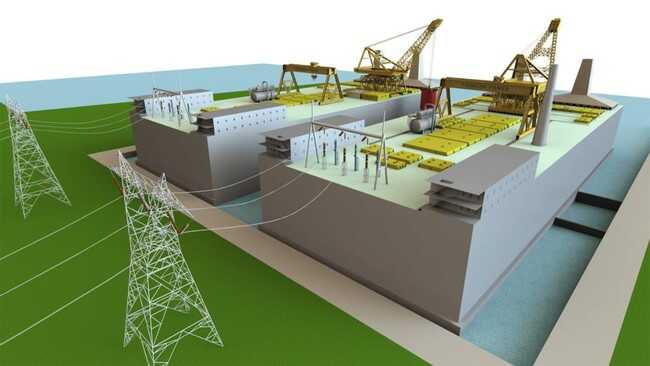
Jakarta, CNBC Indonesia - PT Thorcon Power Indonesia affirmed that all planned research and site evaluation activities on Kelasa Island, Bangka Tengah Regency, are being carried out in accordance with regulatory procedures. This is in response to various questions from various parties, especially members of the Indonesian Parliament (DPR RI), regarding the planned development of a Nuclear Power Plant (PLTN) based on Thorcon 500 technology.
Dhita Karunia Ashari, Director of Operations at PT Thorcon Power Indonesia, said that the site evaluation research is an initial stage aimed at collecting comprehensive technical, environmental, and social data. This is done primarily before proceeding to the next licensing stage in the process of licensing the technology in Indonesia.
“As a technology developer, Thorcon views transparency as part of its professional responsibility. In strategic projects such as Nuclear Power Plants (PLTN), public dialogue is not merely an add-on, but a foundation. Therefore, it is important to clearly and proportionally explain the company’s position, role, and approach,” said Dhita, in a written statement to CNBC Indonesia, Thursday (February 26, 2026).
Dhita explained that Thorcon is a group of companies developing Molten Salt Reactor (MSR) technology, based globally with its headquarters in Singapore. Its main focus is the development of advanced-generation reactors designed for implementation in various partner countries, including Indonesia.
The Thorcon MSR technology is developed in the United States. The company itself has been present in Indonesia since 2018 as a Representative Office and since 2021 as a limited liability company. Currently, Thorcon has branch offices in Bangka Belitung, and a number of employees working at Thorcon are also talented local people.
“Regarding the issue that Thorcon is not known as an operator in the United States, Thorcon has not actually started the licensing stage to become an operator in the US, and instead aims to license and operate its technology in Indonesia,” said Dhita.
On the other hand, he also mentioned that the business model being implemented is the development and commercialization of technology, not the operation of power plants in the US. Therefore, Dhita ensured that the absence of Thorcon’s name on the list of PLTN operators in the United States reflects a difference in business model, not a matter of existence or credibility.
In addition, Dhita believes that in the global nuclear industry, export-based development practices, cross-country partnerships, and first-of-a-kind projects in specific jurisdictions are common.
According to him, many developers of Small Modular Reactor (SMR) and Generation IV reactors are in the design, licensing, and demonstration stages without first operating commercial units in their home countries. Thus, the assessment of an entity needs to be placed in the context of its legal framework and business model.
Socialization as Part of Governance
Meanwhile, in response to the view that the socialization carried out is too intense and potentially causes friction in society, Thorcon stated that transparency is actually a key requirement for creating public trust in strategic infrastructure projects, especially nuclear technology.
One form of socialization is Thorcon’s presence as a speaker in a Public Discussion held by Fokus Babel and KBO at the Aston Emidary Hotel on February 7, 2026. The forum was attended by public officials, community organizations, media, the public, academics, and students.
In the forum, Thorcon presented the objectives, stages, and proposed technology, while also explaining the vision of Indonesia’s energy transition and the potential of the project as a strategic option for the nuclear industry in the future.
At the local level, dialogue is also conducted with communities in Lubuk Besar District, especially Batu Beriga, Lubuk Besar, and Perlang villages which are geographically close to Kelasa Island. All activities are said to be educational and do not involve requests for approval or the collection of signatures.
This socialization and education program has also been presented in a Hearing Meeting with the Bangka Belitung DPRD and the Bangka Tengah DPRD in November and December 2025. However, socialization does not replace the licensing process and does not precede the authority of the regulator.
“All stages still adhere to the legal and regulatory framework in force in Indonesia. The public has the right to understand the benefits, risks, safety aspects, and long-term impacts of a project. Adequate information is a prerequisite for the formation of informed consent in public policy. Therefore, socialization activities are not interpreted as a campaign, but as a space for education and dialogue,” said Dhita.
Licensing Stages with the Regulator
In response to the statement that BAPETEN facilitates companies that are not competent or do not have a license, Dhita explained that the nuclear licensing system in Indonesia is phased and tiered, as regulated in BAPETEN Regulation Number 1 of 2022 concerning the Management of Risk-Based Business Licensing in the Nuclear Sector.
According to him, the licensing stages begin with the Site Permit, then Design Approval, Construction Permit, to Operating Permit. Each phase can only be continued if the previous phase is declared to meet the safety and technical requirements.
Currently, Thorcon is carrying out Site Evaluation as a prerequisite for obtaining a Site Permit. The absence of a construction or operating permit, according to Dhita, is not an indicator of incompetence, but a logical consequence because the process is still in the early stages.
“In fact, in a strict regulatory system, it is impossible for an entity to immediately jump to the construction stage without going through this stage,” he said.
The interaction between the developer and the regulator in the site and design review phase is also a common practice.