
Nuclear Power, the Energy Security Paradox and Geopolitics
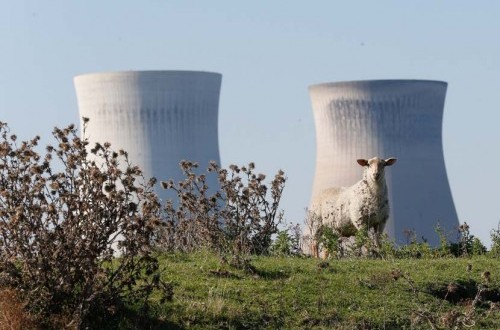
Indonesia is drawing closer to realising its first nuclear power plant (NPP). Nuclear power is an appealing option among other new and renewable energy sources, given the large amounts of energy it can generate with lower operating costs and emissions than fossil-fuel plants such as gas and coal.
Furthermore, advances in NPP technology could benefit the industries involved. But building a nuclear power plant is not merely a technical matter. Indonesia must establish long-term partnerships with foreign parties, and that decision could affect its position in global politics.
On the one hand, the benefits of nuclear power in meeting growing energy needs make its development worthy of support. On the other, a fundamental question arises: how prepared is the Indonesian government to face the consequences and long-term commitments involved in building an NPP?
The idea of building an NPP is not new in Indonesia. It has been discussed since President Soekarno’s administration, and has resurfaced at various times under successive presidents.
Recently, however, PLN’s 2025–2034 Electricity Supply Business Plan (RUPTL) set a target for Indonesia’s first NPP to begin commercial operations in 2032, with a capacity of 0.5 GW, in Bangka Belitung and West Kalimantan.
In the 2025–2060 National Electricity General Plan (RUKN), the government set a target for total NPP capacity to reach 35 GW by 2060, equivalent to 11.7 per cent of the national primary energy mix.
This ambitious target reflects nuclear power’s status as a strategic necessity for Indonesia, given the country’s future energy needs. As fossil-fuel energy declines, the share of new and renewable energy (NRE) is set to increase.
According to estimates by the National Energy Council, the combined capacity of the NRE and fossil-fuel mix will reach only 1,548 TWh by 2045, below estimated total demand of 1,700 TWh. Nuclear power is therefore needed to fill the energy supply gap and support the economy over the long term.
However, the benefits of nuclear power come with a number of conditions. Indonesia does not have sufficient uranium reserves to produce nuclear fuel independently. Uranium enrichment also requires expensive technology and is subject to strict requirements.
That is where the paradox lies. NPPs offer large-scale electricity supplies to strengthen energy security, but their construction still requires cooperation with other countries. The situation is becoming more complex amid escalating geopolitical tensions between Western and Eastern blocs.
Choosing a reactor is therefore not simply a matter of technological suitability; it also involves choosing a strategic partner.
The stakes are high. NPPs operate for decades, far longer than the terms of the administrations that sign agreements and build them. Decisions made today will have consequences for several generations of future leaders.
Several foreign companies, including Russia’s Rosatom and the United States’ NuScale and ThorCon, have already explored opportunities to develop NPPs in Indonesia.
South Korea’s experience shows how nuclear cooperation can constrain a country’s room for manoeuvre. The United States strictly controls the use of nuclear technology to prevent nuclear fuel from being used as a weapon.
Under a revision to the 123 Agreement on nuclear cooperation in 2015, South Korea gained wider scope for cooperation in nuclear fuel management, including reprocessing and uranium enrichment of up to 20 per cent. However, it must obtain the United States’ approval and written consent.
The change was achieved only after more than four decades had passed since the agreement was signed in 1974. This has created obstacles to South Korea’s ambition to become a leading NPP exporter.
The experience illustrates the dilemma of nuclear cooperation. The benefits of developing NPPs are real, but the accompanying conditions can limit a country’s technological and diplomatic flexibility for decades.
A solution may lie in the principle of an independent and active foreign policy, which has long underpinned Indonesia’s diplomacy. It allows Indonesia to reduce the risk of dependence by building partnerships with countries from different blocs at the same time.
Indonesia could gain access to a range of technologies, strengthen the resilience of its fuel supply chain and accelerate construction by working with different partners at each stage.
Dependence on foreign parties would not disappear entirely, but it could be managed so that it is not concentrated in a single country that might restrict Indonesia’s room for manoeuvre in the future.
This idea is not new. During President Soekarno’s administration, a Russian research reactor was planned alongside a United States design, before the plans were cancelled following the political upheaval of 1965.
Diversifying partners, in other words, is not a new concept but part of Indonesia’s strategic instinct. Vietnam, for example, will operate NPPs built by Russia and Japan, conduct research with Rosatom and General Electric, and develop its workforce with South Korea.
In Egypt’s case, although it is operating Russian reactors exclusively at El Dabaa, it has also engaged Australia’s WorleyParsons for site surveys and analysis. Indonesia has pursued a similar approach in the past.
If managed well, the returns would extend beyond electricity capacity. A single 1,000 MW light-water reactor could create 1,200 jobs, with a further 600 jobs over its 50-year operating life.
Given the scale of Indonesia’s NPP ambitions, those figures could multiply. Benefits would also extend to the cable, electrical components, specialised construction, safety testing and maintenance industries. All these sectors could gain new experience and capabilities.
Ultimately, everything comes down to one question. Nuclear power offers a rare combination of relatively clean, reliable, large-scale electricity and the potential to drive industrialisation, making it worthy of a place in Indonesia’s energy mix.
But building an NPP is not simply a matter of buying megawatts. It is a strategic commitment that will outlast the governments that decide to build one or oversee its construction.
Success should not be measured by the number of reactors built, but by Indonesia’s ability to preserve geopolitical flexibility, manage safety, develop domestic industries and reduce dependence over time.
The real question, then, is not whether Indonesia can build an NPP, but whether it can navigate the lengthy process effectively, weigh the geopolitical consequences and make the right choices.
Being a nuclear-powered country is not merely about owning NPPs; it is also about mastering the processes that underpin them. Energy sovereignty must be built and planned carefully so that it does not burden future generations.