
Nuclear Power Plants Could Provide Low-Carbon Electricity, but Face Challenges
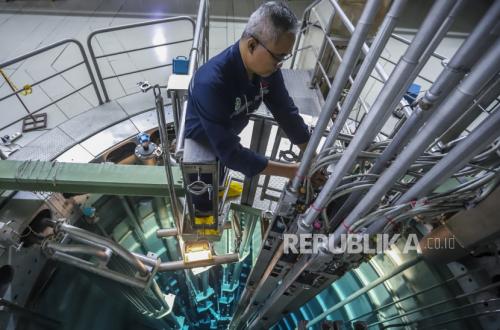
JAKARTA — Nuclear power plants are seen as having the potential to become a source of low-carbon electricity capable of providing a stable supply amid rising national demand. However, developing nuclear technology requires adequate infrastructure, investment, skilled personnel, safety systems and radioactive waste management.
Topan Setiadipura, a nuclear researcher at the National Research and Innovation Agency (BRIN), said Indonesia needs to increase its use of low-carbon energy to meet electricity demand while reducing greenhouse gas emissions. Nuclear power is one option because its generation characteristics differ from those of several renewable energy sources.
According to Topan, solar and wind power output depends on natural conditions and the time of day. Their use in the electricity system requires support from the grid, energy storage, interconnections and adequate supply management.
“Nuclear power plants have different characteristics because they can generate large amounts of electricity continuously, with low greenhouse gas emissions over the plant’s life cycle compared with fossil-fuel power stations,” Topan said at an Economic Frontline discussion in Jakarta on Wednesday (14 October 2026).
The ability to generate electricity continuously means nuclear power could complement other renewable sources. A stable electricity supply is also becoming increasingly important as industry expands, transport is electrified and the digital economy develops.
Nevertheless, Topan said nuclear power is not the only solution to the energy transition. Its development must take account of Indonesia’s electricity-system needs, technological readiness, investment costs, construction times, and the ability to manage safety risks.
Radioactive waste is another issue that must be considered from the planning stage. Public acceptance and investment certainty are also needed to support projects over the long term.
Topan said nuclear power development should be accompanied by investment in education and research, as well as efforts to strengthen the expertise of domestic specialists. This is necessary for Indonesia to build the capacity to master and manage nuclear technology sustainably.
“Thus, nuclear energy use should not stop at building power plants, but should also help foster an ecosystem of science and high-technology industries,” Topan said.
Alongside technological readiness, the direction of national energy policy is a key factor in determining nuclear power development. Building a nuclear power plant requires long-term planning covering energy needs, financing and the readiness of supporting industries.
M. Khalid Syeirazzi, a representative of the National Energy Council (DEN), said nuclear power could support national energy security because it can generate large amounts of electricity while requiring relatively little fuel compared with coal. However, those advantages must be weighed against technical and economic challenges.
“Indonesia must still take into account the nuclear fuel supply chain, dependence on particular technologies and components, project financing, and the capacity to manage waste and decommission power plants,” Khalid said.
According to Khalid, nuclear power development should be accompanied by a strategy to build domestic capabilities so that reliance on overseas technology and components can be managed. This is linked to efforts to maintain reliable electricity supplies in support of economic activity.
Overdependence on a single energy source could also make the electricity system more vulnerable to supply disruptions, price changes and operational problems. Diversifying energy sources is therefore necessary to safeguard national electricity security.
“Excessive dependence on a single energy source can make the system more vulnerable to supply disruptions, price changes and operational problems. By contrast, diversifying energy sources can help strengthen the resilience of the electricity system if it is planned and managed well,” Khalid said.
In the national energy mix, nuclear power could be considered as one low-carbon source capable of providing a stable supply. Meanwhile, the development of other renewable energy sources should continue to reflect the characteristics of local resources and electricity needs in each region.