
Nuclear Explosion Triggered by Computer Error, 60,000 Killed
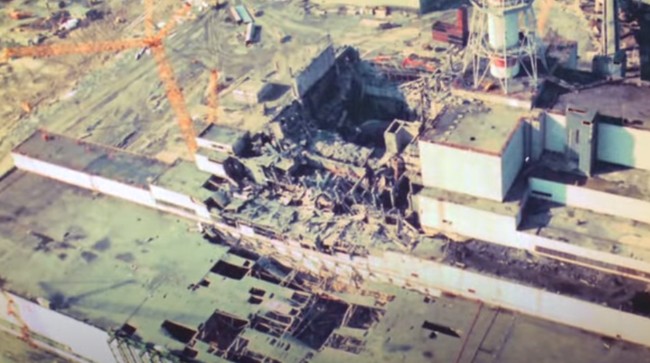
The Chernobyl nuclear accident remains one of the deadliest technological disasters in world history. The event on 26 April 1986 not only caused a nuclear reactor explosion but also dispersed radioactive material across various regions of Europe.
For years, various narratives have emerged claiming the disaster was triggered by a ‘computer button error’. However, investigations show the cause was far more complex, involving a combination of human error, flawed reactor design, and the failure of safety procedures.
The event had a massive humanitarian impact. Approximately 60,000 people are reported to have died, while hundreds of thousands of others were forced to abandon their homes for many years due to radiation exposure.
As background, the Chernobyl nuclear facility was built as part of the Soviet Union’s ambition to become the world’s greatest nuclear power. In 1977, the local government successfully operated a nuclear reactor with a capacity of 1,000 megawatts, capable of supplying large-scale electricity needs for a long period.
From there, the Soviets continued to develop nuclear power. By 1986, there were four large-scale nuclear reactors at Chernobyl with similar power. However, some reactors were still in the testing phase.
According to The Guardian, the test in question concerned continuous cooling. Nuclear reactors must remain in a cold state, meaning the water supply must be available 24 hours a day, 7 days a week. If this fails, the reactor can overheat and trigger an explosion.
In the case of Chernobyl, the Soviet nuclear team attempted a test to activate generators so that the turbines would continue to pump water to cool the nuclear reactor.
The test took place on 26 April 1986. In theory, water would be released by the turbines to continuously cool the reactor core. Through this, the team would determine how long the turbine’s durability lasted while remaining operational.
Unfortunately, during the test, those involved were incompetent. Furthermore, they exhibited denial and were not open to feedback. This was evident in the conduct of Deputy Chief Engineer Anatoly Stepanovich Dyatlov and Chief Engineer Nicholai Fomin.
Citing ‘Chernobyl: 01:23:40’ (2014), Fomin was negligent and appeared to cover up the fact that the cooling power was insufficient. In reality, it was far from adequate. Fomin knew the reactor power was only 200 megawatts, well below the minimum requirement of 700 megawatts.
Meanwhile, Dyatlov insisted that the test must proceed that very day. On the other hand, on the day of the test, the technicians had already given up, as they were unable to perform the task. However, because Dyatlov persisted and issued threats of reassignment, the technicians ultimately complied.
This is where the disaster began. As night fell, the technicians activated the generator. The water turbine successfully engaged. However, midway through, the generator’s power dropped drastically and could not remain operational. As a result, the temperature of the nuclear reactor core rose rapidly. When this occurred, technicians rushed to press the SCRAM button on the computer.
This button serves as a computer command to the system to activate the generator. Unfortunately, the button failed to function because it had never been checked. Consequently, the disaster occurred. The nuclear reactor temperature surged to 3,000 degrees Celsius. Shortly thereafter, a massive nuclear explosion took place.
As the nuclear radiation spread, many residents were still fast asleep. As a result, they were unable to escape and were forced to endure extremely high levels of radiation. At that time, the radiation from the explosion could not be detected by instruments, as the levels were too high for the devices to measure.
It was only when the sun rose that people were shocked to see dust scattering everywhere. This was no ordinary dust, but radioactive fallout. Thus, the tragedy unfolded for the people there.
The BBC notes that 90,000 people died due to long-term nuclear radiation. Additionally, 600,000 people were exposed to radiation but did not die. The WHO notes that the nuclear radiation reached as far as 200,000 km into Europe. Meanwhile, Chernobyl itself will remain uninhabitable for humans for up to 20,000 years due to the devastating effects of radiation.