
NU National Conference 2026 Discusses Leadership and the Organisation's Future
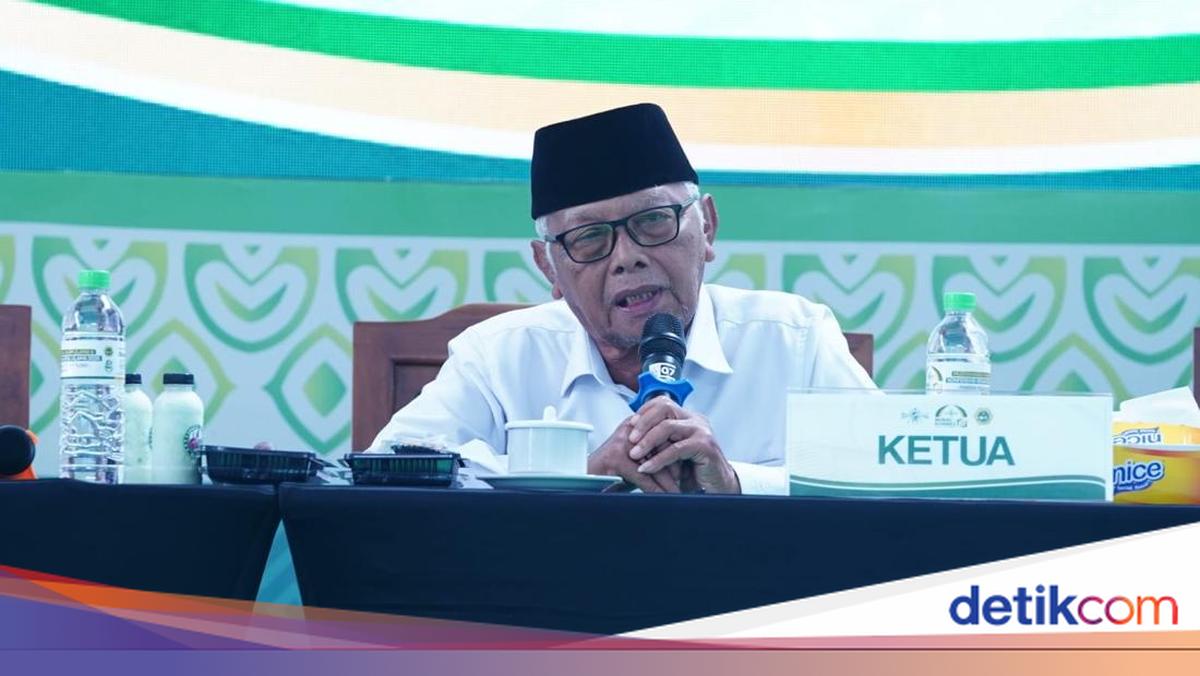
The Nahdlatul Ulama (NU) Alim Ulama National Conference (Munas) and Grand Conference (Konbes) 2026 has become a strategic forum to discuss the direction of leadership and the future of NU. Two senior PBNU figures, Wakil Rais Aam KH Afifuddin Muhajir and KH Anwar Iskandar, presented their views during the Plenary Session II held at Pondok Pesantren Al Falah, Ploso, Kediri, today.
Kiai Afif, as KH Afifuddin Muhajir is affectionately known, dissected two main principles in NU’s journey as an organisation: matters that are permanent (non-negotiable) and matters that can be adapted. “The question is, what aspects of NU are non-negotiable and what aspects can adapt,” Kiai Afif stated in a written release on Sunday (21/6/2026).
According to him, there are at least four things that cannot change under any circumstances, including the Qanun Asasi (including its preamble, fundamental Qanun Asasi, and Khittah), the concept of NU as a societal organisation (jam’iyyah ijtima’iyyah) and not a political party, NU’s foundation on Pancasila, and the ideology of Ahlussunnah wal Jamaah Annahdliyyah.
In this Munas Konbes, the final one of the current PBNU management’s service period, Kiai Afif then elaborated on whether the election mechanism within NU as an organisation is permanent or adaptable. “Speaking of the election mechanism, is it non-negotiable or can it be adapted?” he posed, initiating the discussion.
Kiai Afif detailed that non-negotiable matters are based on objectives, whereas the election mechanism is viewed as a means to achieve those objectives, thus categorising it as adaptable. “Non-negotiable matters concern the objectives, but matters concerning the means to achieve those objectives can be adapted,” he explained.
According to him, the principle that cannot be abandoned in the election mechanism is the principle of deliberation. “In even the smallest matters, the Prophet was commanded to deliberate. Moreover, in major issues such as electing a leader. It is then referred to as ahlussyuro, then as ahlul ikhtiyar, then as Ahlul Halli Wal Aqdi,” he stated.
He reminded that being part of the electorate or the deciding committee in NU’s highest forum is not an easy matter because there are strict prerequisites that must be met. Therefore, he emphasised that the determination of the voter system and the election must always prioritise the path of deliberation.
Regarding the debate on the implementation of the Ahlul Halli wal Aqdi (AHWA) system or other election regulations that often heats up ahead of the organisation’s highest forum, Kiai Afif fully entrusts it to the official consultative forum. “The mechanism can be deliberated on how best to proceed. Hopefully, at the Muktamar later, we can discuss what is best (for NU),” Kiai Afif concluded.
Meanwhile, KH Anwar Iskandar stated that the 2026 NU Munas and Konbes, besides serving as a gathering at the end of the current PBNU management’s service period, is also a forum to discuss and dialogue about various issues facing the nation. “The complexity of the problems facing this nation is part of NU’s responsibility in its dedication and service to religion, the community, the nation, and the country,” said Kiai Anwar.
According to him, this forum is very strategic and requires ijtihad from all participants in an effort to present an NU that provides great benefit for the common interest. “Therefore, the Munas and Konbes must produce decisions that demonstrate NU’s concern for the future,” he explained.
He cited the importance of optimising Lazisnu as PBNU’s official philanthropic institution that manages Zakat, Infaq, Sadaqah (ZIS), and Social Religious Funds as part of NU’s service in educating the nation. “We are lagging behind in higher education and hospitals,” he said.
Secondly, he continued, NU needs to strengthen the development of Ahlussunnah wal Jamaah (Aswaja) amidst global competition and the various styles of Islamic propagation developing in the digital world. “We cannot deny that we cannot escape this digital life. No one can be free from the digital world. A person might not become a scholar or a doctor, but they cannot be free from digital,” he said.
He explained that while digitalisation has two sides, benefit and harm, as a tool for da’wah, traditional approaches alone are no longer sufficient. “We know very well that digital as a tool for da’wah can no longer rely solely on traditional methods,” he stated.
Kiai Anwar reminded that NU will be left behind if it does not prepare itself to face Generation Z, who were born in the digital era. They are the generation that will determine the future of religion, the nation, and the state. “We will be left behind in the future because ahead of us is Generation Z, who will determine the future of our religion, nation, and state,” he said.
Therefore, Kiai Anwar hopes that this NU Munas and Konbes can produce a formulation on the utilisation of digital technology to strengthen ideology and religious teachings. “Hence, it is necessary for the Munas and Konbes to produce a way to utilise digital technology for our ideology and religious teachings,” he explained.
Kiai Anwar also highlighted the vast potential of NU’s human resources spread across various fields that have not yet been optimised by NU administrators. These include politicians, entrepreneurs, and professionals in specific fields such as doctors, agricultural experts, and IT experts. He stated that this potential needs to be accommodated and coordinated to provide greater benefits. “It is important to accommodate them, do not let them be scattered. That is a great potential that can provide benefits, it just needs to be coordinated,” he said.
He hopes the Munas and Konbes can produce decisions that enable the consolidation of NU members’ potential and their contribution across various policy sectors for the benefit of society. “Let the Munas and Konbes produce outcomes that allow the potential of NU citizens to be consolidated,” he concluded.