
NU Faces Heavy Challenges in Second Century: Urban Youth, Middle Class, and Women
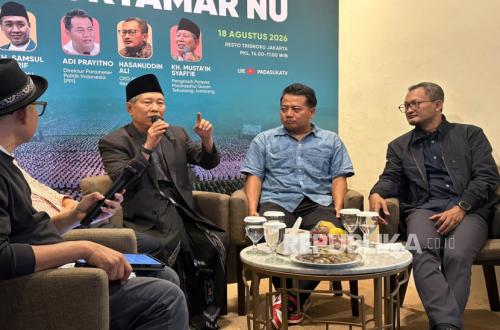
Nahdlatul Ulama (NU) is entering its second century with challenges that are no longer light. Demographic changes, rising education levels among its members, the growth of the middle class, and the increasingly strong flow of urbanisation demand that Indonesia’s largest Islamic organisation make adjustments to remain relevant, especially among the younger urban generation.
This issue is one of the challenges NU will face at the 35th Muktamar to be held in Jombang, East Java, at the end of August 2026. Besides discussing the organisation’s future direction and policies, one of the important agendas of the muktamar is the election of the chairman of the Central Board of Nahdlatul Ulama (PBNU) for the coming period.
Alvara Research Center CEO Hasanuddin Ali said that whoever is elected to lead NU must understand the major changes taking place in Indonesian society. According to him, NU in its second century can no longer be managed in the same way as NU in its first century.
Hasanuddin explained that there have been three main factors that make a person become NU. First, because they were born into an NU family or obtained NU identity as a family inheritance. Second, because they received education from NU institutions, such as pesantren and Ma’arif schools. Third, because the environment and social circles shaped a person’s NU identity.
However, these three factors are no longer dominant, particularly for Generation Z. “For Gen Z, they are NU but not NU that is merely inherited. They need more real reasons for why I am NU,” Hasanuddin said during the 35th NU Muktamar Discussion Series themed ‘Stop Transactional Politics at the NU Muktamar’ in Jakarta on Tuesday (18/8/2026).
This phenomenon, he said, is especially visible in Indonesia’s major cities. Urban youth do not automatically feel part of NU simply because of family background or environment. They need more concrete reasons regarding NU’s relevance to their lives. “I have great hopes for NU in urban areas, the challenge is very heavy,” he said.
According to Hasanuddin, the issues of young people and urban areas must be among the main concerns at the 35th NU Muktamar. Therefore, the forum is expected not to stop at the leadership succession agenda, but also to produce decisions relevant to the problems of today’s NU community.
NU is also considered to need to provide broader space for women. Hasanuddin mentioned the issues of youth, urban areas, education, the middle class, and women as important parts of NU’s roadmap for the next 25 years. Therefore, the agenda of electing the chairman at the 35th Muktamar is important not merely because it determines who will lead the organisation, but also because the elected leader will determine how NU responds to these changes.
The 35th NU Muktamar in Jombang is considered insufficient merely as an arena to determine who will lead PBNU, but also a momentum to determine NU’s direction in entering a new phase. The elected leader will face a major task: ensuring NU maintains strong roots in tradition while being able to respond to changes in Indonesian society that is increasingly educated, urban, young, and dominated by the middle class.