
NU Congresses Through the Ages
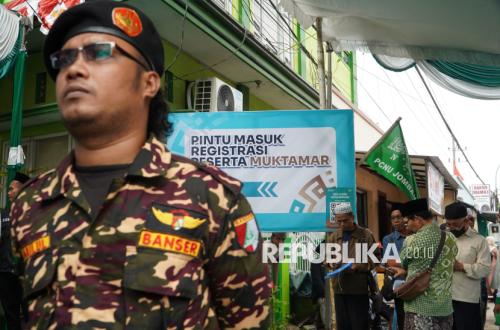
The Nahdlatul Ulama (NU) Congress has a long history that is not merely a consultative forum for its administrators, but also an important moment for NU in responding to religious and social issues. Since the first congress in Surabaya on 21 October 1926, the organisation’s highest forum has continued to move from one city to another, following the dynamics of the community and the socio-political conditions of the time.
The first Nahdlatul Ulama (NU) Congress was held in Surabaya on 21 October 1926, not long after NU was established, and remained in that city until the third congress. In the following years, the congress moved progressively westward, starting with Semarang (1929), Pekalongan (1930), Cirebon (1931), Bandung (1932), and Jakarta (1933), before moving to Banyuwangi (1934) and thereafter being held in various locations.
According to the Ensiklopedia Nahdlatul Ulama: Sejarah, Tokoh dan Khazanah Pesantren published by MataBangsa and PBNU in 2014, the first NU Congress outside Java was held in Banjarmasin (1936). The 1941 congress was planned to be held outside Java for the second time, in Palembang, but failed due to the Asia-Pacific War situation. During the six years of Japanese occupation, no congress was held. The first congress after the independence of the Republic of Indonesia was held in Purwokerto (1946).
The choice of congress venue has always been linked to NU’s efforts to assist Muslims facing problems. The Semarang congress (1929) was held because of a split within Sarekat Islam (SI) into the white SI and the red SI, the latter dominated by communist groups. Similarly, the Pekalongan congress (1930) was held after a severe conflict between residents and ethnic Chinese, which NU felt the need to calm.
The Cirebon congress (1931) was an effort to address divisions among Muslims on religious matters. The Bandung congress (1932) was a strategy for developing NU in the Priangan region.
From the past to the present, the NU Congress has not been merely a meeting of administrators. NU members have always enlivened the congress through public rallies attended by thousands of people. These were usually held at the city’s grand mosque, or in an open field if the expected crowd was very large. On such occasions, popular and respected preachers appeared.
At the first congress, the public rally was held at the Sunan Ampel Mosque and was attended by around ten thousand worshippers, an event never before experienced in Surabaya. At the second congress, the public rally at the Sunan Ampel Mosque was attended by tens of thousands of people.
The fourth congress was held in Semarang, while the public rally took place at the Great Mosque of Semarang and was extraordinarily lively. At the Pekalongan congress, the public rally was held at the Great Mosque of Pekalongan and received an impressive reception.
When the sixth congress was held in Cirebon, there was some difficulty in holding the mass rally at the Great Mosque of Cirebon. However, KH Wahab Hasbullah eventually resolved this by lobbying the Adviseur voor Inlandsche Zaken in Jakarta.
The seventh congress was held in Bandung. The public rally was held at the Great Mosque of Bandung with skilled speakers, including KH Wahab Hasbullah, who ultimately succeeded in establishing many branches in West Java.
Next was the Petamburan Congress in Central Jakarta. The public rally was held in front of the congress venue because the grand mosque in Tanah Abang could not accommodate the rally.
Source: jawawa.id (https://jawawa.id/newsitem/nu-congresses-through-the-ages-1787827968)
Originally published by Republika (https://khazanah.republika.co.id/berita/tkfa4o483/muktamar-nu-dari-masa-ke-masa), translated from Indonesian