
NU Congress: Dignity, Service, and the Common Good
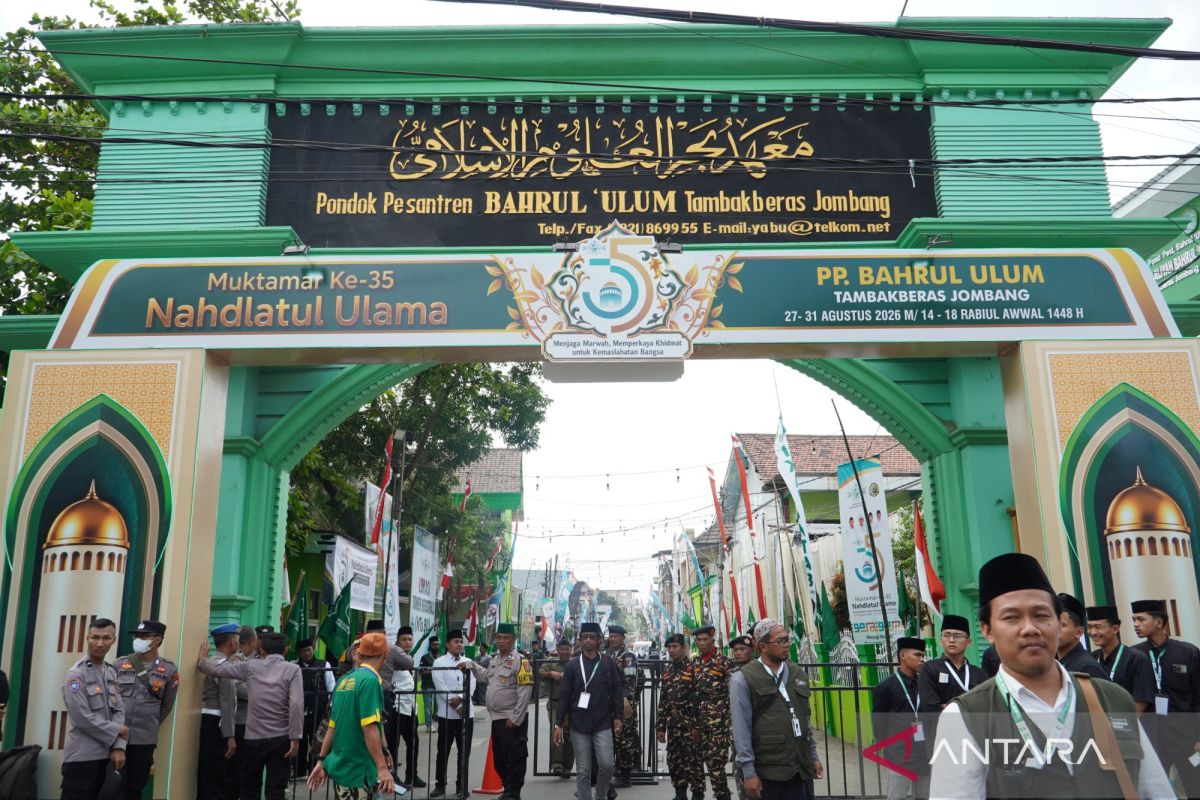
Ahead of the 35th Nahdlatul Ulama (NU) Congress at Bahrul Ulum Islamic Boarding School in Tambakberas, Jombang, from 27 to 31 August 2026, one important question must be asked: where does NU intend to direct its service as it enters its second century?
The congress theme, ‘Safeguarding Dignity, Enriching Service for the Common Good of the Nation’, carries a fundamental message that NU is required to reflect on its function as a religious and social organisation (jam’iyyah diniyyah ijtima’iyyah) that bears great responsibility towards the ummah as well as the nation. For the author, the congress does not merely determine who will lead for the next five years; far more important is the direction of NU after entering its second century and what it wishes to bequeath to Indonesia.
What makes the Jombang Congress different is that not all of its material can be answered from classical perspectives alone. Based on the 35th Congress materials already received by participants, several matters have drawn the author’s attention. Some of the issues discussed relate directly to technological developments, the economy, and the challenges of contemporary social life: wireless brain implants, crypto assets, gold zakat standards, mining concessions, energy sovereignty, and food security.
When dignity is questioned
‘Safeguarding dignity’ means far more than protecting the organisation’s image.
NU’s dignity has been built through pesantren, the scholarship of ulama, the tradition of deliberation, and religious moderation—it is born of trust, not power. Therefore, safeguarding dignity means safeguarding trust, particularly amid an uncertain global situation.
NU’s recent internal dynamics should serve as a lesson for all NU members, both at the structural level and at the grassroots. Differences of opinion in an organisation as large as NU are natural; what must not happen is for those differences to cause the congregation to lose direction regarding the main purpose of the organisation.
The congress must become a moment of reconciliation—not to erase differences, but to return them to NU’s tradition: deliberation, clarification, and respect for the ulama. From a national resilience perspective, the ability to manage differences without losing unity is the very core of resilience itself.
NU’s internal resilience is part of the strength of the Indonesian nation. The dynamics of NU’s relationship with politics must also be maintained at a proportional distance. NU must remain aware of its function as a balancer and supervisor of policy. This is where NU’s khittah (principles and values) must remain the guiding light without forgetting its role as guardian of the national consensus, preserving the integrity of the Unitary State of the Republic of Indonesia, and fighting for the welfare of the ummah.
Resilience of the information space
The main challenges of artificial intelligence (AI) for Nahdliyin members and pesantren include the shifting of religious scholarly authority, the risk of eroding critical reasoning, and the loss of spiritual value in the chain of scholarly transmission. However, Nahdliyin members must continue to respond adaptively through the development of independent digital innovations, such as Digdaya AI-NU and technology literacy training. The crowded religious information space that circulates rapidly is often not directly proportional to the depth of knowledge. Many truncated narratives are spread without context, scholarly lineage, or clear methodology.
Facing this information chaos, Nahdliyin members need to strengthen the intellectual fortress that has long been the strength of pesantren: reading, studying, and writing.
The battle of ideas today takes place every second on social media. One video can shape the perception of millions of people; one provocative narrative can widen the distance between groups. NU has begun to respond: the 2026 National Conference and Grand Consultation approved a fiqh guideline on the right to be forgotten, which affirms the prohibition of re-disseminating content that shames a person, with strict exceptions for the sake of transparency regarding the track record of leadership candidates. NU has also affirmed a balanced stance on artificial intelligence: asking AI about religion is permissible, but making it a guide for religious practice is not justified, while participating in developing AI that presents authoritative Islamic references is deemed necessary.
The author sees that NU media must not function merely as a mouthpiece for organisational activities. NU media must become part of a healthy information ecosystem—verifying, providing context, and building a soothing Islamic-national narrative. NU also needs to prepare a generation with literacy resilience: the ability to understand information, verify truth, and not easily become part of digital provocation. Amid today’s boundless digitalisation, which has become the main consumption of the nation’s younger generation, if NU can at least create a healthy information ecosystem, millions of young Nahdliyin members, as well as the nation’s children, will be saved.
A modern mass organisation
The Pre-Congress Bahtsul Masail at Cendekia Amanah Islamic Boarding School in Depok discussed three issues at the forefront of civilisation: the commercialisation of genetic data (DNA), the integration of wireless brain implants (Neuralink), and the status of cryptocurrency in fiqh muamalah.
Genetic data is not ordinary data. It is a biological blueprint that concerns parents, siblings, and even unborn descendants. From the perspective of maqashid shariah, this touches upon hifzh an-nasl (the concept of protecting lineage or family honour) and hifzh an-nafs (the concept of protecting life or safety) simultaneously; from a national resilience perspective, it concerns the sovereignty of the nation’s biological data. Regarding wireless brain implants, fiqh affirms the boundary between treatment that restores function and augmentation that alters the nature of creation—including the legal status of a person’s will mediated by another party’s control device.
As for crypto assets, they demand clarity of classification: whether they constitute legitimate wealth, a commodity, or a means of payment—an answer that has so far differed between regions and has not been resolved at the national level, even though millions of young Nahdliyin members have already become involved in the circulation of digital assets without guidance.