
NU and Muhammadiyah for Indonesia
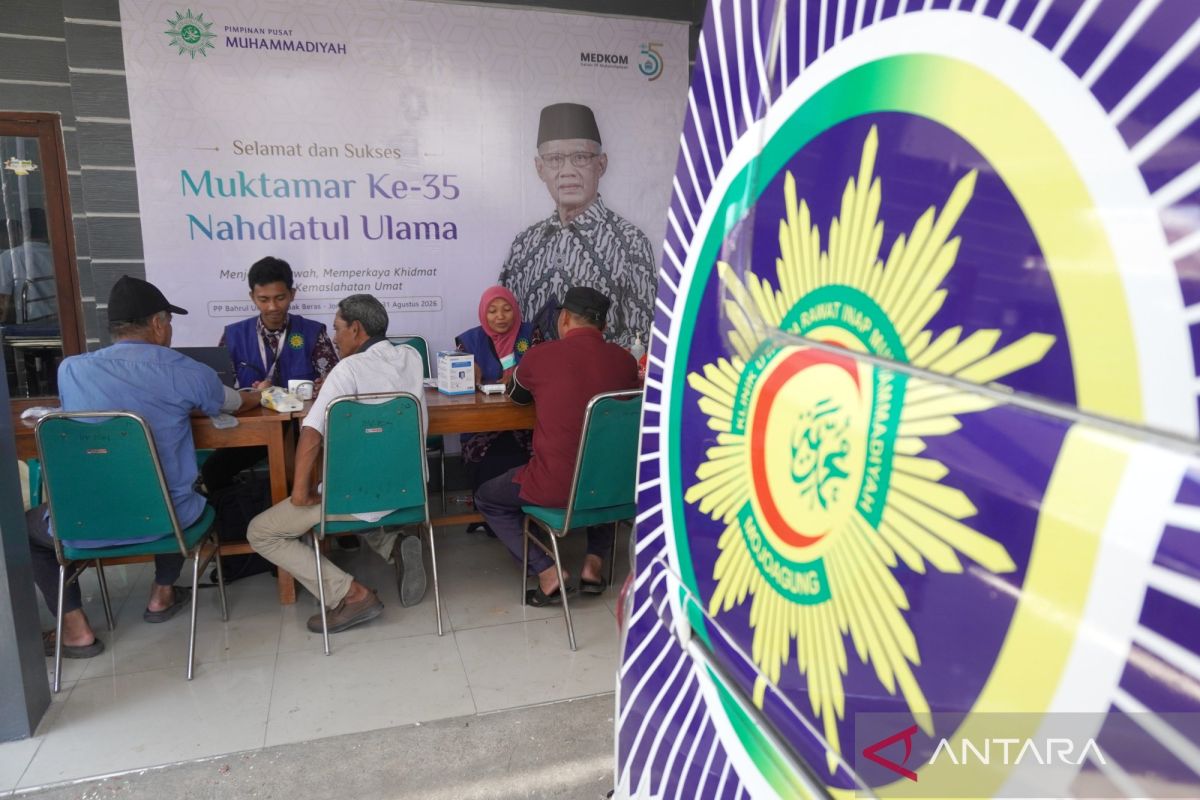
When these two organisations are strong and work together, minority groups also feel the protection of being fellow citizens of the nation.
Bondowoso (ANTARA) - The 35th Muktalam of Nahdlatul Ulama (NU) has concluded, establishing KH Miftahul Akhyar as Rais Aam and KH Abdul Hakim Mahfudz, also known as Gus Kikin, as the General Chairman of the Executive Board of Nahdlatul Ulama (PBNU) for the 2026–2031 term.
President Prabowo Subianto, during the opening of the congress held at the Bahrul Ulum Islamic Boarding School in Tambakberas, Jombang, East Java, repeatedly emphasised the importance of Muhammadiyah standing alongside NU.
NU and Muhammadiyah are large Islamic community organisations that differ in several aspects, including religious practices. In terms of intellectual context, they are often divided into the dichotomy of modernist Islam for Muhammadiyah and traditional Islam, or the ‘kaum sarungan’, for NU.
In their development, these differences have become increasingly blurred as both move towards modernist tendencies. Many NU figures have subsequently emerged as modernist Islamic thinkers.
All the movements that demonstrate this division, and the subsequent movement towards unity, form an important part of these religious organisations’ roles in the nation’s historical journey. NU and Muhammadiyah are two wings of the Garuda, working together to carry the people towards the gates of prosperity.
NU and Muhammadiyah have left a long-standing impact by taking positions on the left and right, or the front and rear, to achieve the same goal: leading Indonesia towards its ideal aspirations as a nation. In terms of tangible contributions, Muhammadiyah has provided significant input to formal education, while NU’s primary contribution is more visible through the pesantren (Islamic boarding school) system. These contributions exist alongside their roles in the economic, political, and social spheres.
As evidence that their efforts are becoming more integrated, NU is expanding its role in formal education, including higher education. Conversely, Muhammadiyah has begun adopting the NU model by establishing pesantren. From this increasing proximity in the field of education, a satirical yet soothing expression has emerged: NU is becoming more ‘Muhammadiyah-like’, and Muhammadiyah is becoming more ‘NU-like’.
All these efforts are undertaken to maintain the continuity of the nation and the state known as Indonesia, ensuring it becomes increasingly peaceful and prosperous.
Source: jawawa.id (https://jawawa.id/newsitem/nu-and-muhammadiyah-for-indonesia-1788174460)
Originally published by Antara (Indonesian) (https://www.antaranews.com/berita/5718847/nu-dan-muhammadiyah-untuk-indonesia), translated from Indonesian