
NTT Prepares Water Pumps and Brigade System to Face Drought Threat
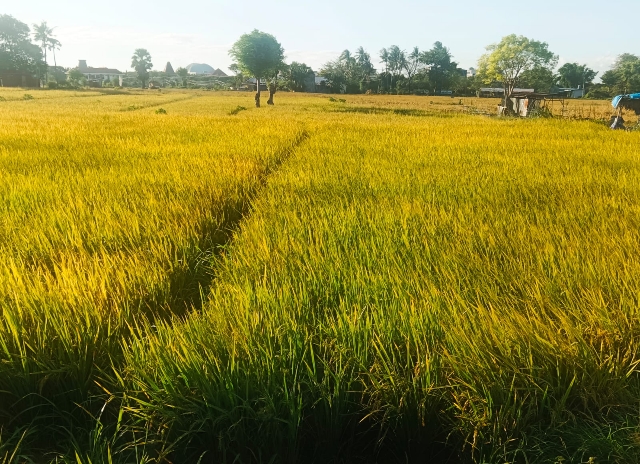
The provincial government of East Nusa Tenggara (NTT) is strengthening its preparedness against this year’s drought threat through three main strategies: mitigation, adaptation and anticipation.
Beyond intensifying weather monitoring and water resource management, the NTT Agriculture and Food Security Office has also prepared dozens of water pumps and agricultural machinery that can be swiftly deployed to affected areas.
Joaz Bily Oemboe Wanda, head of the NTT Agriculture and Food Security Office, said climate change has made seasonal patterns increasingly difficult to predict, requiring the government to accelerate anticipatory measures to prevent harvest failures.
“This year the impact of drought is already being felt in several areas, particularly West Sumba. That is why we continue to monitor weather developments together with the BMKG and prepare response measures,” Joaz told Media Indonesia in Kupang on Tuesday (15/7).
As a mitigation step, he said, the agriculture office regularly updates weather information, maps water sources together with the River Basin Authority (BWS), the Public Works and Spatial Planning Office, and district and municipal governments, and urges farmers not to force rice planting when water availability is insufficient.
To speed up field responses, the Agriculture Office has adopted a brigade system for managing agricultural machinery. Under this system, water pumps and tractors are held as government stock that farmer groups can borrow as needed, then return so the equipment can be promptly moved to other areas requiring assistance.
The NTT Agriculture Office currently holds a stock of around 60–70 water pumps. This year the government is also receiving an additional 80 or so units from the Ministry of Agriculture.
“Last year 84 water pump units managed to save around 1,000 hectares of paddy fields in Kupang Regency. If demand increases, we will propose additional units to the central government,” Joaz said.
In addition to water pumps, the government is preparing tractor assistance, rice, maize and soybean seeds, and pesticides. For areas at risk of water shortages, farmers are being encouraged to plant more drought-resistant commodities such as soybeans and legumes.
Gebi Reni, head of the Food Crops and Horticulture Protection Technical Unit at the NTT Agriculture and Plantation Office, said drought impact monitoring is carried out by Plant Pest Control Officers (POPT) stationed across all regencies.
Besides monitoring pest and disease attacks on crops, POPT officers are also tasked with tracking drought and flood events. NTT currently has around 254 POPT officers, still far short of the ideal of one officer in every district.
“We receive climate information from the BMKG, which is then relayed to POPT officers in the field to be passed on to agricultural extension workers and farmers as an anticipatory measure,” Gebi said.
To date, reports of drought impacts have come only from West Sumba Regency. The affected area covers roughly 305 hectares of paddy fields, with around 29 hectares estimated to have suffered crop failure after rice plants aged about one month no longer received any water supply.
According to Gebi, deploying water pumps at some locations may not necessarily be a solution because water sources in the area have already dried up.
“If the water sources are gone, the pumps cannot be used either. That is why we are directing farmers to switch to more drought-resistant crops that can still make use of residual soil moisture,” he said.
Even so, no other regencies have reported drought so far. The Agriculture Office remains on heightened alert based on BMKG forecasts indicating that a number of areas in NTT are entering the drought-prone category.
Beyond drought, the Agriculture Office is also anticipating an increase in crop pest attacks driven by climate change.
To support pest control, the government has prepared five pesticide warehouses spread across Timor Island, Sumba, Flores and Manggarai Raya, enabling faster distribution should an outbreak occur.
Gebi said one pest under continuous watch is the locust population on Sumba Island. Control measures carried out jointly with the Ministry of Agriculture and the FAO from 2021 to 2025 have succeeded in suppressing the population.
However, extreme weather conditions could still trigger locust eggs buried in the soil to hatch again, so surveillance continues to be tightened. “Climate conditions strongly influence locust development. That is why we carry out continuous monitoring so attacks can be prevented early,” he said.