
NTT Logistics Abundant, Distribution Becomes the Challenge
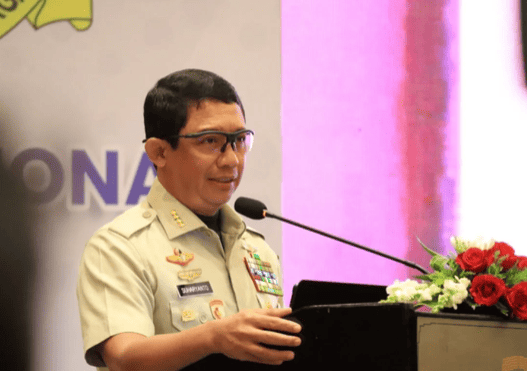
The government has confirmed that the supply of logistics for earthquake victims in Nusa Tenggara Timur (NTT) is in sufficient condition. The main focus of the response has now shifted from inter-island aid delivery to breaking through the last mile to reach residents who have evacuated independently in remote villages.
Head of the National Disaster Management Agency (BNPB) Lieutenant General TNI Suharyanto reported to President Prabowo Subianto that aid has piled up at the main distribution points. However, geographical challenges and the spread of evacuation locations demand the use of small fleets with high mobility.
“So now there is no distribution problem (from the centre). The obstacle is that there have been many earthquakes, 143 felt tremors, so the people of Flores are still afraid,” said Suharyanto in a coordination meeting on Wednesday (26/8).
The government is operating three main logistics hubs at Halim Perdanakusuma (Jakarta), Labuan Bajo, and Maumere. Unlike the handling of the Aceh tsunami, which was heavily dependent on air routes, road access in NTT is currently reported to still be passable by land vehicles. Therefore, BNPB has deployed 90 trucks (50 from Labuan Bajo and 40 from Maumere) as well as 200 motorcycles to reach narrow roads in rural areas.
The mobilisation of aid is also reinforced by TNI personnel, including combat support battalions that carry out distribution on foot to the furthest points. In total, 23 aircraft, 17 helicopters, and 12 ships are on standby to support the movement of logistics and personnel.
In the health sector, the government faces a psychological challenge as 19 community health centres (puskesmas) have not fully operated due to concerns about aftershocks. As a solution, 122 service tents have been erected outside buildings. In addition, two hospital ships (KRI dr. Soeharso and RS Kapal Kesatria Airlangga) and two field hospitals in Nagekeo and Ruteng are now operational.
Suharyanto stressed that the current challenge is no longer the availability of goods, but rather the speed of distribution from the sub-district level to the villages. “The logistics are plentiful, there is no difficulty from Jakarta to NTT. What we need is time to reach the people, whether by motorcycle or on foot,” he concluded.