
NTT Immigration Records Rp 21.4 Billion in Non-Tax Revenue, Up 85.61 Percent
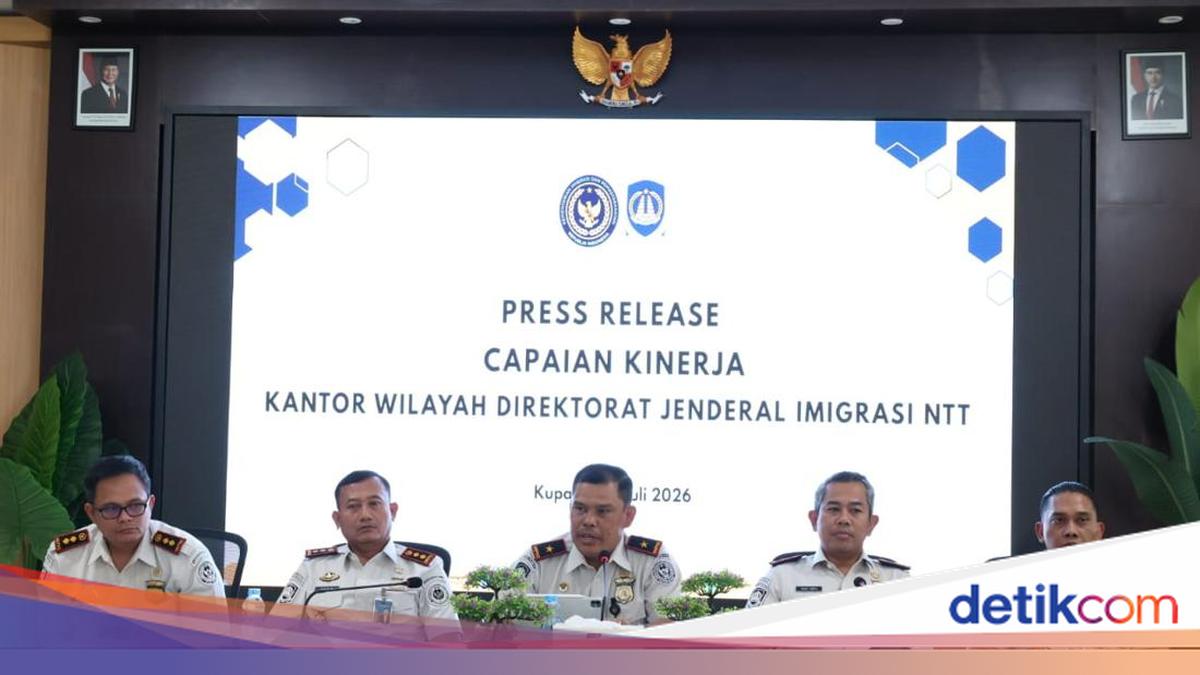
The Regional Office of the Directorate General of Immigration for East Nusa Tenggara (Kanwil Ditjen Imigrasi NTT) recorded non-tax state revenue (PNBP) of Rp 21.49 billion in the first half of 2026. This realisation reached 85.61 per cent of the target set for the same period.
The Head of the Regional Office, Saroha Manullang, said the achievement was driven by an increase in foreign tourist visits to leading destinations in NTT, such as Labuan Bajo, Maumere and Kupang.
“For the non-tax state revenue achievement of Rp 21,487,839,000, this represents an increase of 85.61 per cent from the target set for the same period,” said Saroha Manullang in a press statement received by detikBali on Friday (24/7/2026).
In addition to the increase in PNBP, the NTT Regional Immigration Office also issued 10,071 passports and 22,016 residence permits for foreign nationals between January and June 2026. Saroha also expressed her highest appreciation to all staff who have worked tirelessly amid constraints.
“With all our limitations and shortcomings, we strive together with the entire immigration workforce in NTT to maximise all available resource potential,” said Saroha Manullang.
For this achievement, the NTT Regional Immigration Office was ranked second best nationally in the performance assessment conducted by the Ministry of Immigration and Corrections.
In the field of supervision, NTT Immigration has optimised various operations, both independently and through the Foreign Nationals Supervision Team (Timpora) and joint operations. These steps are taken to monitor the NTT region, which covers approximately 47,350 square kilometres and includes 1,192 islands.
“Meanwhile, the total number of people crossing through the NTT region during the first six months of 2026 was recorded at 368,162, consisting of 177,341 departures and 190,821 arrivals,” explained Saroha.
Saroha said the Class I TPI Kupang Immigration Office continues to strengthen coordination with various stakeholders to prevent immigration violations at international entry points.
Meanwhile, the Class II TPI Atambua Immigration Office faces supervision challenges in the Indonesia-Timor-Leste land border area. To this end, supervision is carried out through collaboration with relevant agencies so that services for crossers remain optimal without neglecting security aspects.
“Atambua is the nation’s frontline post. The challenges are highly complex, ranging from border traffic to potential immigration vulnerabilities. We focus on optimising services to the public and strengthening supervision along the border line while prioritising state security and sovereignty,” stressed Saroha.
In the eastern part of Flores, the NTT Regional Immigration Office also plans to establish an Immigration Office in Larantuka. According to Saroha, this step aims to widen access to immigration services while supporting regional economic growth and protection for Indonesian Migrant Workers (PMI).
“The plan to establish an Immigration Office in Larantuka is a strategic step to bring immigration services closer and strengthen them, as well as to improve access for regional economic growth. It is also a form of protection for Indonesian Migrant Workers (PMI) to ensure they comply with procedures and legal provisions,” explained Saroha.
In addition, the Kupang Immigration Detention Centre (Rudenim) is currently handling 16 Uzbek nationals suspected of violating their residence permits (overstay) and allegedly intending to travel illegally to Australia. They remain in detention and will be deported in accordance with prevailing regulations.
Going forward, the NTT Regional Immigration Office is targeting strengthened services and supervision through the addition of four new immigration offices in Alor, East Flores, Ngada and East Sumba. In addition, the construction of state apartment blocks in Labuan Bajo continues to be pursued to support staff welfare and improve services in the priority tourism area.
“The construction project for State Apartment Blocks in Labuan Bajo also continues to be pursued to improve staff welfare and support service performance in the super-priority tourism area,” said Saroha.