
NTT Governor Highlights Low Vehicle Tax Compliance, Pledges Optimisation
Compliance among East Nusa Tenggara (NTT) residents in paying vehicle tax is very low. Based on an evaluation by the NTT Provincial Government, the average vehicle tax payment compliance rate in regencies and cities is below 50%.
“In fact, there are regions that have only managed to collect around 23% of the total existing potential. This means there is still a very large space for us to optimise. This is not new potential, but old potential that has not been maximally cultivated so far,” explained NTT Governor Emanuel Melkiades Laka Lena.
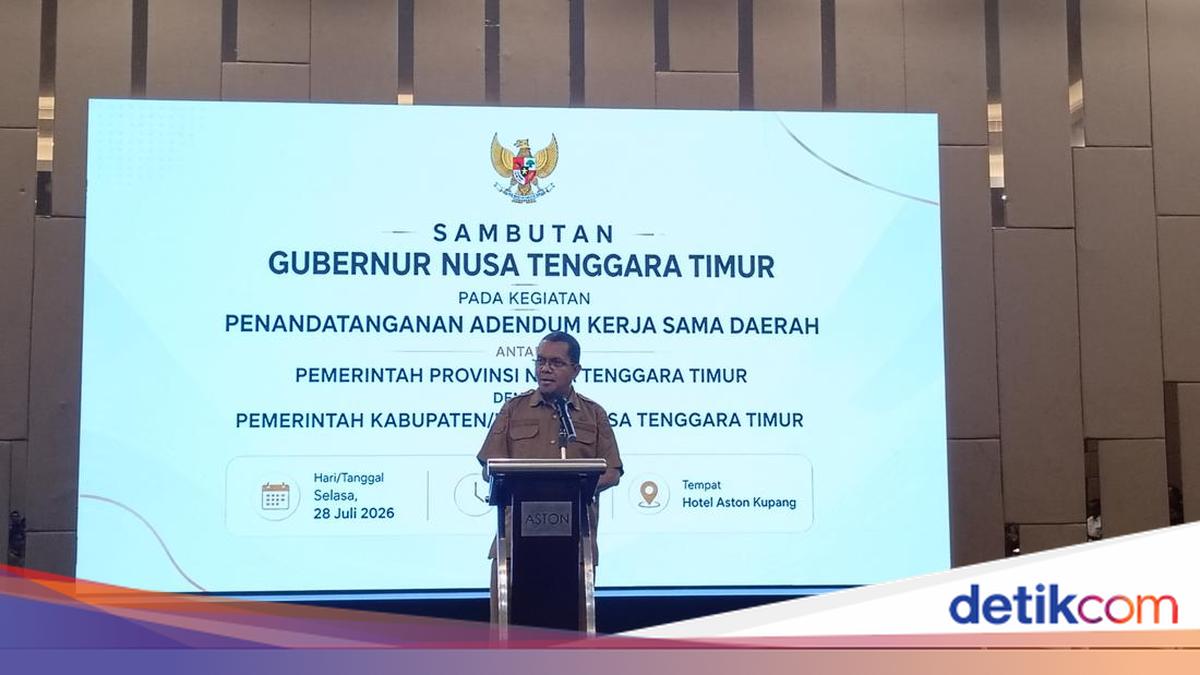
The low compliance of residents in paying vehicle tax was revealed by Laka Lena during the Signing of the Addendum to the Joint Agreement between the NTT Provincial Government and Regency/City Governments on the Optimisation of Regional Tax Collection and Tax Surcharges, in Kupang, Tuesday (28/7/2027).
Laka Lena confirmed he will optimise vehicle tax revenue in NTT. He stressed that the policy of optimising regional tax collection is not solely to pursue increased income, but also a strategic step in adapting to changes in regional financial governance in Indonesia.
Local governments, Laka Lena explained, have been too dependent on fund transfers from the central government. As a result, the potential of Regional Own-Source Revenue (PAD), particularly from motor vehicle tax, has not been managed optimally. The situation has now changed after the central government cut the General Allocation Fund (TKD) to the regions.
“All this time we have never seriously managed this potential because central transfers to the regions were still relatively safe. But now the situation has changed, we must seek sources of revenue that are indeed the right of the regions,” Laka Lena added.
In addition to the domestic situation, the global situation has also made local government finances increasingly constrained. Consequently, local governments are now required to be more independent in financing development, including personnel expenditure.
Almost every regional head in Indonesia, Laka Lena noted, makes motor vehicle tax the largest contributor to PAD, including in NTT. However, the compliance level of the NTT public in paying vehicle tax is very low.
Laka Lena has held discussions with several regional heads in Yogyakarta and Bali regarding strategies to increase PAD. As a result of the discussions, Laka Lena believes that optimising vehicle tax is an unavoidable step for regions to have stronger fiscal capacity.
For Laka Lena, the policy of optimising vehicle tax in NTT will spark debate because it touches on long-untouched issues. Even so, Laka Lena considers that the polemic will be part of the process towards more orderly and equitable governance.
“We are not creating new taxes. We are only ensuring that obligations which have not been fulfilled so far can be properly met,” stressed the Golongan Karya (Golkar) Party politician.
Laka Lena has issued Gubernatorial Regulation (Pergub) Number 32 of 2026. According to Laka Lena, the regulation provides various conveniences for residents who wish to transfer vehicle ownership and settle tax arrears.
Through this policy, Laka Lena aims to provide administrative fee reductions and even the elimination of tax penalties. The goal is to give the public the opportunity to fulfil their obligations without being burdened by large sanctions.