
NTT Agrarian Reform Movement Demands Resolution of Seven Land Conflicts
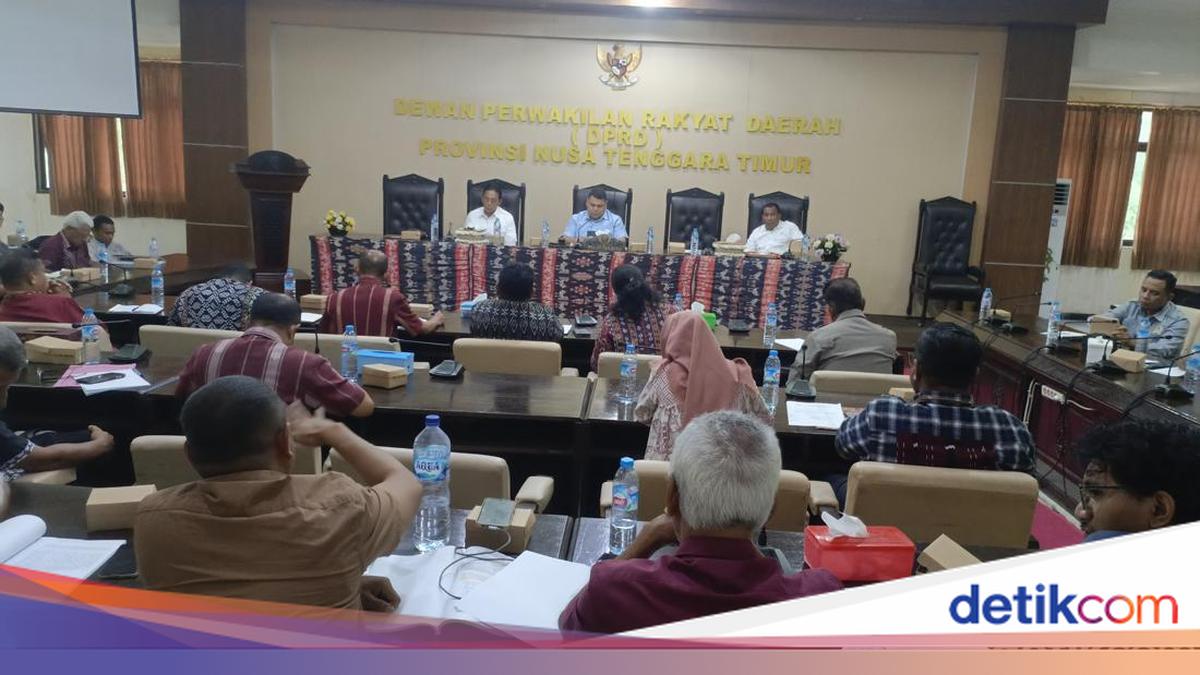
The East Nusa Tenggara (NTT) Provincial Legislative Council held a hearing with the NTT People’s Agrarian Reform Movement (Geram-NTT) on Thursday (8 October 2026). At the hearing, Geram-NTT outlined seven major agrarian conflicts in the province: Pubabu-Besipae, the Temef Dam, the Laob Tunbesi Permanent Production Forest, Naibonat, Kera Island, Fatukoa and the Verbum Kayu Putih case.
Geram-NTT General Coordinator Andi Sanjaya stressed that agrarian reform must not become a policy façade consisting merely of distributing certificates and holding meetings around a table.
“The state has spent too long talking about agrarian reform through speeches, programmes, certification, coordination meetings, data collection and bureaucratic processes, while people on the ground still face land conflicts, insecure rights, claims over land, relocation threats, criminalisation and intimidation,” Andi said at the hearing, chaired by NTT Deputy Legislative Council Speaker Fernando Soares and attended by representatives of the National Land Agency (BPN), the NTT provincial administration’s legal bureau and the Nusa Tenggara II River Basin Agency.
Andi said more than two decades had passed since MPR Decree No. IX/MPR/2001 on Agrarian Reform was adopted. Yet unequal control of land persisted, and communities defending their living spaces continued to confront administrative authorities and law enforcement officers.
“For the Laob Tunbesi Permanent Production Forest, Geram-NTT firmly demands the revocation of Decree No. 357/2016, which designated settlements, gardens, farmland and customary forest as permanent production forest,” he said.
On the Pubabu-Besipae dispute, Geram-NTT said residents did not need a ceremonial resolution but a decision that gave them certainty.
“People do not need repeated meetings without decisions that provide certainty. They need clarity on the land’s status, recognition of customary community rights and remedies for those affected,” he said.
Andi also highlighted the Kera Island case, saying relocation could not be treated simply as a question of whether residents were willing to move. For fishers, he said, their homes were directly connected to the sea, their livelihoods, boats and safety. A census of households must not be treated as evidence of consent to relocation.
“Data collection is not consent,” he said.
In Naibonat, Geram-NTT called for legal certainty for residents formerly from East Timor. Andi said relocation was not merely about moving houses, but also about moving people’s lives, work and families’ futures.
For Fatukoa, Geram-NTT urged the government to disclose all documents concerning the area’s status, maps and boundaries. “If the state is confident that its claim over the area has a strong legal basis, it should disclose all the documents to the public. Carry out joint mapping,” he said.
Regarding the Temef Dam and Laob Tunbesi, Geram-NTT said compensation remained unresolved for land, crops and ancestral graves affected by the Temef Dam, a National Strategic Project.
“People do not in principle oppose the construction of the dam, but they want legal certainty and a fair settlement of their rights,” he said.
Geram-NTT also raised the Verbum case. Andi said the movement wanted an investigation reopened into residents’ complaint over alleged forgery of documents from the Agrarian Affairs and Spatial Planning Ministry/National Land Agency, which had been closed by investigators.
Andi said Geram-NTT’s presence at the provincial legislature was intended to demand that agrarian reform ensure people had more than a piece of paper: they must genuinely have space to live and work on their land.
“Agrarian reform must ensure that people do not merely possess a document, but truly have space to live, work, produce and determine their own future,” he said.
NTT Legislative Council issues four recommendations to governor
Fernando Soares, the NTT Deputy Legislative Council Speaker who chaired the hearing, said the council would seriously oversee problems involving disputed forest areas in the province.
“After this, our fellow councillors will ask the Agrarian Reform Task Force, chaired by the governor, to follow up on all these problems concerning our forest areas,” Fernando said.
He said the council had found numerous irregularities on the ground. Many areas remained classified as forest in official maps, despite the forest having disappeared and the land having become residential areas.
“We have also found many problems in Kupang Regency. Places marked as forest areas on maps no longer have forests and have instead become settlements. This is a concern for the council, and we will closely oversee the matter,” he said.
Fernando said the current moment should be seized, with an Agrarian Reform Agency now in place and the President seeking a swift resolution to all agrarian disputes.
“The council will therefore make recommendations to the NTT Governor, as chair of the provincial Agrarian Reform Task Force,” he said.
The first recommendation is to refer the legal problems faced by the Verbum community to the police. Second, the task force should promptly invite the alliance and communities affected by agrarian disputes for discussions. Third, customary communities’ legal status should be strengthened through regional regulations in all regencies and municipalities across NTT. Fourth, the land certification rate should be raised; Fernando said only about 50 per cent of land in NTT had been certified.
He said the National Land Agency should help residents increase the proportion of certified land.
“These are the recommendations the council will submit to the government for follow-up,” Fernando said.
Source: jawawa.id (https://jawawa.id/newsitem/ntt-agrarian-reform-movement-demands-resolution-of-seven-land-conflicts-1791460273)
Originally published by detikBali (https://www.detik.com/bali/nusra/d-8698465/geram-ntt-desak-penyelesaian-7-konflik-agraria), translated from Indonesian