
NTB's Empowered Village Programme Attracts Social Ministry Attention, Being Prepared as National Model
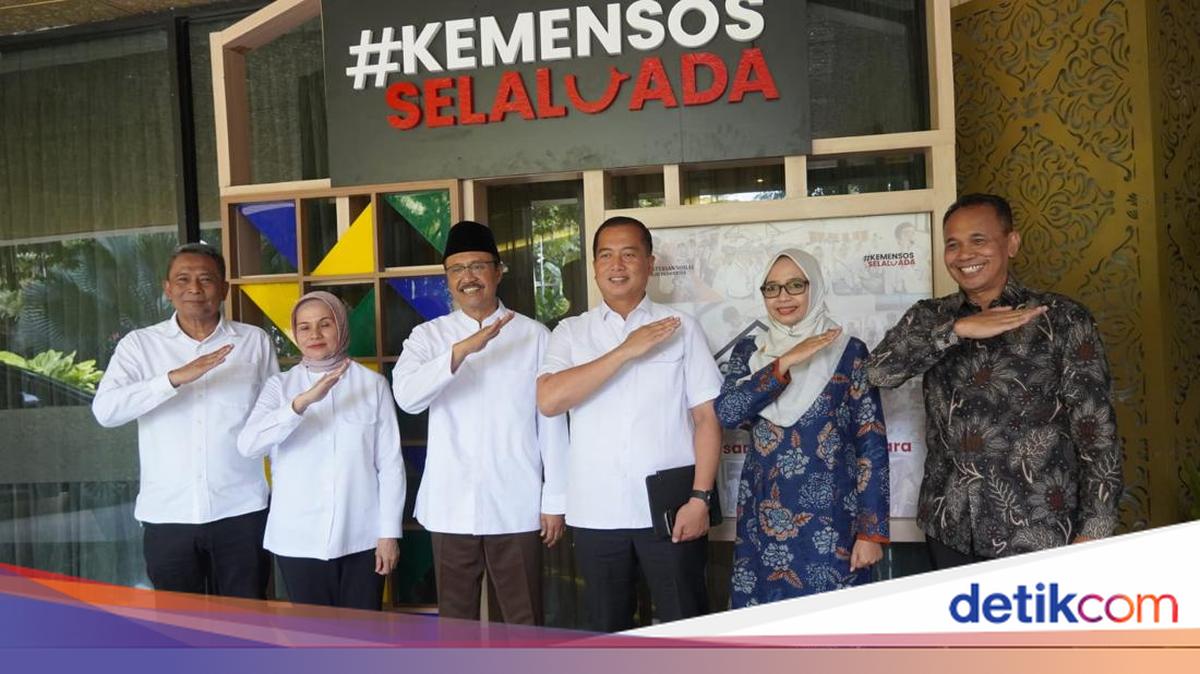
The Empowered Village Programme developed by the West Nusa Tenggara Provincial Government (Pemprov NTB) has attracted the attention of the Ministry of Social Affairs (Kemensos). The programme is being considered for adoption as a national model in efforts to alleviate poverty in an integrated manner.
Social Minister Saifullah Yusuf stated that the Ministry of Social Affairs is sufficiently enthusiastic about making NTB a model for integrated poverty and social problem management.
“For NTB I am very enthusiastic. I want NTB to become an example in handling poverty and social problems in an integrated way,” he said whilst receiving a working visit from NTB Governor Lalu Muhamad Iqbal in Jakarta on Monday, 9 March 2026.
The Nahdlatul Ulama figure outlined several reforms being undertaken by the Ministry of Social Affairs, particularly in organising the social assistance data system through the National Single Socio-Economic Data (DTSEN).
Furthermore, data management and validation have now been handed over to the Central Statistics Agency (BPS) as the national data centre to ensure that social assistance recipient data is truly accurate.
“This is a direct instruction from the President to ensure that social assistance data is truly valid. We must not allow those who are entitled to not receive assistance,” he stated.
Beyond this, the Ministry of Social Affairs also expressed readiness to assist in the development of two Red-White Fishermen’s Village locations in NTB. Each location will be built on approximately one hectare of land with an integrated fishermen’s settlement concept consisting of approximately 100 complete housing units equipped with social facilities, places of worship, and children’s play areas.
Additionally, the Ministry of Social Affairs will also conduct a cataract surgery service programme for 500 NTB residents. This comprises approximately 350 patients from Lombok Island and 150 patients from Sumbawa Island.
NTB Governor Lalu Muhamad Iqbal explained that poverty alleviation, particularly extreme poverty, is one of the main priorities for regional development. Currently, NTB ranks among the 12 provinces with the highest poverty rates in Indonesia.
“Currently NTB still has approximately 106 villages categorised as extreme poverty, with nearly 114,000 household heads falling into the extreme poor category,” he explained.
To address this issue, the NTB Provincial Government has formulated the Empowered Village Programme, which focuses on villages with extreme poverty levels. Through this programme, approximately 40 villages annually receive special mentoring to ensure that poverty management programmes run in a more targeted and data-based manner.
Field mentors conduct verification and validation of communities’ socio-economic conditions so that interventions provided can truly be precisely targeted.
“So the Empowered Village Programme does not only target village development in general, but also provides direct intervention to extremely poor families,” he said.
At the family level, each household head receives assistance of approximately 7 million rupiah to develop productive enterprises as a livelihood source. These include layer chicken farming, vegetable cultivation, and greenhouse development which can become suppliers for free nutritious meals programmes.
Meanwhile, at the village level, the government allocates approximately 500 million rupiah to address various structural obstacles that have previously prevented communities from escaping poverty. These funds are used for the development of agricultural access roads, improvement of inadequate housing, and provision of other basic infrastructure.
The former Indonesian Ambassador to Turkey emphasised that the poverty alleviation approach in NTB is conducted through orchestration of various stakeholders. These include the central government, provincial government, regency/city governments, village governments, tertiary institutions, and the private sector through corporate social responsibility (CSR) programmes.
“Ideally they continue to receive social assistance for at least one year during the intervention period, so they have time to truly become economically independent before leaving the poor group,” he stressed.