
NTB Weather Forecast Thursday 5 March 2026: 6-Metre Waves Loom, BMKG Declares Red Zone Status
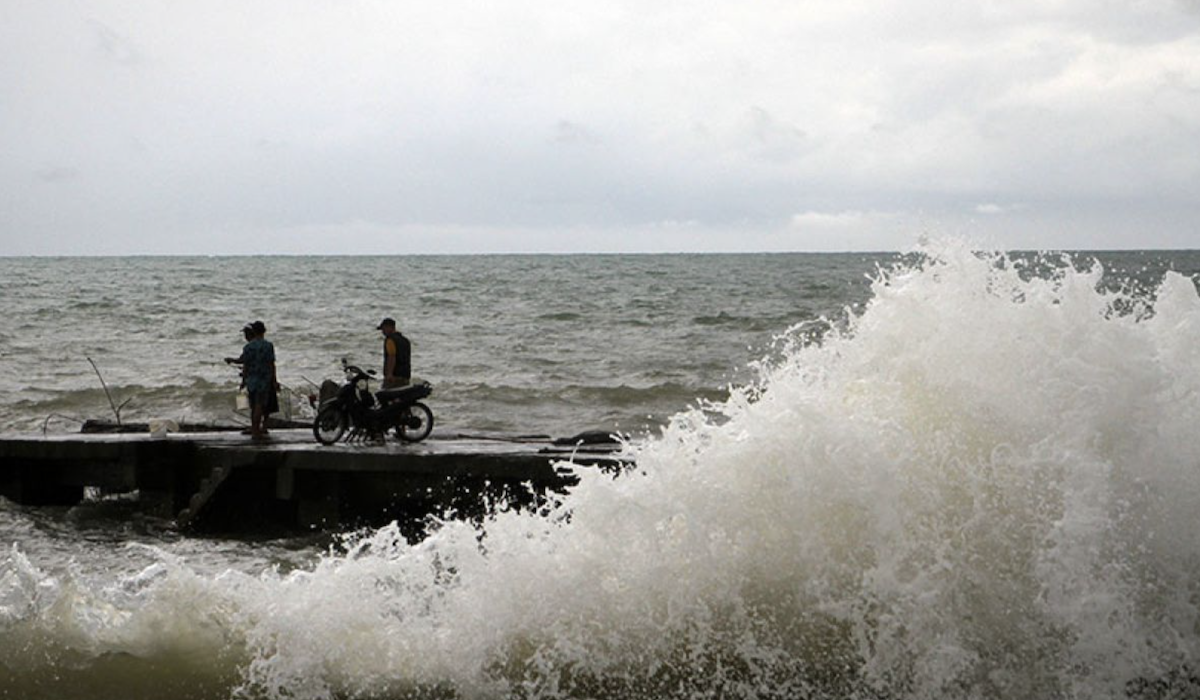
Badan Meteorologi, Klimatologi, dan Geofisika (BMKG) has designated a red zone for several sea areas around Nusa Tenggara Barat (NTB) on Thursday, 5 March, following the monitoring of two tropical cyclone seeds in the Indian Ocean that threaten waves exceeding six metres. BMKG forecaster Kadek Katriavi of the Zainuddin Abdul Madjid (ZAM) Meteorological Station explained that the rough weather is caused by Tropical Cyclone Seeds 90S near the southern coast of East Java and Tropical Cyclone Seeds 93S to the northwest of Australia. Both seeds have the potential to strengthen into tropical cyclones in the near future. Based on the wave forecast map for 5–6 March 2026, the red-zone designations apply to the affected waters. BMKG has urged coastal communities and those navigating the Lombok Strait, Alas Strait, and Sape Strait to increase vigilance, as rising wind speeds could trigger maritime accidents for fishing vessels and ferries. Kadek added that an indirect impact of the two seeds will be a sudden increase in wind speed, with southern NTB the most affected due to its direct exposure to the Indian Ocean. “We are issuing early warnings so that communities and shipping operators along strategic inter-island routes remain alert to high waves,” Kadek said in Mataram. As this report was filed, BMKG continued to monitor developments via the Tropical Cyclone Warning Centre (TCWC) Jakarta to anticipate the movement of the seeds that could worsen weather conditions in NTB. In February 2026, BMKG also forecast rainfall with intensities exceeding 100 millimetres per dasarian, with probabilities of 80% and above 90%. BMKG analysis indicates active low-frequency and Rossby equatorial waves around NTB, and for the period 1–10 February 2026 (Dasarian I), there was a 70–90% probability of rainfall exceeding 50 millimetres per dasarian.