
NTB Regional Council Urges Underwater Pipeline to Resolve Gili Trawangan Water Crisis: SWRO Too Expensive
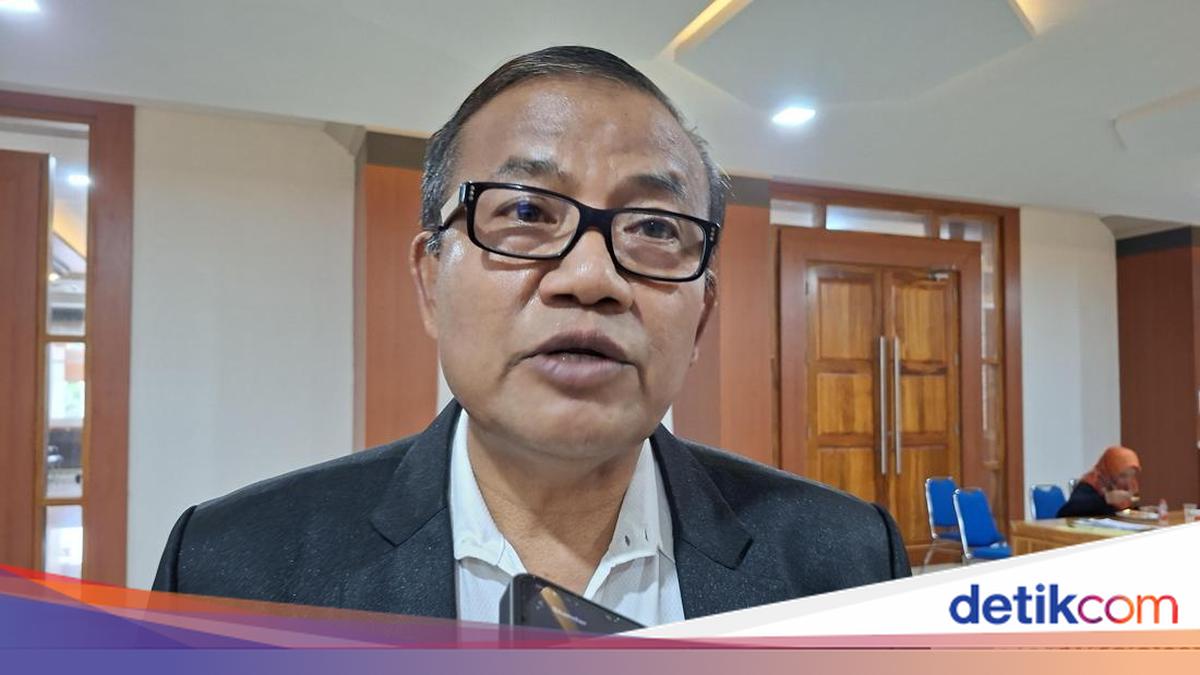
Suharto, a member of the NTB Regional Council representing the West Lombok-North Lombok constituency, has highlighted the ongoing clean water crisis in the Gili Trawangan tourism area over the past week. He asserted that addressing the water crisis in Gili Trawangan requires a long-term perspective.
The member of Commission IV of the NTB Regional Council noted that the use of Sea Water Reverse Osmosis (SWRO) technology, managed by PT Tiara Cipta Nirwana in collaboration with PDAM Amerta Dayan Gunung in Gili Trawangan, is believed to be expensive and unsuitable for the long term. Furthermore, the NasDem politician emphasised that the SWRO system requires extremely high operational costs, particularly regarding electricity consumption and membrane maintenance.
“Using SWRO is expensive because it requires significant electrical energy and membrane upkeep. The membranes require immense energy to push the water through,” Suhably said in Mataram on Friday (11/09/2026).
Suharto joked that SWRO technology is essentially designed for extreme scales, meaning its presence in a tourism area actually burdens local business owners. He argued that the system is far from ideal for the business sector.
“SWRO is a technique used for space missions to the Moon. Therefore, this system is expensive. For the sake of the people and entrepreneurs, government intervention is needed. We need water to be piped from North Lombok to the Gilis,” he asserted.
Suharto suspects that the SWRO scheme implemented in Trawangan is heavily driven by business interests. He urged the local government to take the initiative to switch to an underwater piping line from the mainland of North Lombok Regency (KLU) to the three Gili islands.
“An underwater pipeline is a better option. If PLN can install underwater cables, why can’t we do this? It likely means a contractor hasn’t been found yet, which makes the thinking difficult,” he insisted.
Suharto also lamented that while the water supply was halted, the water transfer process from the North Lombok mainland to the Gili area remains insufficient to meet the needs of residents and hotels. Indeed, several hotels were forced to cease operations when the SWRO supply was cut.
“This is a matter of political commitment. We are talking about bringing water from the North Lombok mainland to the Gili area. The cost of continuing with SWRO is actually higher. Perhaps there is a lack of political will from the government,” he criticised.
Suharto reiterated the need for direct government involvement to attract investors or partner with local-owned enterprises (BUMD) to install an underwater pipeline for long-term service.
“I hope the state is present. The state must invest slightly and seek investors. PDAM can operate there; they just need support from the central government for the piping project,” he said.
He also expressed regret over the cancellation of a pipeline aid project from the Ministry of PUPR in the past due to the presence of PT TCN. Additionally, he criticised the Regent of North Lombok for rejecting the installation of an underwater pipeline to Gili Trawangan.
“This is what I am saying; the orientation is not purely towards low-cost solutions. Think about the business owners there,” the NasDem politician urged.
Entrepreneurs in Gili Trawangan are part of the community that sustains the tourism sector and therefore deserve access to drinking water at a low cost.
“These business owners need government support. The government must allocate budgets to support facilities for the people. The entrepreneurs in Trawangan, who are also tourism actors, are part of the community,” he explained.
He compared the tariff for water produced via SWRO, which is significantly higher than water from an underwater pipeline from PDAM. According to information he received, SWRO tariffs in Trawangan have reached Rp 20,000 per cubic metre.
“The government must be present to provide facilities where operational costs are not as high as SWRO. Buying SWRO water is certainly more expensive than paying for PDAM water,” he remarked.
Therefore, Suharto pushed for the installation of an underwater pipeline as the only permanent solution, similar to what has been implemented on neighbouring islands.
“There must be an underwater piping line. Gili Air has already implemented this. We cannot continue to rely solely on SWRO; it is too expensive,” he added.
He added that the high production costs of SWRO automatically lead to high selling prices for consumers. Given these conditions, Suharto questioned the local government’s reluctance to implement a low-cost solution and urged the government to conduct a feasibility study for the underwater pipeline.
“If the local government needs to conduct a feasibility study, it must be done immediately. Create a study on how the community and entrepreneurs there can soon enjoy clean water sent from the North Lombok mainland,” he urged.
Following the Regent’s rejection of the piping option, Suharto encouraged journalists and the public to continue monitoring the results of studies regarding the losses incurred by using SWRO. Beyond the cost issue, Suharto warned of serious environmental threats caused by continuous groundwater extraction via the SWRO system.
“This will lead to abrasion. The island will be continuously eroded by the water extraction. The ground will subside, which is dangerous. Therefore, if we take water from the mainland, we only need a pipe. That is our suggestion,” he concluded.
Source: jawawa.id (https://jawawa.id/newsitem/ntb-regional-council-urges-underwater-pipeline-to-resolve-gili-trawangan-water-crisis-swro-too-expensive-1789135094)
Originally published by detikBali (https://www.detik.com/bali/nusra/d-8659046/dprd-ntb-desak-pasang-pipa-bawah-laut-atasi-krisis-air-di-trawangan-swro-mahal), translated from Indonesian